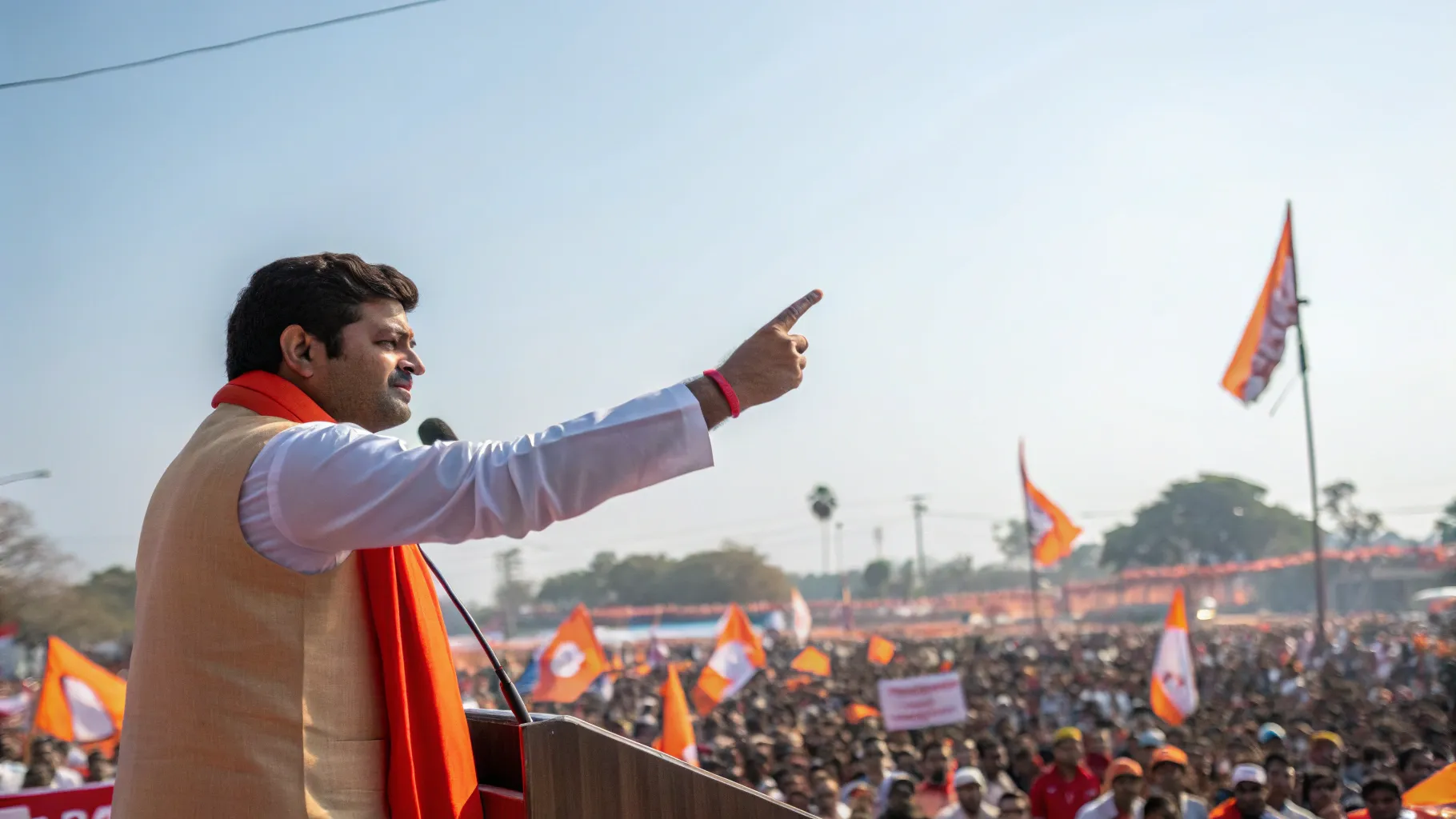
Nitin Nabin, the Bharatiya Janata Party’s newly appointed national president, pledged on Sunday to return his party to power in Uttar Pradesh by leaning on development and trust. Speaking at a public gathering alongside Chief Minister Yogi Adityanath, he framed the state as a test of momentum for the party and a stage to reassert its governance goals.
His message came as both leaders sat together to listen to the 130th episode of Prime Minister Narendra Modi’s radio address, Mann Ki Baat. The timing signaled unity at the top of the party and a renewed push in India’s most politically significant state.
Political Stakes in Uttar Pradesh
Uttar Pradesh shapes national politics. With 80 Lok Sabha seats and 403 seats in the state assembly, it often sets the tone for party strength across India. The BJP has governed the state since 2017 under Yogi Adityanath, winning a second term in 2022. That victory marked a rare back-to-back win in the state’s recent history.
As national party chief, Nabin’s focus on Uttar Pradesh reflects the high stakes. A strong performance here can steady the party’s national position. It can also help guide allied strategies across northern India.
A Development-First Pitch
“I would say that the way we are writing new chapters of development in Uttar Pradesh, we will strive to bring the government back to power in Uttar Pradesh, and with your blessings, we will once again form a government that will bring development and increase people’s trust.”
Nabin’s words track with the BJP’s long-standing message in the state: improve infrastructure, expand welfare delivery, and stress law and order. His emphasis on “trust” points to service delivery and public satisfaction as the party’s core metric.
Yogi Adityanath’s administration has highlighted expressways, industrial corridors, and urban upgrades as signs of progress. The state has pursued manufacturing and logistics projects aimed at jobs and investment. Supporters argue these efforts have raised growth prospects and improved connectivity.
Record and Resistance
The BJP won 312 assembly seats in 2017 on promises of development and tough policing. It returned to office in 2022 with 255 seats, even as opposition parties sought to capitalize on unemployment concerns and rural distress. That result confirmed a broad base of support but also showed that margins can narrow in a competitive field.
Today, the Samajwadi Party remains the BJP’s chief rival in the state. It has pressed issues such as price rises, public sector hiring, and local governance. Civil society voices and smaller parties continue to raise concerns about livelihoods and urban-rural gaps. These themes will shape the next contest as much as big-ticket projects.
Signals from Mann Ki Baat
The leaders’ joint listening to Mann Ki Baat doubled as a show of alignment with the prime minister’s policy cues. Since 2014, the program has aired monthly messages that often spotlight welfare, citizen action, and national pride. Party organizers use these gatherings to mobilize cadres and engage communities at the booth level.
- It provides talking points for local outreach.
- It links state agendas to national narratives.
- It encourages volunteer networks to grow.
What to Watch Next
For Nabin, turning a pledge into results will depend on a few levers. He will need to keep the party organization tight in districts, match promises to visible outcomes, and address voter concerns over jobs and prices. Coordination with the state government will be critical to keep projects on schedule and benefits flowing.
Analysts say the contest will likely hinge on three factors: delivery of welfare schemes, perceptions of law and order, and the reach of infrastructure plans into smaller towns and rural blocks. Voter turnout patterns and opposition alliances could also shift the map.
Nabin’s message sets a clear benchmark: development that people can see and trust. If the party can translate that into local wins and citizen satisfaction, it may hold its ground. If not, the race could tighten as rivals amplify economic and social issues.
For now, the party has a simple goal in its largest battleground: protect its base, grow in swing districts, and keep the focus on outcomes. The next months will test whether a development-first pitch, backed by unified leadership, is enough to secure another term in Lucknow.