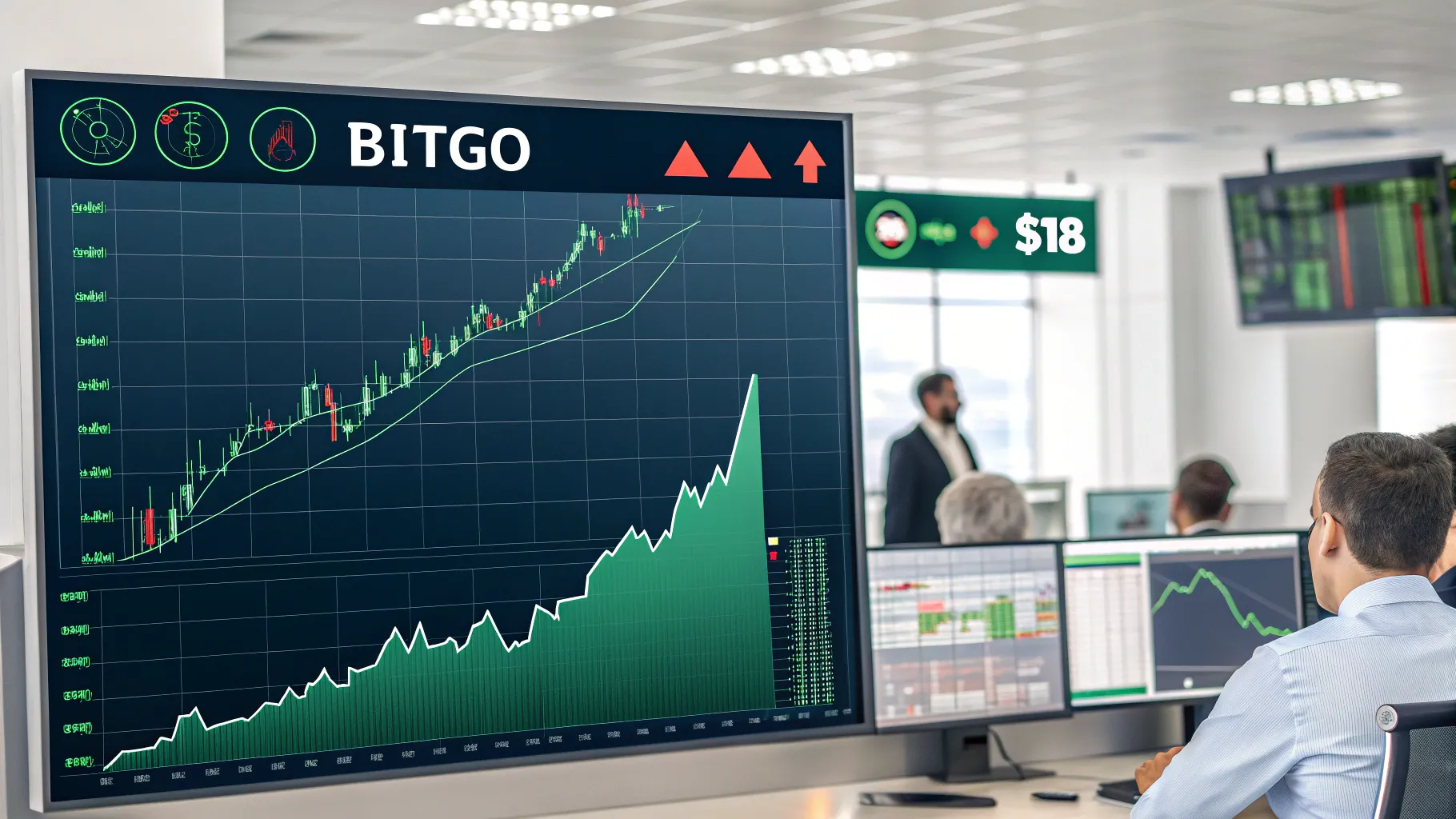
BitGo’s stock jumped as much as 35% above its $18 offer price on its public debut before giving up much of the early advance. The move signals brisk demand at the open and a quick reset as traders reassessed price and risk. The crypto custody company entered public markets amid ongoing swings in digital asset prices and fresh interest from institutional investors.
Market Debut And Price Action
“BitGo’s IPO saw the stock surge as much as 35% above its offer price of $18 a share, before paring back much of those gains.”
The sharp rise at the open shows strong initial bids, a common pattern for new listings in hot sectors. A fast retreat suggests supply met that demand once early buyers took profits. Such reversals often occur when pricing meets the top of investor expectations.
Traders watch the first hour closely for clues. A large gap up can draw momentum buyers, but it can also invite swift selling if the price runs ahead of fundamentals. By the session’s middle stages, shares tended to trade in narrower ranges as market makers balanced orders.
Background On BitGo And Its Sector
BitGo is known for digital asset custody and wallet infrastructure used by institutions. The firm sits in a critical part of crypto’s market plumbing, safeguarding tokens and enabling settlement for funds, trading platforms, and companies that hold digital assets.
Custody services have gained attention as regulators and investors push for stronger safeguards. The approval of spot bitcoin exchange-traded funds earlier this year drew more traditional capital into crypto markets. That shift raised the profile of firms that store assets, manage keys, and support compliance.
IPO appetite has also been improving. Several new listings across tech and finance have tested demand after a slow period. However, new issues remain sensitive to interest rates, growth prospects, and valuation discipline.
Why The Initial Swing Happened
Early price spikes in an IPO can reflect a limited supply of shares available to trade. Underwriters and insiders often hold stock that is subject to lockups, reducing float on day one. That scarcity can amplify moves when demand is strong.
The subsequent pullback may reflect a shift from early enthusiasm to fundamental screens. Investors weigh revenue stability, regulatory exposure, and client concentration in crypto services. They also test how earnings might track with bitcoin’s price cycle, which can affect transaction volumes and custody fees.
- Supply-demand dynamics: Small floats can drive outsized opening moves.
- Profit-taking: Fast gains invite quick sales from short-term traders.
- Valuation checks: Buyers reassess multiples after the first surge.
Regulatory And Industry Considerations
Digital asset firms remain under close oversight. Rules on custody, disclosures, and capital requirements are evolving in key markets. Clearer standards could help institutional adoption, but uncertainty can weigh on valuations.
For custodians, trust and security are the core product. High-profile failures at trading venues in recent years pushed many institutions to separate trading from storage and to require third-party audits. Companies that can demonstrate resilient controls and insurance coverage often enjoy an edge with risk committees.
At the same time, competition is rising. Large exchanges, traditional banks, and specialized fintechs now offer custody. Pricing pressure and integration demands are increasing as clients seek one-stop solutions for trading, reporting, and compliance.
What To Watch Next
Investors will look for trading to stabilize after the first sessions. Consistent volume and a tighter bid-ask spread often signal a more durable price range. The first earnings report will be an important test of revenue mix and cost control.
Key items on the near-term checklist include client growth in institutional accounts, any new partnerships with asset managers, and updates on regulatory approvals. Management’s commentary on security posture and insurance coverage will also draw close attention.
If crypto prices stay steady or rise, custody activity could benefit from higher inflows and transaction volumes. If volatility spikes, risk controls and service uptime will be in focus.
BitGo’s first-day arc—strong pop, quick fade—fits a familiar IPO playbook. The next phase will depend on delivery against growth plans and clarity on rules for digital assets. For now, the debut shows there is demand for picks-and-shovels exposure to crypto, but investors want proof that earnings can hold through cycles.