Most seminars at the Small Business Administration (SBA) usually cover the expected topics: loan application process, compliance paperwork, and business entity structures. However, the workshop that the SBA Sacramento District Office organized, with Victor Migalchan as the speaker on March 24, was on a completely different topic. Migalchan is a brand strategist who also operates Movieverse Entertainment. He spent the entire morning presenting his viewpoint, which, by the way, might upset some traditional marketers: branding, for most small businesses, is broken. It’s not because the owners are not making an effort.
It’s because they are using it as a decorative element, whereas it should serve as business infrastructure. The workshop attracted business owners from across the Sacramento area. The attendees included lawyers, consultants, real estate professionals, several product companies, and a good number of founders who are still at the pre-launch stage. The main theme of the event was “Brand Development towards Monetization. ” This was the first of the events that Migalchan and the SBA Sacramento District Office are planning to make into a series.
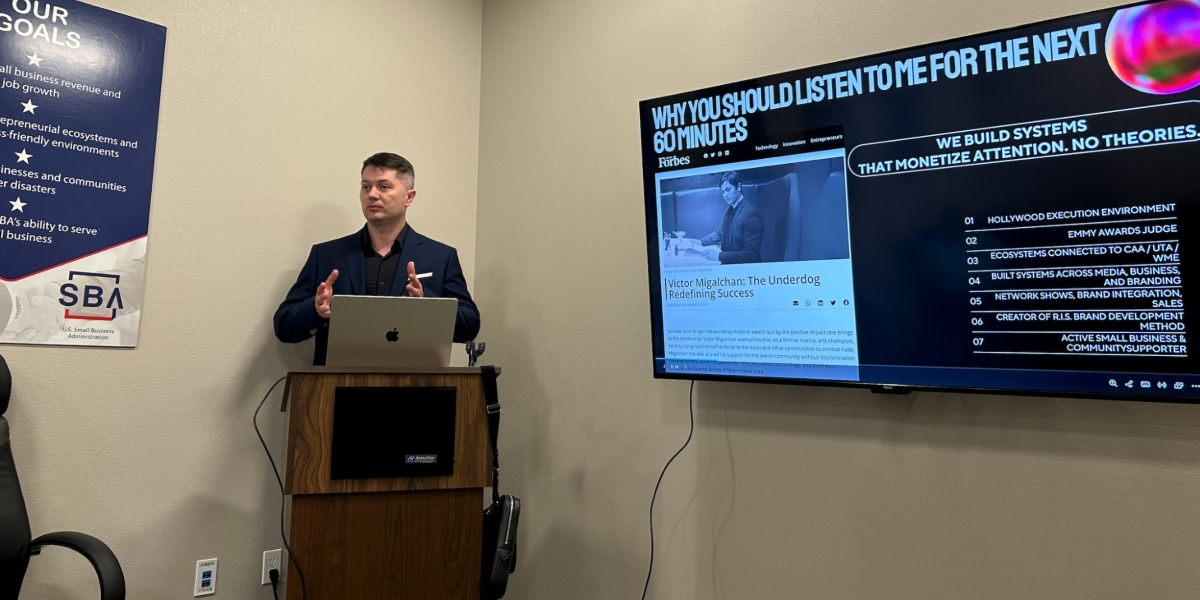
Photo Courtesy: U.S. Small Business Administration
Why Branding Keeps Falling Through the Cracks
Logos and grids are just the flash. Brands live in how you talk to people – every email, every call, every chance to show up.
Luzzi says many businesses have strong offerings but fail to say why they matter. She noted the shift: brand work isn’t optional anymore. It’s now a must-have for small firms, and most SBA programs don’t even cover it properly, no curriculum, no setup, no real guidance.
That mismatch is what triggered the collaboration between Migalchan and the SBA – something that wasn’t on anyone’s radar at first, at least in theory. They realized small business success depends less on flashy designs and more on daily conversations that build trust.
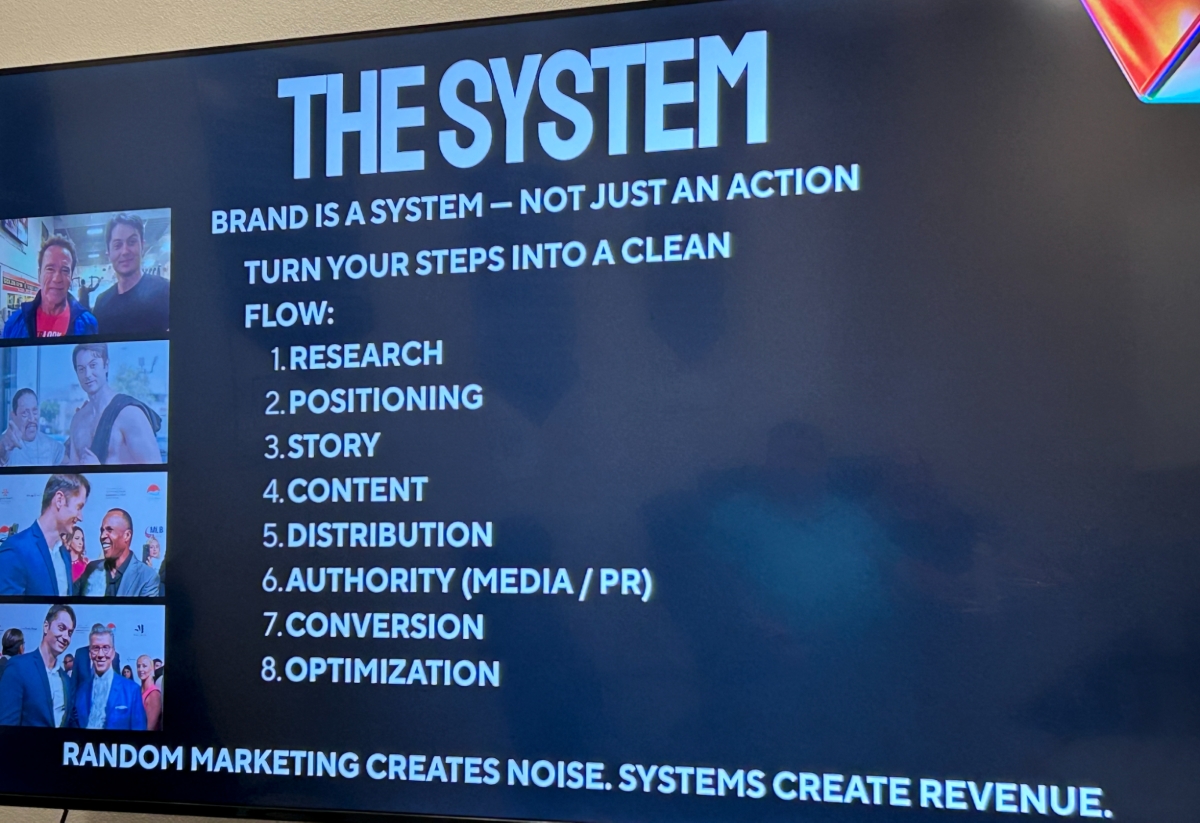
Photo Courtesy: U.S. Small Business Administration
A Partnership Built on a Shared Blind Spot
Migalchan had been contributing to the small business support networks even before they initiated this collaboration. He was involved in programs associated with the SBA and worked with the National Federation of Independent Business. Through such channels, he came into contact with Luzzi’s staff, and a series of discussions ensued regarding the elements they found lacking in the current resource bank.
What they took as their starting point was a simple one. While there is plenty of support available to small businesses in their operations, the same goes for financing. However, a business‘s strategic positioning, i.e., how a business decides to present itself in the market and why that is a key factor in its growth, somehow largely gets neglected.
Luzzi’s department saw that outside specialists could meet needs their current program had not been addressing. By teaming up with subject-matter experts such as Mr. Migalchan, who offered us marketing tools that went beyond traditional ones, we are equipping entrepreneurs with the knowledge necessary to develop sustainable and profitable businesses in our region, ” she stated. The team, which also publishes updates and event recaps on the SBA’s Instagram account, handled promotion and logistics, drawing attendees from the 21 counties the district office serves.
Five Stages, No Fluff
Migalchan didn’t lead the session as a brainstorming session. Instead, he shared a five-stage framework that he used in his consulting practice and explained each stage to the participants one at a time. The first stages are research and positioning. You need to analyze your competitors, understand what really matters to your potential customers, and decide what image the business should project. Without that basis, he said to the room, everything else will be a mere guess.
Story creation follows. No tagline making. Migalchan challenged the attendees to view narratives as stories of attained results and emotional connections rather than mere service and credential lists. Third is execution, where messaging, visuals, and presentation must align with the perception the brand intends to create. When the image and the story contradict each other, trust begins to erode even before any real conversation takes place.
Building visibility and authority is where most small businesses stall, as Migalchan. Content that lives on a site no one sees? It just sits there, useless. Real reach comes from media placements, partnerships, and community channels. Measurement in the fifth stage ties it all together. Brands aren’t finished – they evolve based on actual audience feedback. “Branding is about aligning perception, trust, and visibility,” Migalchan said. “That structure? Probably not optional for small business owners anymore.” The thing is, without real engagement, the whole thing falls apart more or less.
The Moment It Clicked
The room was a melting pot. A couple of pre-launch founders grappling with getting their positioning right from the start were sharing a room with old operators who felt their current brand was not accurately reflecting the direction they wanted to take their business. However, the one common frustration that was almost universal was the fact that people were doing things: posting advertising, updating websites. None of it was connected to any larger strategy.
One participant simply asked the question. If leads are already coming in, why spend more on branding?
Migalchan didn’t dismiss it at all. The two of them actually discussed the matter right there in the room. How long were leads actually taking to convert? How often did pricing become a barrier? Was the quality of the interest generated in-house sufficiently good? One could visibly see the participant’s viewpoint shift with each question. Others were following the same realization.
Luzzi mentioned that the level of interest was maintained throughout. “Attendees reported that the course not only demystified the process but also laid down clear-cut, actionable steps to sharpen their messaging and branding strategy, ” she added. “Many quoted that they had gained a great deal of assurance in how they positioned their businesses to grow.”
What’s Coming Next
March marked the beginning of the event. Migalchan and the SBA Sacramento District Office are developing a broader series that explores in detail the facets of brand strategy. Workshops that tie branding to investor readiness are also planned.
Small business owners do not require more random tactics, Migalchan said. What they need are integrated systems. “Our aim is to assist business owners in creating not only something that is visible but also sustainable and scalable,” Luzzi advised entrepreneurs in the Sacramento area to keep an eye on the SBA Sacramento District Office’s Eventbrite page and website for updates. The subsequent workshop is already in the pipeline.