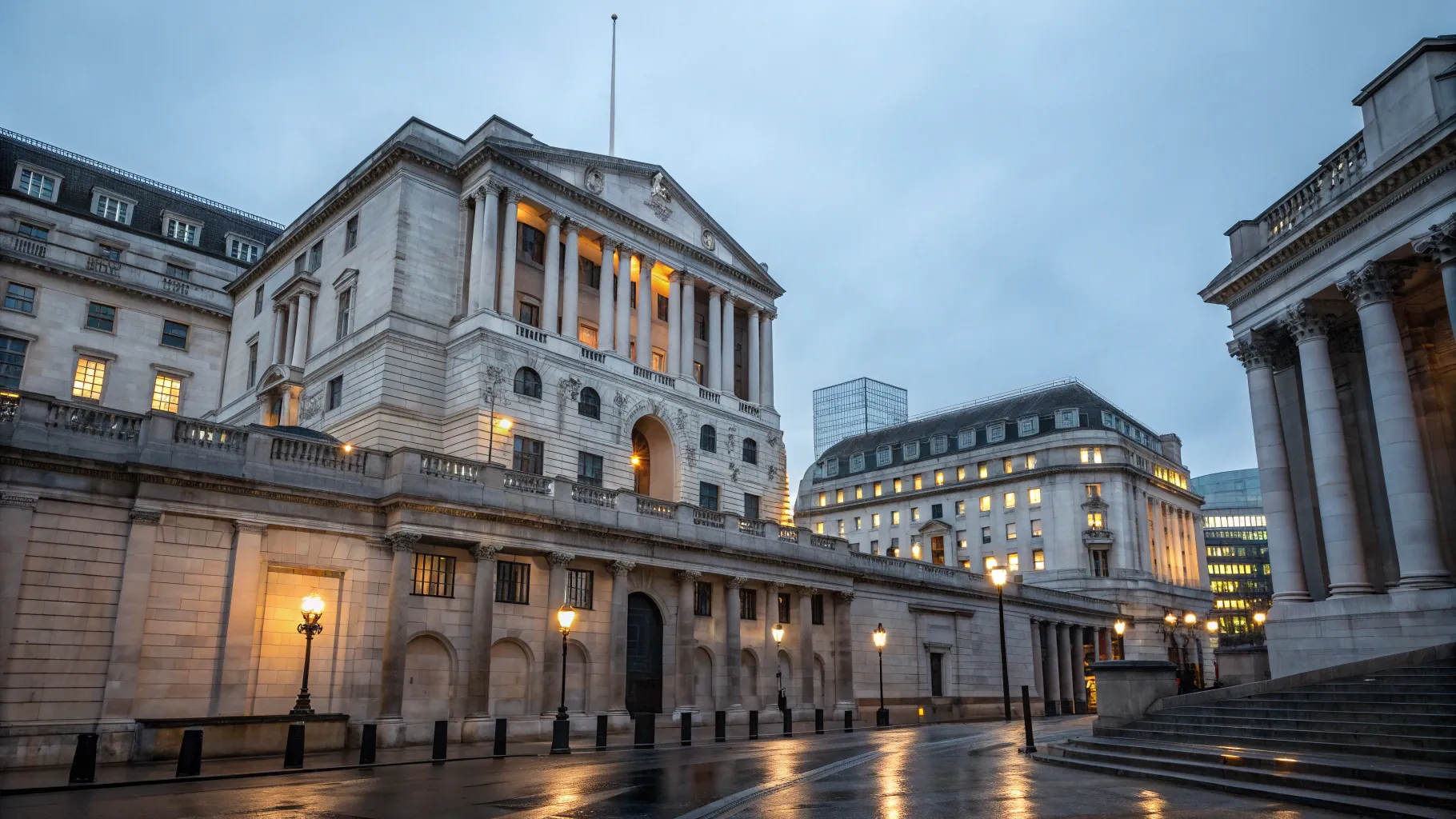
The Bank of England reduced its key interest rate to 3.75 percent, trimming it from 4 percent in a late-year policy decision. The move is aimed at easing borrowing costs after a long fight against inflation. It brings the benchmark to its lowest level since the peak of the tightening cycle.
Officials made the cut in the final policy meeting of 2025, signaling cautious confidence that price pressures are easing while growth remains fragile. The decision affects mortgages, corporate loans, savings rates, and government borrowing costs across the United Kingdom.
What Changed and Why It Matters
“The Bank of England voted to cut interest rates from 4% to 3.75% in its last monetary policy move of 2025.”
The central bank has kept conditions tight since inflation surged after the pandemic and the energy shock in 2022. It now judges that demand has cooled enough to warrant a small cut. The shift is designed to support households and businesses without reigniting price growth.
The Bank’s mandate is to keep inflation near 2 percent. While price growth has slowed from previous highs, officials have warned that services inflation and wage pressures need watching. A quarter-point cut suggests a measured approach rather than a rapid easing cycle.
How We Got Here
From late 2021 to 2023, the Bank raised rates from near zero to a peak of 5.25 percent to contain rising prices. That aggressive cycle squeezed borrowers and cooled the housing market. By 2024, the Bank began discussing the timing of cuts as energy costs fell and supply chains improved.
Despite softer inflation, growth remained uneven. Higher mortgage costs weighed on consumer spending. Business investment improved only slowly due to uncertainty about demand and global trade. With inflation trending lower, policymakers opened the door to carefully calibrated easing.
Impact on Households and Businesses
For many borrowers, the change will be felt gradually. Fixed-rate mortgage holders will see an impact only at renewal. Variable-rate and tracker mortgages should fall more quickly, offering some relief to monthly budgets.
- Homeowners on variable rates could see payments dip modestly.
- First-time buyers may find affordability slightly better, depending on lenders’ pricing.
- Small firms could access loans at lower rates, helping cash flow and hiring plans.
- Savers may see lower returns as banks adjust deposit rates.
Banks and building societies will reprice products in the coming weeks. The speed and extent of pass-through will shape how much support reaches the real economy.
Signals from Policymakers
The quarter-point move appears designed to maintain pressure on inflation while acknowledging the slowdown in activity. It indicates that the Bank is not declaring victory, but sees room to support growth.
Future decisions will depend on incoming data on wages, services inflation, and consumer demand. A sustained drop in core inflation would strengthen the case for further cuts. A surprise uptick could pause or reverse easing.
Comparisons and Market Context
The decision aligns with a broader shift among major central banks that tightened policy earlier in the cycle. Some began trimming rates in mid to late 2024 as inflation cooled. The Bank of England’s move keeps it broadly in step while reflecting UK-specific risks.
Government borrowing costs often adjust quickly after policy moves. Mortgage pricing tends to follow with a lag. The pound’s reaction will depend on investor views about the pace of future cuts and the strength of the UK economy.
What to Watch Next
Key indicators in the months ahead include wage growth, services inflation, retail sales, and mortgage approvals. Lenders’ pricing decisions will show how the policy change filters through to households.
Businesses will gauge whether lower financing costs lift investment plans. Any renewed pressure from energy prices or global supply chains could complicate the policy path.
The rate cut closes a year marked by cautious steps toward easier policy. It offers limited relief for borrowers while reminding markets that inflation risks have not fully faded. The Bank will likely proceed meeting by meeting. The next milestones will be fresh inflation readings and updates on wage growth, which will shape whether this cut is the start of a steady path lower or a pause in a careful recalibration.