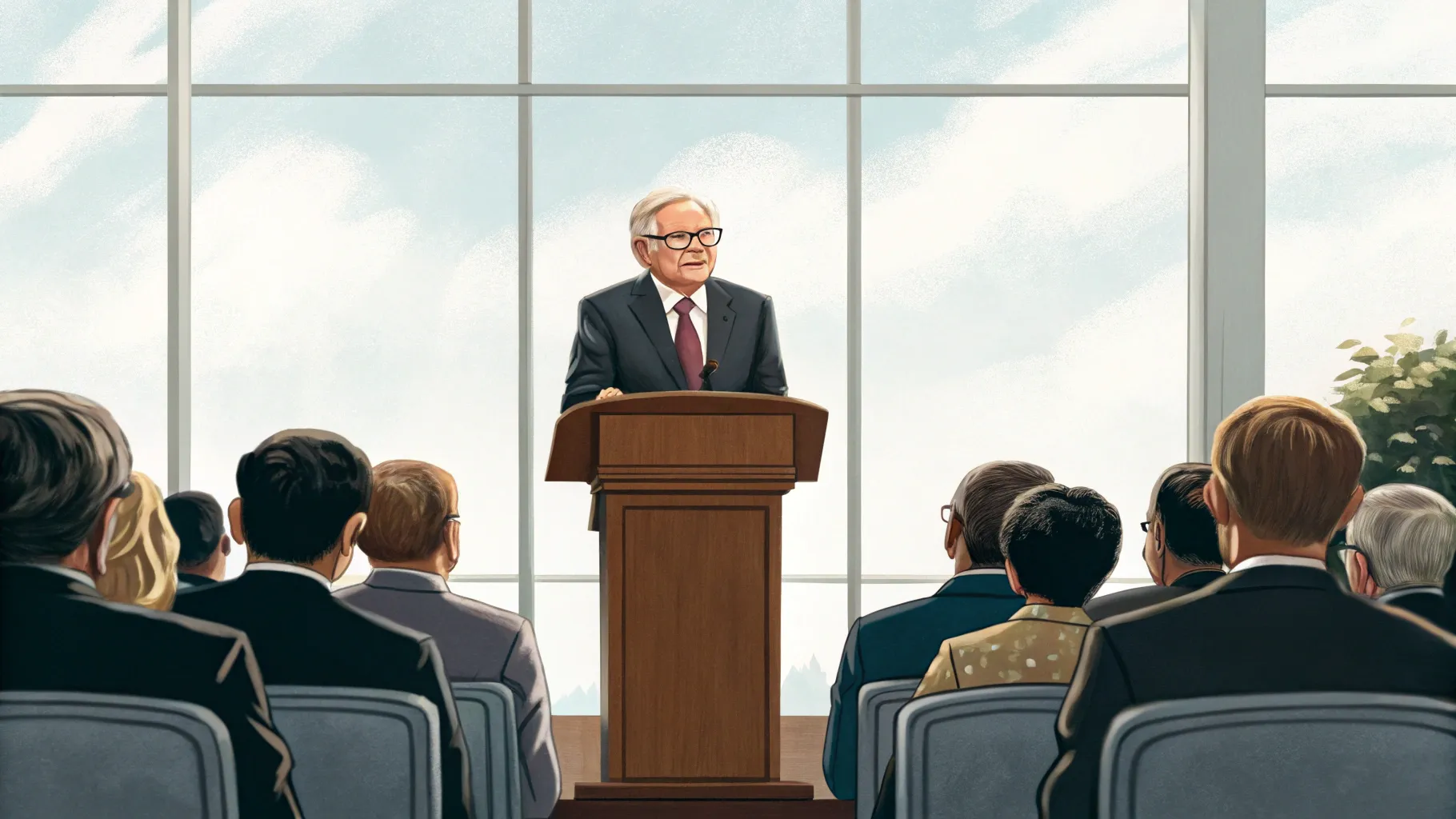
Warren Buffett told shareholders that “everything will be the same” when he steps down, but a recent slide in Berkshire Hathaway’s shares suggests investors are not fully convinced. The move comes as markets weigh whether the company’s long-standing “Buffett premium” can hold without its legendary leader at the helm.
The shift raises a core question: who and what will drive Berkshire’s next chapter. Buffett, who has led the conglomerate for decades, has laid out a succession plan. The company’s mix of insurance, rail, energy, and a large stock portfolio gives it unusual breadth. Yet confidence in Berkshire has long reflected confidence in Buffett.
Succession Plan and Leadership
Buffett has repeatedly said leadership is prepared for his eventual retirement. He has identified Greg Abel, the vice chair who oversees non-insurance operations, as the intended chief executive successor. Ajit Jain leads the insurance businesses, a key engine of Berkshire’s earnings through underwriting profits and investment float.
“Everything will be the same,” Buffett told investors, seeking to reassure them about continuity.
Supporters say the company’s decentralized model should outlast any one person. Its managers run their businesses with wide autonomy. Berkshire’s board has also discussed plans for capital allocation and buybacks in a post-Buffett era. Still, the market often prices uncertainty before facts arrive, and that appears to be happening now.
The So-Called Buffett Premium
For years, Berkshire has traded with what many investors call a “Buffett premium.” That term reflects a belief that Buffett’s judgment improves capital allocation, risk control, and long-term returns. The premium also stems from his public trust with shareholders. His annual letters and candid meetings have been part of the company’s identity.
Analysts say the stock’s recent weakness hints at worries that the premium could fade. Investors are asking whether future leaders will deploy Berkshire’s large cash reserves as skillfully, maintain discipline on acquisitions, and resist pressure to chase hot markets.
Berkshire’s scale complicates the task. Its insurance float supports investment returns, but it also requires careful underwriting. The energy business is capital intensive. The railroad, BNSF, faces cyclical freight demand. These units demand different skills and different capital plans.
Investor Concerns and Market Signals
Some portfolio managers argue that the company’s structure and culture can preserve most of the premium, especially if the successors keep buybacks and cautious deal-making intact. Others warn that a leadership change can reshape market psychology even if operations barely change.
History offers mixed lessons. Companies tied to iconic leaders often face a valuation reset as successors prove themselves. Shares can lag during that trial period. The reverse can also occur when new leaders unlock value or sharpen focus.
- Risk: a lower valuation multiple if confidence in capital allocation slips.
- Counterpoint: disciplined buybacks and steady underwriting could support earnings and book value growth.
Buffett’s track record still influences today’s pricing. But as his direct role recedes, investors will test whether Berkshire’s advantages—patient capital, tax-efficient structure, and decentralized operations—stand on their own.
What to Watch
Several markers may guide sentiment from here. First, clarity on how successors communicate. Regular, plain-spoken updates could reinforce trust. Second, evidence of steady underwriting results and investment returns. Third, the pace and price of any major acquisitions. Overpaying would erode the premium faster than any speech might repair.
Buyback policy will also matter. Berkshire has used repurchases to deploy cash when shares trade below intrinsic value. If that framework persists, it could set a floor under the stock and signal discipline in capital use.
Finally, the mix of the equity portfolio bears watching. Large concentrated positions have powered past gains but introduce volatility. A consistent approach to concentration and risk controls will shape how investors judge the next era.
For now, the share slide acts as a referendum on the handoff. Buffett has offered assurance. Markets are asking for proof. If the team under Greg Abel and Ajit Jain can deliver steady results and measured deals, the premium may endure—perhaps smaller, perhaps different, but supported by performance. If not, Berkshire could settle into a more ordinary valuation tied closely to the earnings of its operating companies.
The coming quarters will provide the first tests. Investors will look for calm execution, transparent communication, and prudent capital allocation. Those signals, more than any promise, will decide how much of the Buffett premium survives the transition.