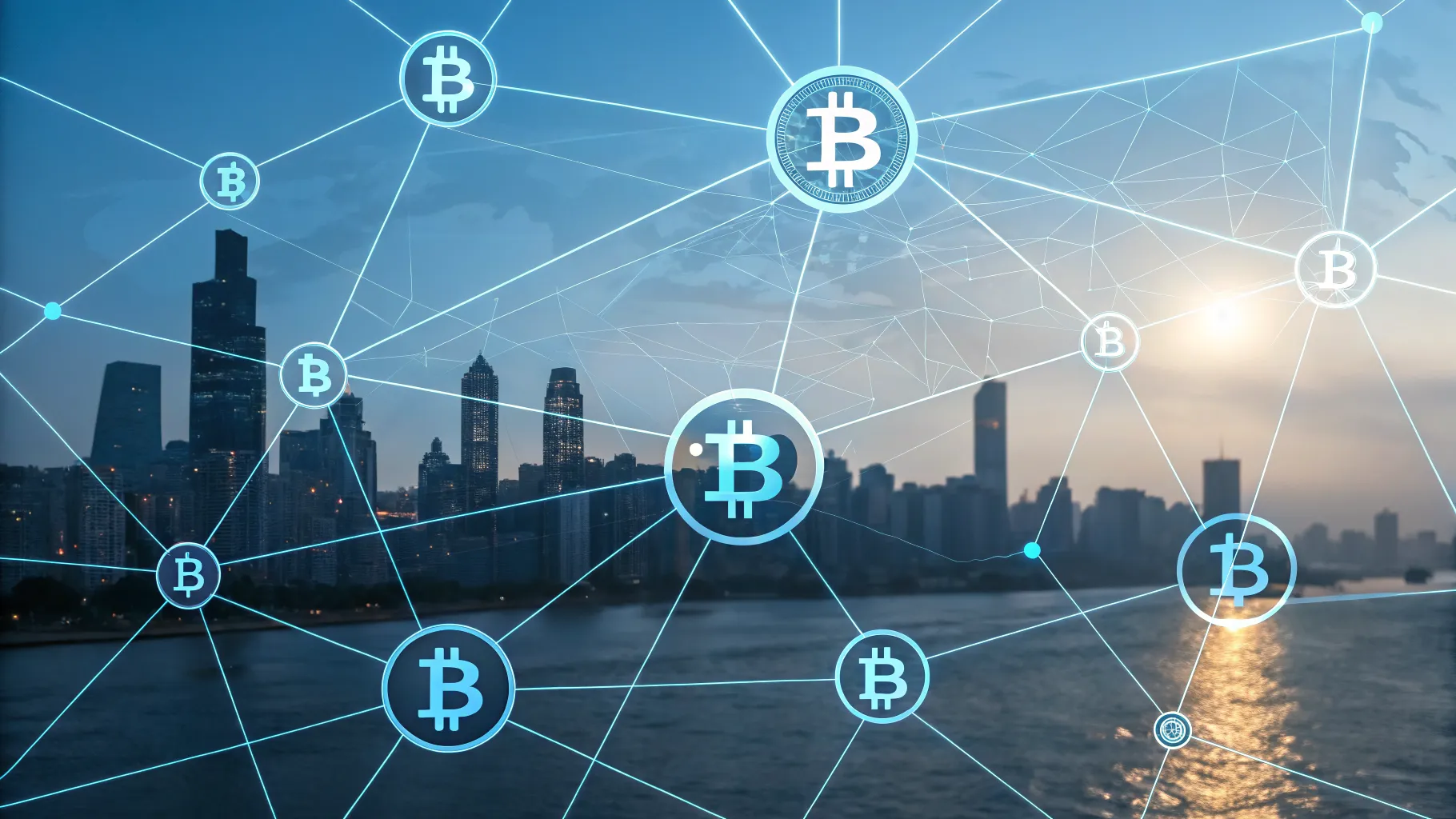
As interest in digital money rises again, a core idea is drawing fresh attention: Bitcoin moves value from person to person without a central gatekeeper. That design is changing how people think about money, power, and trust online.
Supporters say the system offers permissionless access and lower fees. Critics warn about price swings, scams, and energy costs. Regulators are racing to catch up as the market grows and more firms build on top of the network.
What Makes Bitcoin Different
“Bitcoin runs on a P2P network instead of being controlled by the government, a bank, etc.”
“It lets you send value directly to someone else without a middleman.”
Bitcoin launched in 2009 with software published under the name Satoshi Nakamoto. The network records transactions on a public ledger called a blockchain. Thousands of nodes keep copies of that ledger and check each new block of transactions.
There is no company in charge. The code is open source. Anyone can run a node, hold coins, and verify payments. This design removes the single point of failure that exists in many payment systems run by a bank or a card network.
How the System Works
Users control coins with private keys. When they send a payment, the network checks that the keys match the funds. Miners group transactions into blocks and secure them with computing power. This process, called proof-of-work, makes it hard to cheat the record.
Fees rise or fall with network demand. At busy times, users may pay more to get faster confirmation. Tools like the Lightning Network aim to lower costs and speed up small payments by settling many transfers off-chain and then closing them on-chain.
A Decade of Growth and Scrutiny
Bitcoin has moved from a niche experiment to a global asset tracked by major firms. Some public companies hold it in treasury. Exchange-traded products have given more investors access. Payment apps now let users buy, sell, and transfer small amounts with a few taps.
Regulators have stepped in as the market scales. Agencies in the United States, Europe, and Asia have added rules on custody, disclosures, and anti-money-laundering checks. Enforcement actions against fraud have increased following high-profile failures and hacks.
Supporters See Open Access; Critics See Risks
Fans argue that a peer-to-peer system can help people who lack bank accounts. They point to fast cross-border transfers and savings protected from local currency shocks.
Critics raise different concerns. Prices can swing by double digits in days. Scams and phishing drain funds with little recourse. Keys lost or stolen often mean permanent loss. Consumer protection varies by country.
- Energy use from mining remains a flash point.
- Tax rules differ across borders and can confuse users.
- Law enforcement tracks illicit flows, but privacy tools complicate this work.
Real-World Use and Case Studies
Workers in some countries now receive part of their pay in Bitcoin. Small merchants accept it to cut card fees or reach customers abroad. In high-inflation economies, some households use it to move savings into an asset with a fixed supply.
At the same time, outages at exchanges and meme-fueled rallies show the market’s fragility. These episodes push better security, clearer disclosures, and safer custody. Industry groups say audits and proof-of-reserves can build trust, though standards are still forming.
What to Watch Next
Developers are improving tools for faster and cheaper payments. Policymakers are weighing stablecoin rules and clearer tax guidance. More banks are exploring custody and settlement services for institutions that want exposure without holding private keys.
If fees fall and tools become easier, daily use could grow. If regulation tightens or energy rules bite, growth could slow. Education will matter either way, since user mistakes often lead to loss.
Bitcoin’s core idea—a network that lets people exchange value without a middleman—continues to drive debate. The next phase will test whether that idea can scale, stay secure, and serve both retail users and large institutions under closer oversight.