It is rare for patients to see how hospital operations have changed over time. Yet behind the scenes, the forces defining such environments have grown increasingly acute: worker shortages, increased administrative requirements, and the escalating complexity of documentation demands. All of these elements compete with time at the patient’s bedside, which is the most essential resource in healthcare.
Hospitals have historically attempted to handle these difficulties through additive approaches: more systems, more applications, more digital point solutions. However, fragmentation is an unforeseen result of this layering. Efficiency suffers when systems are unable to interact, and instead of being assisted by technology, clinicians are forced to navigate it. The sector’s issue is now as much architectural as it is clinical.
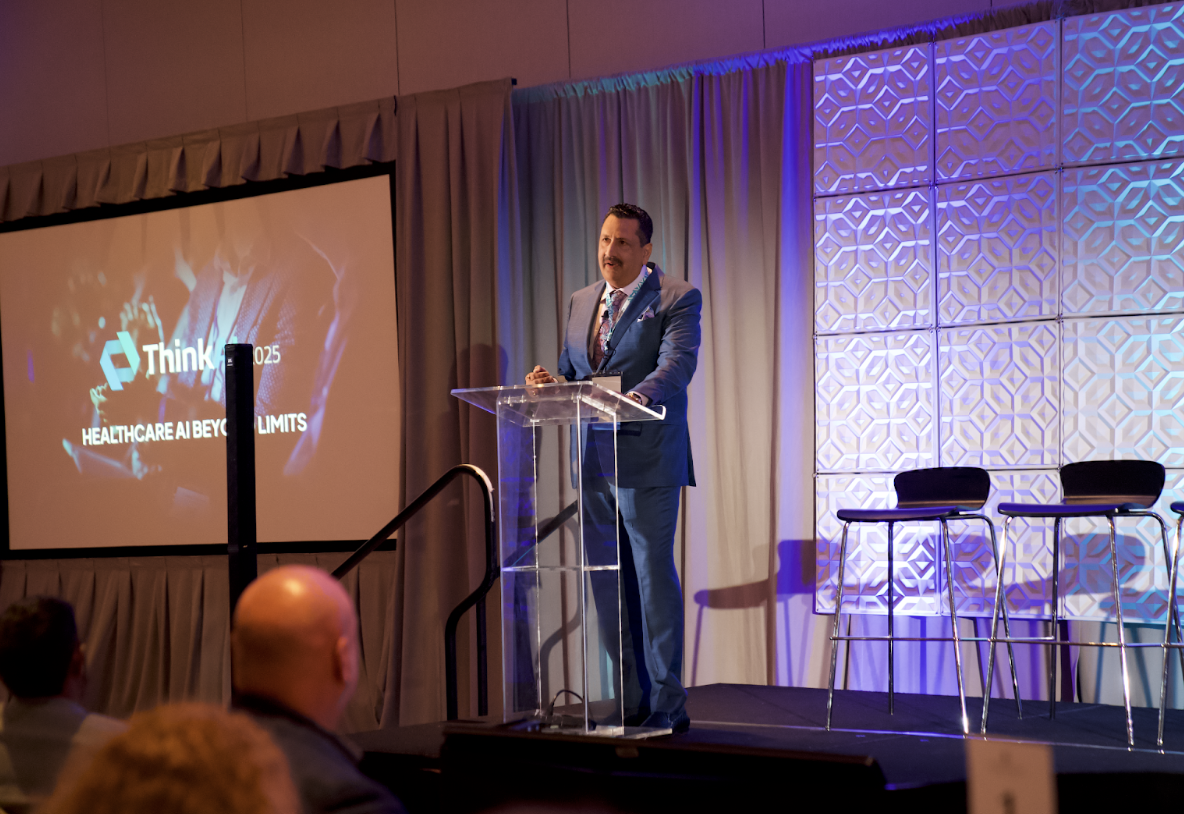
Andor Health CEO Raj Toleti Delivers a Keynote to Hospital Thought Leaders Nationwide At Think AI
This conflict was a reoccurring issue at the ThinkAI, Andor Health’s user group and thought leadership convention in Orlando, where executives from big systems including Sentara Health, Ballad Health, and Deaconess Health investigated what meaningful parallel assistance for clinical teams may look like. ThinkAndor®, an interoperable agentic AI platform developed by Andor Health to function across workflows rather than inside a single domain, was the focus of their attention.
The platform’s design offers simultaneous functions – virtual nursing support, real-time recording, EMR insights, and automated reporting — allowing hospitals to grow capacity without interrupting established bedside procedures. Rather of substitute for clinical care, the platform absorbs the time-intensive, non-clinical duties that dilute it.
For health systems negotiating high demand and limited staff availability, the early data has been enlightening. Sentara Health claimed that after five months of implementation, more than 11,119 hours of digital nursing aid were provided, and more than 7,000 hours were returned to nurses themselves. Sentara Health went from having no virtual care infrastructure to fully digitized support throughout its network.
The ramifications go beyond personnel relief. Vizient’s Dr. Barbara Seymour stressed that mainstream AI adoption will depend on addressing nursing’s special requirements: workflow alignment, data accuracy, and cost effectiveness. Rather than requiring clinicians to modify their practices to accommodate new technologies, these criteria reflect a rising concern that technology treatments must blend in seamlessly with clinical sequences.
As hospitals evaluate how operational assistance is supplied, ThinkAndor® indicates a trend toward comprehensive, system-level infrastructure. ThinkAndor® is intended to automate care while ensuring that physicians can use it efficiently. The model suggests that in the future, parallel assistance will be a necessary component of everyday hospital operations rather than an exception.