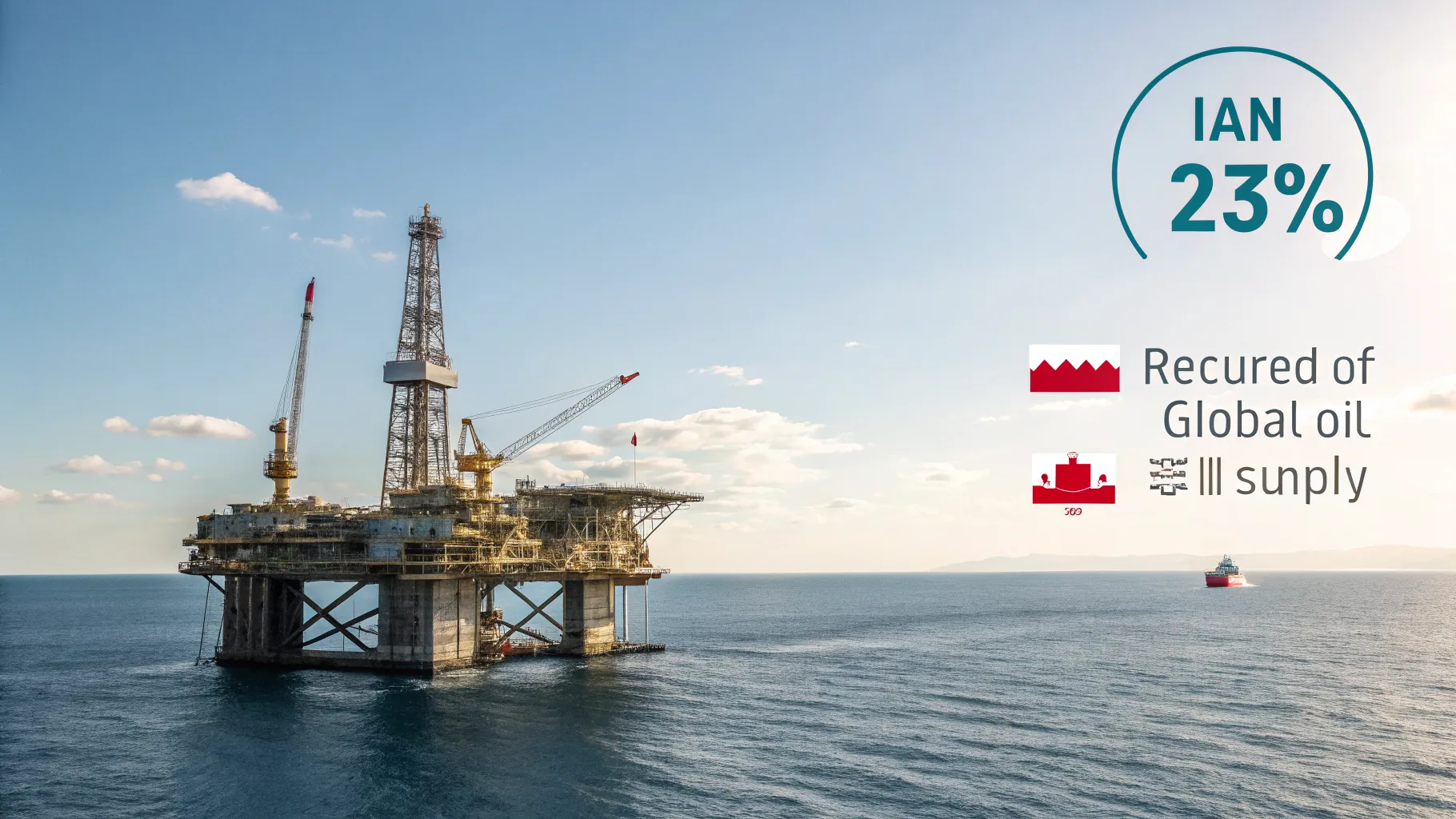
A sudden shock to energy markets is rippling across the world as the conflict involving Iran removes a vast share of crude from the market. BloombergNEF estimates the disruption has cut global oil supply by about 9 million barrels per day, a scale that could reshape prices, trade flows, and economic outlooks in the months ahead.
The estimate, shared as fighting intensifies in a key producing region, signals one of the largest modern supply hits. It arrives as governments and companies brace for tighter inventories, shipping delays, and rising fuel costs.
“The Iran war has cut global oil supply by about 9 million barrels per day, according to BloombergNEF estimates.”
What a 9 Million-Barrel Shock Means
Global oil demand in recent years has hovered near 100 million barrels per day. A shortfall of 9 million barrels per day would represent roughly a tenth of that flow. Such a loss pressures prices, squeezes refiners, and forces importers to seek barrels farther from home, often at higher transport costs.
Analysts note that even partial restoration would still leave the market tight. The size of the disruption suggests governments could turn to emergency stockpiles or diplomatic efforts to redirect supply.
Market Impact and Price Pressures
Traders typically respond to large supply shocks with a surge in futures prices and a jump in volatility. Rising crude prices tend to lift gasoline, diesel, and jet fuel costs with a lag of weeks. That raises freight and travel costs and can spill into food prices through higher transport and fertilizer expenses.
Refiners may adjust output to protect margins, while some petrochemical plants face feedstock shortages. Airlines and shipping firms often hedge fuel, but sustained tightness erodes that cushion over time.
Economic Stakes for Producers and Importers
Major importers in Asia and Europe face tougher procurement and could draw down inventories. Emerging economies with weaker currencies are especially exposed to higher dollar-denominated energy costs, which can strain budgets and widen trade deficits.
Some producers outside the conflict zone may benefit from higher prices if they can raise output. Yet pipeline and port limits, maintenance schedules, and environmental rules can cap short-term gains.
Possible Policy Responses
Governments have a few levers when supply tightens at this scale. They can release strategic reserves, ease shipping bottlenecks, and adjust fuel taxes or subsidies to cushion consumers. Diplomatic outreach to large producers is another path, seeking temporary production increases or reallocations of existing cargoes.
- Strategic stockpile releases to stabilize supply
- Targeted relief for transport and heating fuels
- Temporary waivers to clear shipping and insurance hurdles
- Coordinated action through international energy forums
Logistics, Shipping, and Insurance
Conflict in or near key waterways can slow transit and raise insurance costs. Rerouted tankers may take longer paths, reducing the effective supply available each week. Storage hubs often see rapid drawdowns as buyers cover near-term needs, then rebuild stocks at higher prices later.
Historical Context and Risk Scenarios
Large oil shocks have preceded slowdowns or recessions in the past, including the 1970s embargo episodes and the 1990 Gulf crisis. While every event differs, the common thread is tighter supply feeding through to inflation and strained consumer demand.
Two broad scenarios stand out. A rapid de-escalation could restore some output and shipping capacity, easing price spikes. A prolonged conflict could keep the market short, prompting repeated stockpile draws and deeper demand destruction.
Competing Views From the Market
Some market participants warn that a 9 million barrel per day gap could lift prices sharply and persistently if spare capacity stays idle. Others argue that a mix of spare capacity, strategic reserves, and demand restraint could soften the blow. Much depends on security conditions, the speed of repairs, and coordinated policy action.
What to Watch Next
Key indicators in the coming weeks include official inventory data, refinery utilization rates, shipping traffic through critical chokepoints, and any announcements on strategic reserve releases. Forward curves for crude and refined products will signal whether traders expect a quick recovery or a long disruption.
The headline estimate is stark and simple. If the cut holds near 9 million barrels per day, energy costs are likely to rise, inflation risks will build, and growth forecasts may slip. If output or logistics recover, the market could stabilize more quickly. Policymakers and businesses will track each new data point as they decide whether to conserve supplies, adjust budgets, or seek alternative fuels.