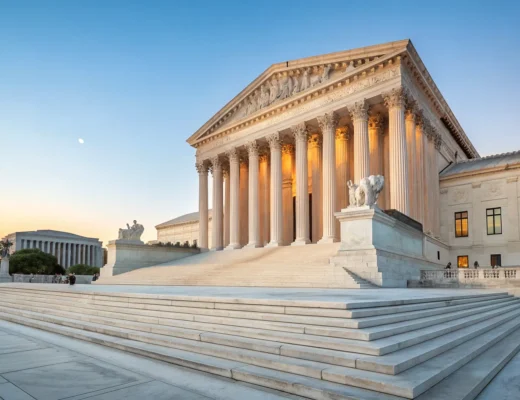
The White House is signaling it has backup plans to keep tariffs in place even if the Supreme Court limits the president’s authority. Former Council of Economic Advisers Chair Kevin Hassett said the administration could switch legal grounds if needed. His comments point to a high-stakes fight over trade policy and presidential power that could affect prices, supply chains, and diplomacy.
“The White House could deploy alternative tariff authorities if the Supreme Court rules against President Donald Trump,” Kevin Hassett said.
At issue is how far a president can go in setting tariffs without new action by Congress. The case has drawn interest from manufacturers, importers, and farm groups. They want clarity on what rules will govern sudden changes that can disrupt markets.
Background: A Long Debate Over Tariff Authority
Presidents have used several trade laws to set or raise tariffs over the last half century. The most cited is Section 232 of the Trade Expansion Act of 1962, which allows tariffs for national security. Another tool is Section 301 of the Trade Act of 1974, used to answer unfair trade practices. Section 201 safeguards can also protect domestic industries from import surges.
Courts have upheld broad discretion on these laws in the past. But critics say Congress never meant for open-ended tariff actions that last for years. Supporters argue that fast-moving trade shocks require swift executive action. The Supreme Court’s decision could narrow or preserve that discretion.
What Alternatives Are on the Table
Hassett’s remarks suggest the White House is ready to shift to other legal paths if the Court blocks one route. Trade lawyers say several statutes could be used, each with different timelines and standards.
- Section 301: Targets unfair trade practices after a review by the U.S. Trade Representative.
- Section 232: Allows tariffs to address risks tied to national security after a Commerce Department inquiry.
- Section 201: Temporary measures to help industries adjust to import surges.
- IEEPA: The International Emergency Economic Powers Act, used mainly for sanctions, with tighter guardrails for trade use.
Switching legal authority may keep some tariffs in place, but it could require new findings, notices, or hearings. That process could delay action or change the scope of the measures.
Legal Stakes at the High Court
The Court’s ruling will likely turn on separation of powers and how much direction Congress gave in past trade laws. A ruling against broad presidential power could force more specific findings and stricter timelines. It might also push Congress to write clearer rules.
Business groups split on the issue. Importers warn that surprise tariffs act like taxes on consumers. Some manufacturers and unions say tariffs are needed to counter subsidies abroad and protect jobs.
Economic Impact and Industry Reactions
Tariffs affect prices, sourcing decisions, and investment. Firms that rely on imported parts face higher costs. Some pass those costs to customers. Others shift production or seek new suppliers.
Farm groups worry about retaliation from trading partners, which can hit exports of soybeans, pork, and dairy. Retailers warn of higher shelf prices if current tariffs expand to more consumer goods.
Supporters point to reshoring trends and new factory announcements as signs that tariffs can nudge production home. Skeptics counter that gains are uneven and that uncertainty weighs on small businesses.
What to Watch Next
If the Court narrows presidential authority, expect the administration to cite a different statute and start fresh reviews. That would keep trade policy active but add procedural steps. If the Court upholds broad powers, tariffs already in place could continue without major changes.
All sides are preparing for either outcome. Agencies may draft backup findings. Companies are running pricing and supply scenarios. Allies and rivals are watching for signals that could affect talks at the World Trade Organization and bilateral negotiations.
Hassett’s comments show the White House is not planning to step back from tariff tools. The immediate question is which legal door it will open. The larger question is whether Congress will reclaim more control over trade or leave it with the president.
The decision will shape import costs and bargaining power for years. Readers should watch for the legal basis cited in any new action, the timelines for review, and any carve-outs for key industries. Those details will determine who pays, who benefits, and how long the measures last.