
The modern workspace looks nothing like it did a decade ago. Employees now log in from home offices, shared workspaces, airports, and coffee shops. Core business applications live in the cloud, sensitive data is shared across collaboration tools, and access is no longer limited to a single office network.
This flexibility has helped companies scale faster, but it has also introduced new security risks. A single compromised password, a convincing phishing email, or an unsecured device can expose an entire organization. For founders and operators, cybersecurity is no longer an IT problem; it is a matter of business survival.
Below are five cybersecurity platforms that help protect modern, distributed workspaces. Each takes a different approach, depending on where risk is most likely to appear across users, devices, networks, and cloud services.
Check Point
Check Point is one of the most established names in cybersecurity and is widely known for its prevention-first approach. Rather than focusing only on detecting attacks after they happen, Check Point prioritizes stopping threats before employees ever interact with them.
Its Infinity platform brings together security for networks, cloud environments, endpoints, email, and collaboration tools under a single framework. This allows threat intelligence to be shared across the entire workspace, improving protection against phishing, malware, and ransomware.
For companies with distributed teams, this unified approach helps reduce blind spots and simplifies security management.
Core strengths
- Strong phishing and malware prevention
- Protection for email and collaboration tools
- Unified security across users, cloud, and networks
Best for
Growing companies and enterprises want to prevent attacks early rather than respond after damage is done.
Cisco
Cisco offers a broad security ecosystem designed to protect users, devices, networks, and communication tools. It is especially common in larger organizations with complex infrastructure.
Cisco’s security tools share intelligence in real time, helping teams identify threats quickly and prevent them from spreading. This is supported by Cisco Talos, one of the largest commercial threat intelligence teams in the world, which continuously analyzes global attack activity.
For organizations already using Cisco networking equipment, this integrated visibility can be a significant advantage.
Core strengths
- Deep visibility across networks and endpoints
- Strong email and phishing protection
- Threat intelligence backed by global research
Best for
Large organizations or companies with complex environments, especially those already using Cisco infrastructure.
IBM
IBM approaches workspace security through identity, access control, and enterprise-grade governance. Its solutions are often used by organizations that operate in regulated industries or manage sensitive data.
IBM Security Verify focuses on controlling who can access systems, applications, and data, and under what conditions. By enforcing strong authentication and access policies, IBM helps reduce the impact of compromised credentials and limits how far attackers can move inside an organization.
This approach aligns well with zero-trust security models.
Core strengths
- Identity and access management at scale
- Centralized governance and policy control
- Support for compliance-driven environments
Best for
Enterprises and regulated organizations that want identity to be the foundation of their workspace security strategy.
SentinelOne
SentinelOne is best known for its endpoint security and automated threat response capabilities. It is designed for teams that want clarity and automation rather than constant alert fatigue.
Using behavior-based detection, SentinelOne identifies suspicious activity across laptops, servers, and cloud workloads. Its automated response features can contain threats without waiting for human intervention, helping teams act faster when incidents occur.
This makes it a strong option for remote or hybrid organizations with many devices to manage.
Core strengths
- Behavior-based detection
- Automated threat containment
- Clear visibility into attack activity
Best for
Remote and hybrid companies with lean security teams that need fast detection and response.
Fortinet
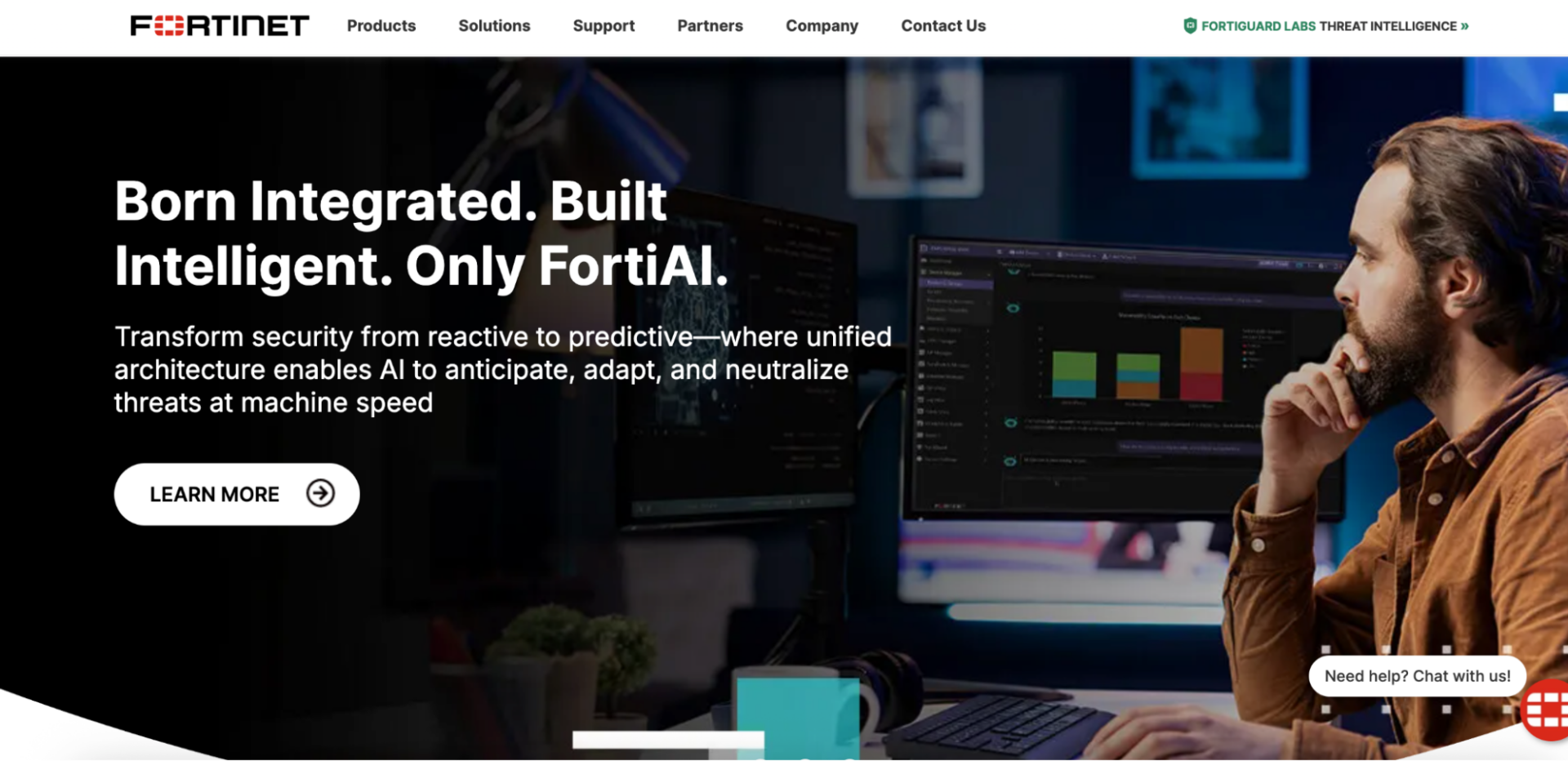
Fortinet provides an integrated set of security tools designed to work together under a single platform. Its Security Fabric connects network, endpoint, email, and communication security into one environment.
This approach helps reduce complexity by giving security teams a unified view of threats across the workspace. Fortinet also leverages shared threat intelligence to improve detection and response across its products.
For organizations looking to consolidate vendors, this can significantly simplify operations.
Core strengths
- Integrated security across multiple layers
- Shared threat intelligence
- Centralized policy enforcement
Best for
Mid-market and enterprise organizations are looking for an all-in-one security ecosystem.
Bottom Line
There is no single cybersecurity tool that protects every modern workspace in the same way. The right choice depends on how your team works, where your data lives, and which risks matter most.
Some organizations benefit most from prevention-first platforms that stop threats before employees are exposed. Others need better visibility across complex infrastructure, stronger identity controls, or an automated response for distributed teams.
The best cybersecurity tools are the ones that align with how your business operates today. Start by identifying where your biggest risks are and choosing a platform that addresses those areas directly.
Photo by Jefferson Santos; Unsplash