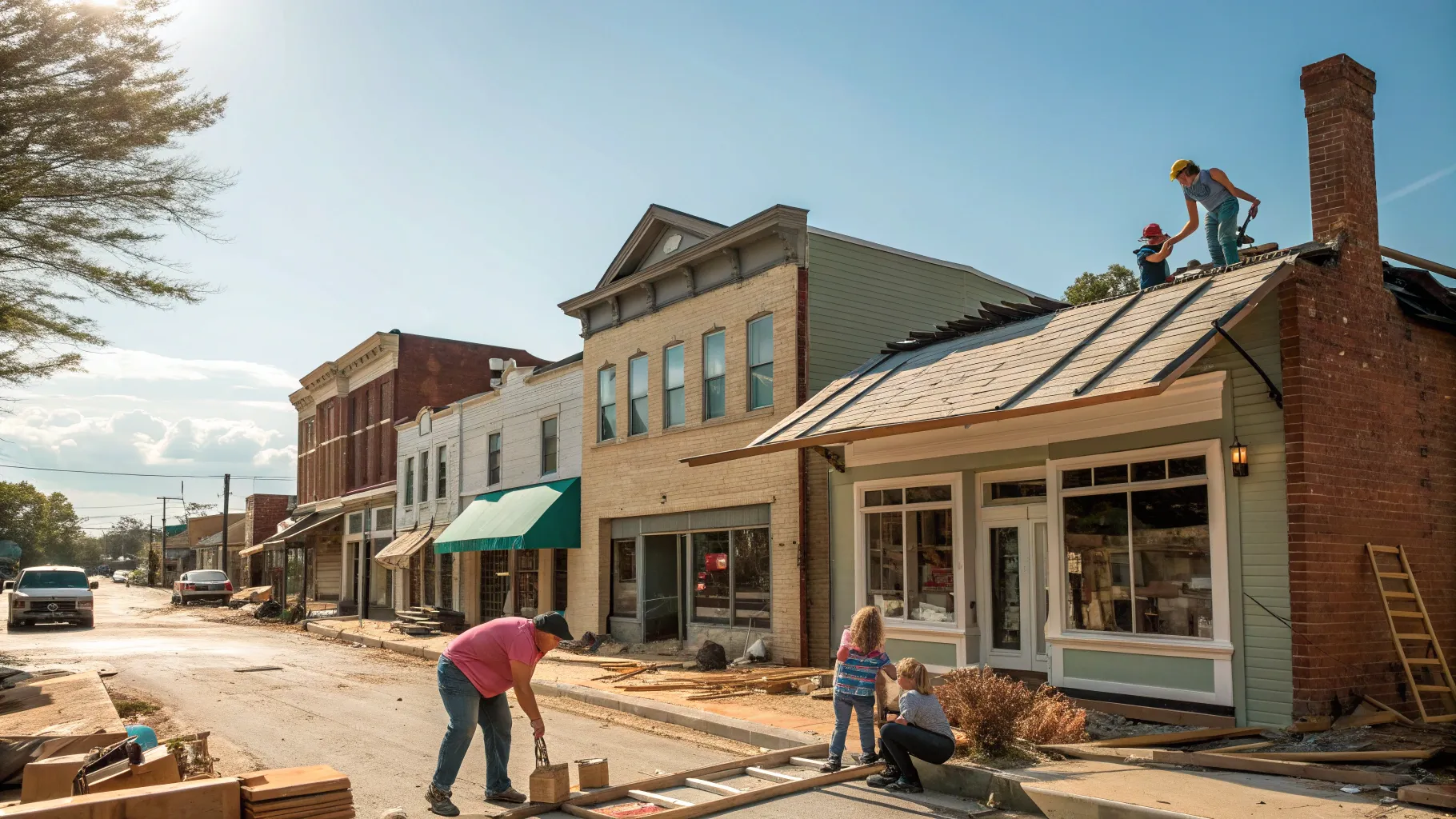
One year after Hurricane Helene tore through North Carolina, families and small businesses are still repairing homes, reopening storefronts, and restoring daily life across hard-hit towns. The storm struck communities statewide and left damage estimated in the billions, setting off a long recovery that continues today.
From the coast to the foothills, residents describe a grind of insurance claims, contractor shortages, and rising rebuilding costs. Local officials point to lingering gaps in housing and infrastructure that slow recovery and keep some families displaced. The work ahead remains large, but progress is visible in rebuilt schools, reopened roads, and community-led relief efforts.
Recovery Progress, One Year On
“North Carolina families and business continue rebuilding one year after Hurricane Helene devastated communities and caused billions of dollars’ worth of damage.”
That reality is evident in neighborhoods where construction crews still fill streets and plywood still covers windows. Many homeowners are on their second or third round of repairs as supply costs fluctuate. Business owners report steady foot traffic returning, though some corridors remain patchy, with reopened shops next to shuttered storefronts.
Local leaders say the pace varies by county. Communities with stronger tax bases moved faster on public works projects. Rural areas, where incomes and resources are thinner, have taken longer to rebuild water systems, bridges, and clinics.
Economic Strain On Small Businesses
Hurricane losses cut deep into cash reserves for mom-and-pop stores, restaurants, and service providers. Interrupted supply lines and damaged inventory led to prolonged closures for many. While grants and loans helped some keep workers on payroll, others scaled back hours or shut down entirely.
Owners say the recovery is steady but fragile. Insurance payouts did not always match repair estimates, and some policies excluded flood damage. That left gaps businesses tried to fill with savings or community fundraisers.
- Supply chain swings raised costs for lumber, roofing, and electrical parts.
- Labor shortages delayed reopening timelines across multiple sectors.
- Tourism corridors saw uneven visitor returns, affecting seasonal jobs.
Housing, Infrastructure, And Public Services
Housing remains the central challenge. Families in low-lying areas face higher rebuilding standards and elevation requirements, which can be expensive. Renters affected by the storm often had fewer options and less access to assistance, leading to longer displacement.
Infrastructure repair moved faster in some places than others. Main thoroughfares reopened within weeks, but secondary roads, culverts, and local bridges took months. Utilities restored service quickly in urban areas, while remote communities reported longer outages and slower grid repairs.
Schools and clinics also felt the strain. Temporary classrooms and mobile health units filled gaps, but permanent fixes require sustained funding and planning.
Aid, Insurance, And The Funding Patchwork
Recovery funds came from a mix of federal, state, and local programs, along with private charities and volunteer groups. Officials caution that navigating different rules and timelines remains a major hurdle for residents who lack time or legal help to complete complex applications.
Insurance remains a sore point. Homeowners with flood exclusions faced the steepest bills. Others found deductibles higher than expected. Advocates argue for clearer policy terms and stronger consumer protections before the next storm season.
Climate Risks And What Comes Next
Emergency managers warn that more frequent and intense storms are testing older infrastructure and building codes. Communities across North Carolina are weighing higher standards for new construction, voluntary buyouts in the most flood-prone areas, and stronger local emergency plans.
Resilience projects under discussion include elevating homes, improving stormwater systems, and hardening critical facilities. Officials and community groups emphasize that preparation and clear communication can save lives and reduce long-term costs.
Community Resilience On Display
Faith groups, nonprofits, and volunteers have been central to the recovery. They organized supply drives, offered legal clinics for aid applications, and set up rebuild teams for elderly and disabled residents. That network helped reach households that might have fallen through the cracks.
Business alliances formed buying co-ops to secure materials, and neighborhood groups pooled tools and labor for common repairs. These efforts sped up progress and kept more money circulating locally.
As the state marks a year since Helene, the picture is mixed: stronger systems in some places, ongoing hardship in others. The most urgent needs remain housing, targeted aid for small businesses, and investments in infrastructure that can stand up to the next big storm. North Carolina’s recovery is advancing, one project at a time, with residents watching the calendar and the weather—and pressing for the resources to finish the job.