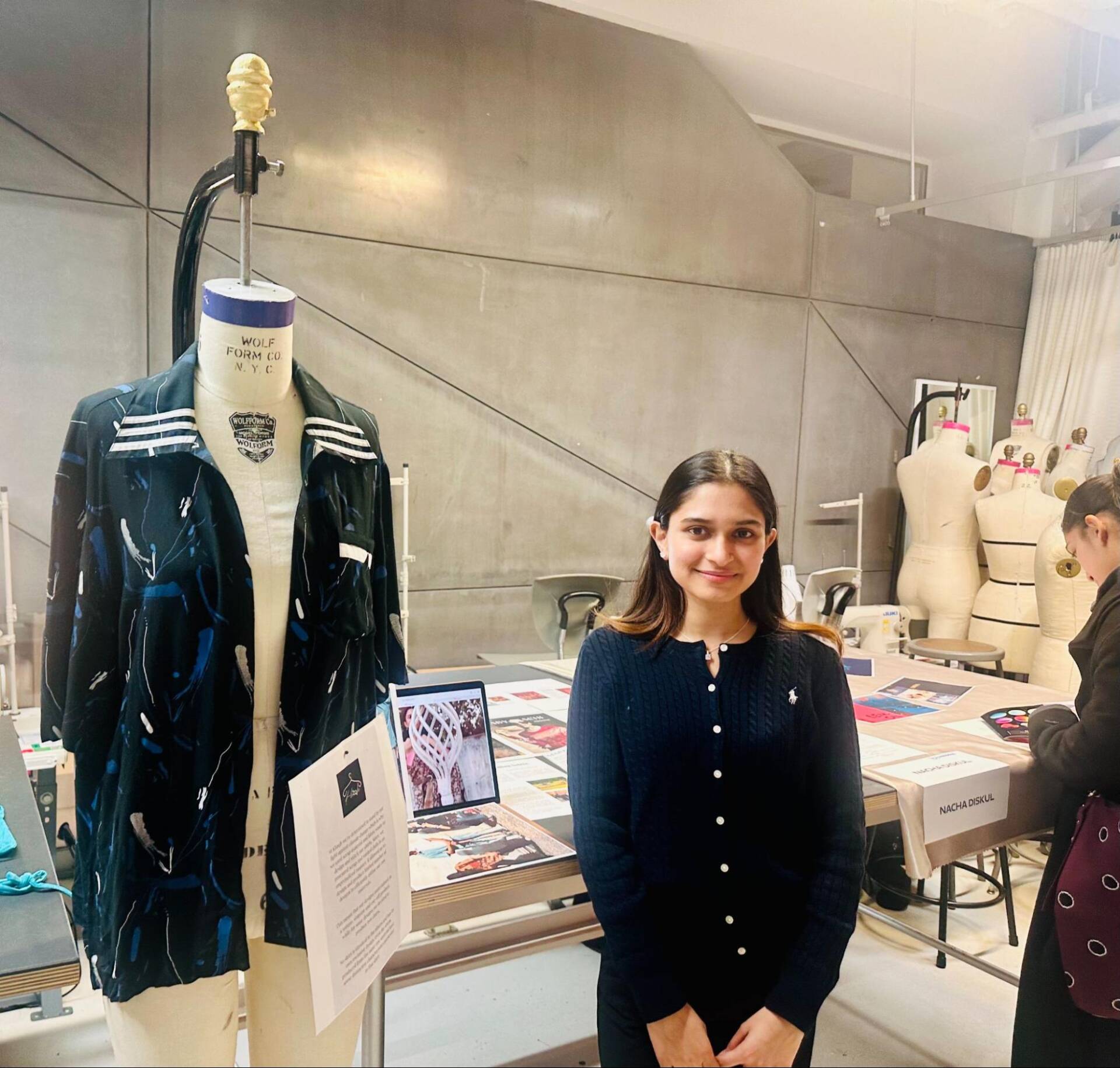
The fashion industry is entering a period where production reliability carries more strategic weight than stylistic novelty. Regulatory pressure is rising, sustainability standards are tightening, and brands are confronting the fact that their most serious vulnerabilities sit deep within their material and manufacturing pipelines. As companies search for new models that combine creativity with engineered consistency, ventures like Khaqh are drawing attention for how they turn waste into structured, high-value material systems. At the center of this work is Nandini Sharma, Chief Fashion Officer of Khaqh and a sustainability researcher operating across design, manufacturing, and material science.
Her work is not a solo design exercise. Sharma leads a large, cross-functional team spanning material researchers, process engineers, and production specialists, coordinating efforts that move from waste sourcing to finished textile systems. The scale of that collaboration reflects the nature of the problem Khaqh is trying to solve: fashion’s failures are rarely aesthetic, and rarely isolated.
“The future of fashion depends on how well we understand the materials we rely on,” she says. “Every error you see at the runway level began much earlier in the chain.”
Rise of Material Intelligence
The conversation around sustainable fashion has shifted from inspiration to infrastructure. Circular design is no longer treated as a creative add-on. It now requires the rigor of engineering. Khaqh emerged within this shift, demonstrating how textile waste can be reconstructed into consistent, high-performing garments. The company’s first four collections sold out within days and generated more than thirty thousand digital impressions during their launch week. Early production diverted more than 1.2 tons of discarded textiles and positioned the venture for a projected $5 million in annual revenue.
This commercial traction paralleled the academic influence of Sharma’s book, Re-Imagining the Future and Smart Fashion Manufacturing. The publication examines pattern logic, engineered materials, and computational workflows that strengthen supply chain resilience. With more than 1200 citations, the book has shaped more than 150 university projects and has been referenced across incubators, research programs, and early-stage founder pitches that explore the scalability of circular design.
“Waste is not the problem,” Sharma explains. “The problem is the lack of systems that can interpret and control it.”
Diagnosing Fashion’s Reliability Problem
Material behavior remains one of the most expensive obstacles in the global fashion supply chain. Industry audits report that nearly 18% of sampling cycles fail because textiles respond unpredictably to movement, stress, or environmental conditions. These failures cost an estimated $9.7 billion each year and slow the adoption of sustainable materials across major brands.
Parsons School of Design has become a live testing environment for these challenges. Its graduate fashion shows involve more than two hundred designers and multiple commercial partners. The shows function as operational laboratories that reveal where textiles succeed or collapse under real production pressure. Sharma plays a structural role within this setting, helping coordinate sponsorships, backstage operations, and material-sensitive workflows. Her planning contributed to a 40% reduction in last-minute changeovers and supported nine new partner integrations in the most recent cycle.
“People see a runway as a creative showcase,” she says. “Behind the scenes, it is a stress test for the materials and systems that shape tomorrow’s supply chain.”
Where Sustainable Fashion Manufacturing Must Evolve
The pressure to stabilize materials extends far beyond fashion. The biodegradable and fiber-based packaging sector is projected to exceed 35 billion dollars in value by 2028 as industries search for alternatives to petroleum-based products. Here too, consistency has become the defining challenge.
Shaleen Enterprises in India operates inside this expanding market. The company produces nearly 50 million biodegradable utensils each year and supplies more than one hundred eighty institutional clients across multiple regions. Sharma supports the plant’s product development and material analysis programs, studying fiber density, moisture interaction, and structural behavior. Her evaluations led to redesigns across three major product lines that increased structural strength by more than 30% and reduced defect rates by 22% in only three months.
To sustain progress, she helped establish a training pipeline that raised technician certification rates from 48% to 91%. “Sustainability collapses without worker fluency,” she notes. “A material is only as reliable as the people who understand how it behaves.” These advances positioned Shaleen Enterprises for expansion into three new export markets and a projected 35% revenue increase for the coming fiscal year.
Building the Systems Behind Fashion’s Next Chapter
The push toward verifiable sustainability is reorganizing the sustainable fashion ecosystem. Brands are treating material performance as a technical requirement. Universities are teaching designers to evaluate textiles with the precision of engineers. Manufacturers are integrating frameworks that ensure consistent output across eco-friendly product lines.
Professionals who operate across these layers are becoming the architects of the industry’s next chapter. Sharma belongs to this emerging group. Her work across research, venture development, academic production, and sustainable manufacturing represents a model for system-led innovation.
“Creativity thrives when the infrastructure beneath it is strong,” she reflects. “Once the system supports sustainability, innovation becomes the natural outcome.”
The future of sustainable fashion will be shaped not by trends but by the stability and intelligence of the systems behind them. Leaders who understand this landscape will define how sustainable fashion evolves and how global production economies adapt to new expectations of responsibility and material performance.