You start a side project because it scratches an itch. Maybe it’s a script you wrote to automate your own work, a newsletter you publish after hours, or a small product a few friends already use. At first, it’s energizing. Then the questions creep in. Is this just a hobby? Could it ever pay my rent? And if I try to turn it into a real business, am I risking the one thing that currently makes it fun?
To write this guide, we reviewed founder blog posts, shareholder letters, and podcast interviews from entrepreneurs who actually made the jump from nights-and-weekends to full-time. We focused on documented practices and outcomes, not motivational advice. Sources included Y Combinator’s Startup Library, First Round Review case studies, and founders such as Joel Gascoigne, Pieter Levels, and Sahil Lavingia, who publicly shared numbers, timelines, and trade-offs as they scaled small projects into durable companies.
In this article, we’ll walk through a practical, founder-tested path for turning a side project into a sustainable business without lighting your life on fire in the process.
Why This Matters for Early-Stage Founders
Most companies don’t start as companies. They start as side projects with just enough traction to make quitting your job feel tempting and just enough uncertainty to make it terrifying. At this stage, your real constraints are time, energy, and risk tolerance. You don’t need Blitzscale tactics or venture decks yet. You need clarity.
A sustainable business, at this point, means three things. First, people consistently get value from what you’ve built. Second, some of them pay in a predictable way. Third, you can see a path where revenue could eventually cover your living expenses. In the next 60 to 90 days, your goal isn’t to “go all in.” It’s to reduce uncertainty enough that the decision becomes obvious, not emotional.
1. Treat Your Side Project Like a Hypothesis, Not an Identity
The fastest way to stall a side project is to emotionally merge with it. When your project becomes “who you are,” every data point feels personal. Successful founders separate themselves from the experiment.
Joel Gascoigne has written about Buffer’s earliest days as a simple landing page with a pricing button before the product existed. Users clicked “pay,” then received a message stating the product wasn’t ready yet. That signal alone told him the idea was worth pursuing. The practice here wasn’t confidence; it was detachment. The outcome was validation before commitment.
For you, that means writing down a clear hypothesis. Who is this for? What problem does it solve? Why would they pay instead of using nothing or an alternative? Until those questions are tested, the project is an experiment, not a destiny.
2. Prove Willingness to Pay Before You Optimize Anything Else
Usage is flattering. Revenue is clarifying. Many side projects get stuck in a limbo where people say they “love it,” but no one reaches for their wallet. Sustainable businesses are built on payment behavior, not compliments.
Sahil Lavingia has shared that Gumroad struggled for years because early versions focused on features creators liked rather than on making transactions dead simple. When Gumroad narrowed its focus to helping creators get paid with minimal friction, revenue followed. The shift was from engagement to monetization as the primary signal.
If your side project has users but no revenue, test payment now. This doesn’t require complex pricing. Ask for money in a simple way. A paid tier, a one-time license, or even manual invoicing is enough. If people won’t pay a small amount today, it’s unlikely they’ll pay more later without a major change in value. Payment is the clearest signal when you want to turn a side project into a sustainable business.
3. Design Constraints That Force Focus
Side projects die from overbuilding because there’s no external pressure. You can always add “one more feature” tomorrow. Sustainable businesses emerge when constraints force prioritization.
Pieter Levels has openly documented building projects like Nomad List and Remote OK by imposing artificial limits: no meetings, minimal code, and shipping fast. The constraint wasn’t technical elegance; it was speed to signal. Those projects worked because they focused relentlessly on a narrow promise and charged early.
Create your own constraints. Decide how many hours per week this gets. Decide what you will not build. Decide what success looks like by a specific date. Constraints turn vague ambition into executable plans.
4. Talk to Users About Their Last Real Experience
At some point, dashboards stop being enough. You need conversations. But not hypothetical ones.
Des Traynor from Intercom has explained that early customer conversations worked because they focused on concrete past behavior, not opinions about future features. Asking “tell me about the last time you tried to solve this” reveals friction, workarounds, and urgency. Those details shape products people actually pay for.
Aim for 10 to 20 conversations with people who match your ideal user. Anchor every question to something that already happened. What triggered the problem? What did they try? What broke? How much time or money did it cost? Sustainable businesses are built on problems that are frequent, painful, and expensive enough to justify change.
5. Separate Validation From Scaling
One of the most common mistakes is trying to scale before you’ve validated. Paid ads, complex onboarding flows, and elaborate infrastructure all amplify what already exists. If the core value is shaky, scaling just burns time and money faster.
Stripe’s founders personally onboarded their earliest users, sometimes sitting next to them to debug integrations. Patrick Collison has described this as necessary because it compressed learning. The practice was a manual effort. The outcome was a product that developers trusted enough to build businesses on.
For your side project, do things that don’t scale on purpose. Manually onboard users. Personally answer support emails. Customize solutions. These actions aren’t permanent strategies; they’re learning tools that reveal what should eventually be automated.
6. Build a Financial Runway, Not a Fantasy Timeline
Quitting your job too early is one of the most expensive mistakes you can make. Sustainable businesses are usually transitioned into, not leapt into.
A common rule shared by bootstrapped founders is to wait until the project covers 30 to 50 percent of your living expenses consistently before considering a full-time switch. This isn’t a guarantee of success, but it significantly reduces stress and the likelihood of bad decisions.
Look at your personal burn rate. Be honest. Then map what revenue level would meaningfully reduce risk. This reframes the goal from “make it big” to “make it stable,” which is far more achievable in the short term. This step is often what separates hobby projects from those that turn a side project into a sustainable business.
7. Decide What “Sustainable” Actually Means for You
Not every sustainable business needs to be a venture-backed rocket ship. For some founders, sustainability means a calm, profitable company that supports their lives. For others, it’s a stepping stone to something larger.
Basecamp’s founders have long argued that profitability and longevity are underrated advantages. Their documented approach emphasizes control and optionality over hypergrowth. The principle is not anti-ambition; it’s intentional ambition.
Define your version of success. Revenue targets, working hours, growth pace, and risk tolerance should align with the life you want, not someone else’s Twitter thread.
Common Pitfalls to Avoid
One is waiting for permission. You don’t need an investor, an audience, or a perfect product to start charging. Another is mistaking traction for retention. A spike of interest is meaningless if people don’t come back or pay again. Finally, don’t confuse busywork with progress. Shipping features feels productive, but learning what drives value is what moves the business forward.
Do This Week
- Write a one-sentence hypothesis for who your project is for and why they’d pay.
- Add a simple way for someone to give you money, even if it’s manual.
- Book five conversations with users focused on their last real experience.
- Decide on a monthly revenue target tied to your personal expenses.
- List three features or ideas you will explicitly not work on this month.
- Track one metric that reflects value delivered, not vanity engagement.
- Spend one session doing something manual that teaches you about user behavior.
- Set a 60-day checkpoint to reassess with real data, not feelings.
Final Thoughts
Turning a side project into a sustainable business isn’t about courage or luck. It’s about replacing hope with evidence, one small decision at a time. Most founders who succeed don’t feel ready when they start taking it seriously. They just gather enough proof that continuing becomes the rational choice. Focus on payment, learning, and constraints. The rest tends to follow.
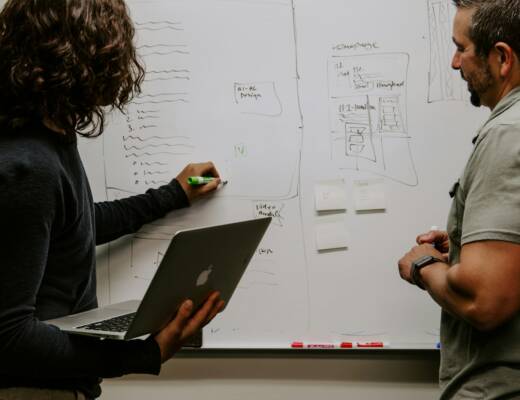
Photo by Sena Aykut; Unsplash