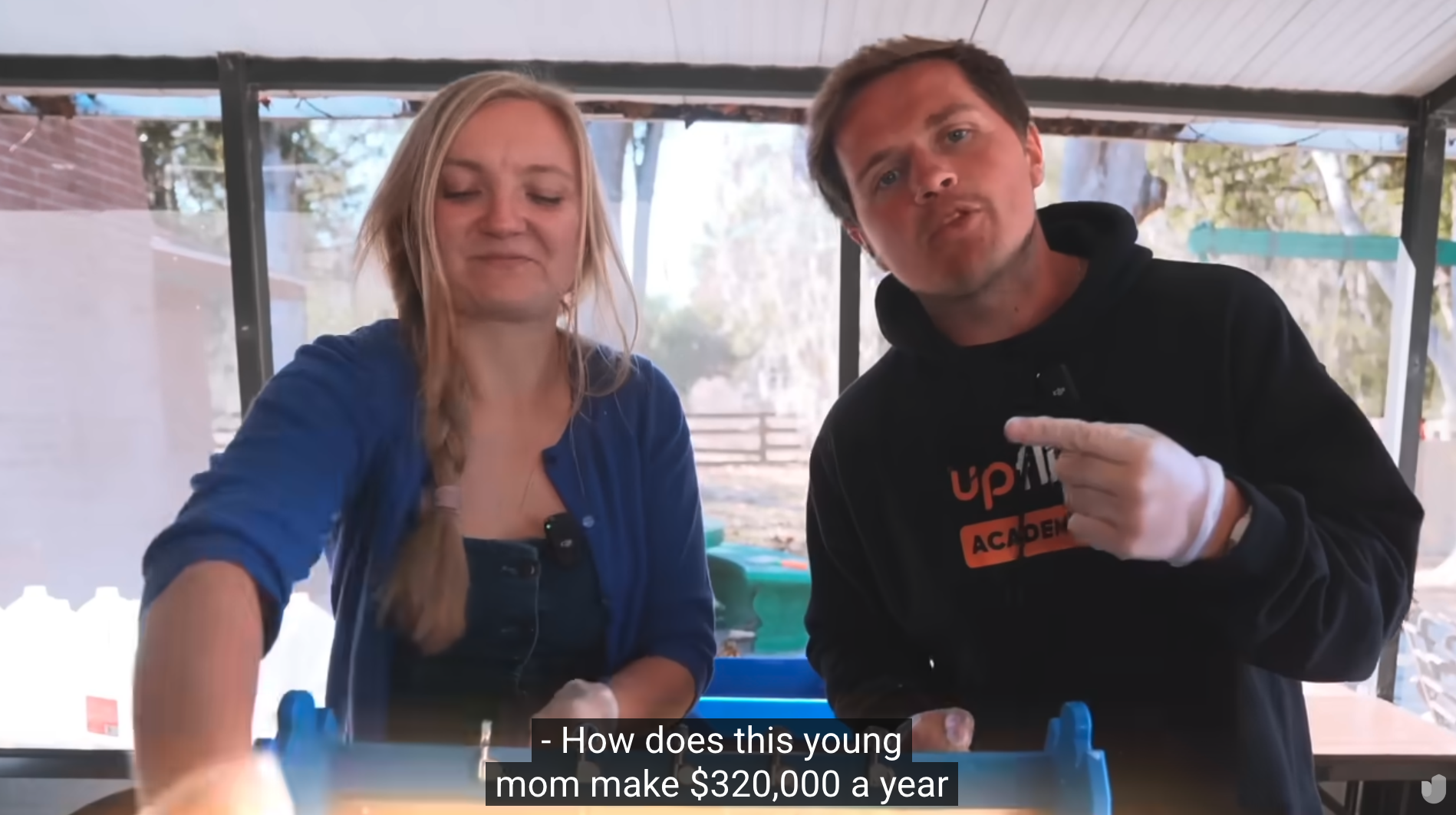
Ashley is a young mother who turned a simple need for cleaner personal care into a thriving home business. She began with no business background, a newborn, and a goal to stay home. Four years later, she produces thousands of bars of soap a month, teaches others online, and runs a profitable operation from her property. Her story shows how a low-cost idea, steady systems, and steady posting on social media can turn into real income.
The Spark That Started It
After giving birth to her daughter, Ashley began questioning the ingredients in everyday products. She read labels and searched for gentler options. Most items on store shelves did not meet her standards. So she mixed her first batches at home for her family. She thought it would end there. It did not.
Her husband told friends and relatives about the homemade soaps. People tried them. They came back asking to buy more. The first time someone handed her cash, she realized she might have found a path to stay home with her baby and still earn money.
“I had no business experience. I just started reading about all the bad stuff they put in soap and thought to myself, maybe I can make something better.”
That first light-bulb moment turned into steady steps. Ashley signed up for free local farmers markets. She wore her baby while greeting customers. The face-to-face feedback shaped her early recipes and gave her confidence to keep going.
From Kitchen Experiment to Real Business
Ashley started making soap about four years ago. She launched her company soon after. Early on, she knew almost nothing about payroll, taxes, or managing people. She learned by doing. Each new step brought a new skill. When she needed to figure out employees, she did. When taxes arrived, she worked through the forms one line at a time.
“I didn’t know how to manage employees… I didn’t know how to do payroll… I’ve learned a ton and I’ve just taken things as it came to me.”
She also took a practical view of growth. There was no big loan. No huge moment. She kept reinvesting into the business while paying herself. That approach helped her scale production, keep control, and avoid debt.
Key Numbers and Milestones
- 2025 revenue: $320,000.
- Physical products: about $190,000 of that total.
- Online products and social monetization: the remaining revenue.
- Monthly sales growth: from about $20,000 to as high as $50,000 in a single month.
- Output: now about 1,000 bars per week, with 3,000 bars curing at a time during busy seasons.
- Team: three part-time helpers, including her mom; Ashley handles creative work and production leadership.
- Payroll: usually $12,000–$14,000 per month, including her pay.
- Marketing budget: $0. She relies on organic social media.
Startup Costs and Tools
One of the most striking parts of Ashley’s story is the low starting cost. She began with basic gear and a few core ingredients. Another thing she did is she avoided splurging on fancy equipment. She did not wait for perfect conditions. She got what she needed and made soap.
Based on her early setup, a new soap maker could begin with roughly $400. That covered entry-level tools and enough supplies to learn and sell initial batches. She also bought used equipment where it made sense. Bakeries going out of business became a reliable source of racks, pans, and tables. Buying secondhand cut costs and let her upgrade when it mattered.
In her early kit, she used:
- Crockpot (dedicated to soap, not food).
- Immersion blender.
- Silicone loaf mold or a cardboard box lined with parchment as a no-cost mold.
- Stainless steel or high-heat plastic bowls for lye solution.
- Kitchen scale (accurate and calibrated).
- Basic safety gear.
- Core ingredients: coconut oil, distilled water, sodium hydroxide (lye).
As production scaled, she added slab molds, a multi-wire loaf cutter, and a commercial immersion blender. Even then, she chose mid-range options. For example, a slab mold near $300, a bar cutter around $215, and a commercial blender for about $300. She only spent more when a tool saved serious time and improved uniformity.
Soap Making Methods: Hot Process vs. Cold Process
Ashley uses both hot process and cold process methods. Each has its place, especially at different stages of growth.
Hot process soap uses heat to drive the chemical reaction faster. The soap moves through phases in the crockpot. First it thickens into a dense mass. Then it reaches a “mashed potatoes” stage. From there, it can be scooped into molds. Hot process can be handy for quicker turnaround and early testing.
Cold process is similar, but without applied heat during the main mix. The batter is poured and allowed to complete its reaction in the mold. As Ashley scaled, she favored cold process for larger runs, while still appreciating hot process for its speed in smaller batches.
Regardless of method, the safety and measurement rules are the same. Accuracy is not optional. It is the difference between a perfect bar and a failed batch.
Safety and Accuracy Basics
Soap making uses sodium hydroxide, also known as lye. It is essential for turning oils into soap. Without it, a maker has only oils and liquids. With it, a chemical reaction called saponification takes place. That reaction turns fats into a solid cleansing bar.
Proper safety steps are non-negotiable:
- Wear protective gear and work in a well-ventilated area.
- Use stainless steel or rated high-heat plastic for mixing lye solution.
- Avoid reactive metals like aluminum.
- Add lye to water, never water to lye. Reversing the order can cause a dangerous eruption.
- Expect heat. Lye solutions get very hot during mixing.
Measurement also matters. Each oil needs a specific amount of lye. That ratio changes when formulas change. An uncalibrated scale can ruin a batch and waste supplies. Ashley has lost full batches to scale issues. Now she watches her equipment closely.
“Most people end up having issues with their scale somehow… I’ve had many times where my scale was just not calibrated correctly and then I’ve lost a whole batch.”
Formulations and Product Line
Ashley builds bars around the base oils. Each oil changes how a bar feels, how long it lasts, and how it lathers. Coconut oil produces a hard bar with a bubbly lather. It is a good starter recipe and an easy way to learn. Olive oil, tallow, and cocoa butter each bring different traits.
She offers two core types that stand out:
Sea salt bars. These are made with sea salt, organic coconut oil, and cocoa butter. They have a strong lather, a firm feel, and they last longer than many standard bars. Essentially, they suit buyers who want a plant-based option with a bold cleanse.
Grass-fed tallow bars. Tallow has surged in interest for skincare. These bars feel creamy and have a mild lather. Many customers with sensitive skin prefer them. Ashley often pairs tallow with aloe vera liquid instead of water for a cool, soothing touch.
Her monthly subscription, “soap of the month,” features seasonal or themed recipes. She rotates extras like avocado, honey, milk, watermelon juice, and even beer. These limited runs keep long-time customers curious and coming back.
“There are so many possibilities with soap making.”
Production at Two Scales
At the kitchen scale, Ashley showed how three ingredients can become a usable bar. She weighed the coconut oil, melted it in a crockpot, and prepared the lye solution with distilled water. She poured the hot lye solution into the oils and blended to trace with an immersion blender. As the mash thickened to “mashed potatoes,” she scooped it into a mold. After cooling and curing, it cut cleanly into eight to ten bars, depending on size.
At her current scale, she prepares large batches with a commercial immersion blender and slab molds. One slab can become eighty bars. She pours the batter, often dividing a portion to mix in activated charcoal or natural colorants, then swirls for marbled designs. After unmolding, she uses a wire loaf cutter to slice slabs into loaves, then a bar cutter to produce uniform bars.
Uniformity is a key quality metric. The bar cutter produces even sizes and weights. That keeps labeling clear and customers satisfied. It also speeds workflow. Cutting eighty bars in minutes is now routine.
Even with larger equipment, the main time sink is not always mixing. It is prep and cleanup. She plans around that. On current gear, a run of 1,000 bars takes about three days, with the non-mixing tasks claiming much of the schedule.
Curing, Packaging, and Shipping
Handmade soap needs time to finish. Ashley lets bars cure for about four weeks. This step hardens the bar and improves lather and longevity. Shipping earlier can lead to a softer bar that dissolves faster in the shower. She wants the end user to open a bar at its peak.
After curing, she bevels edges on selected bars for a smooth first use. Packaging is simple and eco-minded. She wraps each bar in a coffee filter, tapes it, then applies a branded band with ingredients and scent notes. The method is fast and low-cost. It also shows off the natural look of the soap.
Her space is divided into three zones: shipping, curing, and storage for ingredients and tools. Orders are batched by day. Shipping labels and packing slips are printed. Staff box orders for next-day pickup. USPS comes to her property. She rarely needs to leave for deliveries.
Pricing, Deals, and Customer Behavior
In the earliest days, she priced bars at $14. As she scaled and bought oils by the pallet, she brought prices down to a typical range of $10–$12. Bulk purchasing changed her margins in a good way. Greater efficiency also helped. As she puts it, she can now produce 400 bars in a day when needed.
Deals make a difference in average order value. A classic “buy three, get one free” bundle pushes customers to stock up. That one change can turn a single-bar sale into a four-bar order. It also controls shipping costs per bar, since several bars fit in one box.
Her buyers tend to be people who prefer gentle or “cleaner” ingredients. Many are repeat customers who reorder every few months. Soap is a consumable, which means a well-liked bar creates a natural cycle of repeat sales.
Revenue Mix and Online Products
In 2025, the business reached $320,000 in revenue. About $190,000 came from physical products, including soap, shampoo bars, and conditioner bars. The rest came from online education and social media monetization. She runs a soap-making course, sells recipes, and takes on selected brand deals.
Creating content fits well with production. She is making soap anyway. Filming the process and teaching what she knows allows her to earn from the same time block twice: once by producing bars and again by publishing content and digital products.
Marketing Without a Budget
Ashley spends nothing on ads. Every customer comes from organic social media. She posts short, frequent updates on Facebook, Instagram, TikTok, and YouTube. Facebook is her largest platform and her strongest sales driver. She has hundreds of thousands of followers there and expects steady growth.
Her strategy is simple. She films what she is already doing: pouring batter, cutting bars, labeling orders, and talking about ingredients. She edits for quick hits. The opening shot matters. The first line matters. She front-loads each clip with a strong hook. People need a reason to stay for three seconds. Only then do they listen to the story behind the bar.
“Your hook isn’t just what you say at the beginning… It’s also your opening shot. If you don’t keep them, it doesn’t matter what you say next.”
Posting volume also helps. She aims for three posts per day. Over time, she studied which clips perform best and doubled down on those styles. Early on, she avoided overthinking. She posted often, watched the data, and learned from it.
What She Learned About Sales Psychology
Small shifts in how she explains a bar can lift sales. She might spotlight colloidal oatmeal for soothing effects when selling to customers with sensitive skin. She presents the same core bar in a few different ways, each aimed at what a segment values most. Scent, feel, and use case all shape the pitch.
The goal is to match the right message with the right buyer. If a person wants bubbles and a firm bar, coconut blends get the headline. If someone wants creamy and gentle, a tallow base takes center stage. Labels, names, and descriptions all reflect those choices.
Common Mistakes Beginners Make
Ashley has seen many new makers run into the same problems. Scales are at the top of the list. A scale that is off by even a little can throw the whole batch. Batteries run low, or calibration drifts. The result is a bar that does not set right.
Another mistake is buying the wrong kind of lye. Soap makers must use pure sodium hydroxide with no fillers. Some products in stores look similar but are blends or drain cleaners with extra additives. Those do not work for soap making and can be unsafe in recipes.
Finally, new makers sometimes chase fancy equipment too soon. It is better to start simple, prove demand, and add tools when they save time. Many low-cost hacks work very well for early runs. A lined cardboard box can be a fine mold. A basic crockpot can carry a maker through the first season.
From Living Room to On-Property Workshop
Today, Ashley runs production from a converted space on her property. It feels like a small warehouse. There are curing racks, a shipping station, and a wall of ingredients. Everything is organized so she can bounce between roles quickly. The best part: she can do this while staying close to her child’s schedule.
“My baby’s asleep. I’m like, ‘Okay, I’ll go get my work done.’ It might be 4:00 a.m., but I’m walking out here. I can get like five hours of work done before she even wakes up.”
The family helps. Her 11-year-old pitches in. Her husband supports equipment and maintenance. Although the brand face is Ashley’s, the operation is a family effort. That setup fits her original reason for starting: to be home with her child and still build something meaningful.
Farmers Markets and First Online Virals
Farmers markets were her first step outside of family sales. They gave her feedback and helped her learn how to talk about the product. She recommends them to any beginner. They bring foot traffic, questions, and quick market tests. A maker can watch a buyer pick up a bar, smell it, and respond. That is priceless input.
Her first viral video online changed the scale of what was possible. Going from a few dozen shoppers at a weekend market to thousands of people in a single day felt unreal. With online reach, a $0 marketing budget began to drive daily orders. She saw how one short clip could place her in front of a million people in minutes.
Production Details: A Closer Look
For those curious about the exact steps, here is a basic outline of Ashley’s process for a straightforward bar:
1) Weigh oils with a reliable, calibrated scale. Accuracy is critical.
2) Melt the oils in a crockpot or pot, depending on method and batch size.
3) Prepare the lye solution by slowly adding sodium hydroxide to distilled water. Stir until dissolved. Expect high heat and fumes. Ventilate.
4) When temperatures align with the chosen method, pour the lye solution into the oils.
5) Blend with an immersion blender until reaching “trace,” where the batter thickens slightly and leaves a faint line when dripped.
6) For hot process, cook until the batter resembles a smooth paste. For cold process, pour into the mold and let it saponify without external heat.
7) Swirl any natural colorants or add-ins, like activated charcoal, at the right stage for the design.
8) Unmold, then slice into loaves and bars using wire cutters for even pieces.
9) Cure for about four weeks to harden and improve performance.
10) Bevel, label, package, and ship.
Costs at Scale
As orders grew, Ashley shifted to bulk purchasing. The price differences are notable. A small bottle of lye at a craft store can be $16. A 50-pound pail online is about $150. The same is true for oils. A jar of coconut oil at the grocery store is costly per ounce. A pallet price drops that cost dramatically. Those savings allowed her to lower prices for customers while still improving margins.
Shipping remains a large monthly cost. She estimates $4,500 to $6,000 per month, varying with volume. Keeping bars uniform helps control these costs. Bundles reduce per-bar shipping. Planning high-volume shipping days around the subscription cycle also keeps the workflow steady.
Standing Out in a Crowded Market
Soap has many makers. Ashley stands out by blending product and education. She sells bars, but she also teaches. That dual approach builds trust and a sense of community. People follow her for recipes, behind-the-scenes clips, and care tips. When they need to restock, they already know the brand.
She also sells a story. Viewers meet her family. They see the 4 a.m. work sessions. They watch a slab turn into 80 bars. That transparency makes small-batch production feel real and close. It is not a faceless line. It is a home workshop with a mom at the helm.
Advice for New Makers and Sellers
Ashley believes now is a great time to start a business. The reason is simple: social media gives instant reach. She urges beginners to post often and stop waiting for perfect lighting or scripts. The early goal is data. Only by posting can a maker learn what works.
For markets, she encourages signing up for local free events. The booth fee, if any, is small. Face-to-face pitching builds confidence. It also gives live feedback that fast-tracks product tweaks.
On equipment, start with the basics. Dedicate a crockpot to soap. Use a lined box if you do not have a mold. Borrow a scale if needed, and then buy a good one when you can. Focus on learning the craft, then scale into faster tools once demand proves out.
“Stop overthinking it… you just have to start doing something.”
Mindset, Family, and the Next Chapter
When asked what success looks like now, Ashley keeps it simple. She wants to keep building with her family. So, she plans to buy more property and put up a bigger workshop on the site. She wants to stay close to home and keep the business tight-knit.
Her path shows how a clear reason, which is to stay with her child, can drive focused choices. She burned plan B and made plan A work, rather than waiting for perfect timing. Also, she learned taxes on the fly. She posted content daily and, overall, kept moving.
Along the way, she found that teaching others was not a distraction. It became a second income stream that matched her day-to-day. As she mixes a batch, she hits record. As she cuts, she explains. That simple pairing of work and content lets her stack outcomes from the same effort.
What Readers Can Apply Right Now
Readers who want to try a similar path can start small. A single crockpot batch can make eight to ten bars. Three ingredients are enough for the first test. Accuracy, safety, and patience matter more than gear.
Once a maker has a bar worth sharing, feedback is the next step. Give samples to friends and family. Ask for honest notes. Try a free local market. Improve the formula. Repeat. When demand rises, add a second mold. Buy bulk ingredients. Build one habit at a time.
On content, begin with short daily clips. Film what is happening anyway. Use a strong opening shot. Speak plainly about ingredients and skin feel. Share small wins. Share mistakes. When a video lands, study why, then post another like it.
Finally, consider deals that reward stocking up. Soap is a repeat buy. Make it easy for shoppers to fill a box and save. A simple bundle can lift revenue without extra ad spend.
“Just keep taking action because no one knows what they’re doing at first.”
Ashley’s story is not about sudden luck. It is about basic tools, steady posting, and careful steps. She built a real business without debt and without ads. She learned as she went, kept her family close, and let the work speak for itself. For many readers, that may be the most helpful lesson of all.
Frequently Asked Questions
Q: What is the minimum gear needed to make a first batch at home?
A basic setup includes a crockpot, an accurate kitchen scale, a stainless steel bowl, an immersion blender, protective gear, and a simple mold. For ingredients, start with sodium hydroxide (pure lye), distilled water, and a base oil like coconut oil. A cardboard box lined with parchment can serve as a mold if you want to avoid early costs.
Q: How long does handmade soap need to cure before it ships well?
Plan for about four weeks of curing. The bar hardens during that time and lathers better. Shipping too soon can lead to a softer bar that wears down faster in the shower.
Q: How can a new brand get customers without paying for ads?
Post short videos several times a day on platforms like Facebook, Instagram, TikTok, and YouTube. Lead with a strong opening shot and a clear hook. Show production steps, discuss ingredients, and share personal moments from the workshop. Track which posts perform best and make more of what works.
Q: What are common mistakes to avoid when starting to make soap?
Do not skip safety steps with lye. Always add lye to water, and use stainless steel or high-heat plastic. Use a reliable, calibrated scale; small errors can ruin a batch. Make sure your lye is pure sodium hydroxide with no additives. Lastly, resist buying expensive gear too early. Instead, prove demand first, and then upgrade.