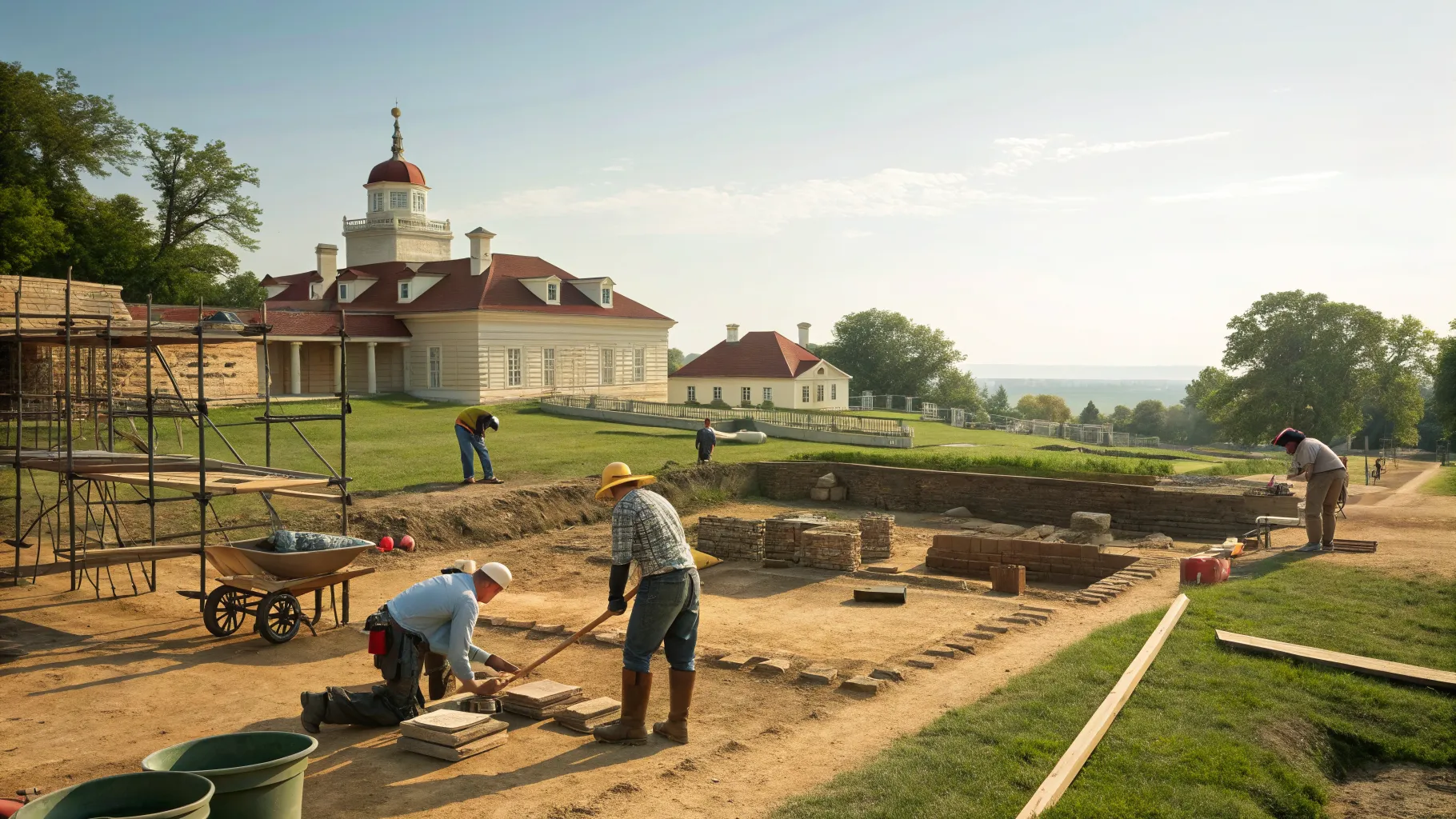
George Washington’s Mount Vernon is in a race against the calendar as crews prepare, renovate, and dig across the grounds ahead of the nation’s 250th anniversary in 2026. The historic estate in Virginia is undergoing an accelerated schedule of repairs and archaeological work to welcome an expected surge of visitors and renewed attention on the first president’s home.
Leadership at the site has fast-tracked projects to stabilize aging structures, refresh exhibits, and expand research into the people who lived and labored there. The push reflects a wider national effort to mark the Semiquincentennial with sites linked to the founding era.
A Push to Be Ready for 2026
“George Washington’s estate, Mount Vernon, is being prepped, renovated and excavated at a breakneck pace for a very big anniversary.”
Crews are working across the mansion, outbuildings, and farm areas to address wear, protect interiors, and manage decades of visitor traffic. Archaeologists are surveying sections of the property to answer fresh questions about daily life on the estate, including the experiences of the enslaved people who sustained it. Conservators say the timeline is tight, but the work is planned to avoid damage and keep parts of the site open.
Mount Vernon, a private non-profit historic site, has faced rising maintenance needs as climate and visitor patterns shift. The anniversary has turned those needs into a deadline, focusing attention on projects that would otherwise stretch across many years.
Why the Excavations Matter
Archaeology at Mount Vernon has often reshaped the public’s understanding of the 18th century. Excavations help verify building locations, recover lost features, and uncover objects that show how people lived, worked, and adapted. Findings can refine exhibits and correct earlier assumptions in ways that printed records cannot.
Researchers say targeted digs now aim to:
- Map original building footprints and paths to guide accurate restoration.
- Recover household items to enrich interpretation of domestic life.
- Document labor systems and supply networks tied to the estate.
These efforts feed directly into refreshed tours and signage. New evidence also supports classroom materials that will circulate widely during the anniversary year.
Preserving the Past, Updating the Visit
The estate’s stewards face a familiar trade-off: protect fragile spaces while improving access for large crowds. Renovations are expected to focus on structural stability, climate control for collections, and safer visitor flow around high-traffic rooms. Outdoor paths, wayfinding, and rest areas are being assessed to reduce wear and ease congestion during peak months.
Curators plan updates to highlight the full community that lived at Mount Vernon. That includes the free and enslaved workers who ran fields, kitchens, and workshops. Interpretive changes often follow research findings, which is why the excavation work now under way is central to the 2026 plan.
Funding and Partnerships
Major projects at heritage sites usually blend private donations, grants, and institutional partnerships. Mount Vernon’s non-profit model relies on membership, ticket revenue, and philanthropy to fund preservation. The anniversary has helped attract interest from civic groups and educators who see the site as a gateway to teaching the founding period with more depth.
Experts note that such partnerships can speed up projects while maintaining standards. Shared goals—protecting artifacts, expanding access, and improving research—guide how work is prioritized under a tight timeline.
What Visitors Can Expect
Visitors in the near term may see scaffolding, temporary detours, and active dig sites. Staff typically keep key areas open while shifting tours as needed. As projects finish, new displays and findings will enter the rotation, giving return visitors fresh material to explore.
Planners are also preparing for higher attendance around 2026. That could mean timed entries, expanded programming, and more digital resources to help schools and families plan visits.
As the 250th anniversary approaches, Mount Vernon’s sprint reflects a larger question: how to honor the nation’s founding while presenting a fuller story of the people behind it. The coming months will test whether rapid preservation and research can keep pace with public interest. Watch for new archaeological reports, exhibit updates, and visitor guidance as the estate moves closer to the milestone year.