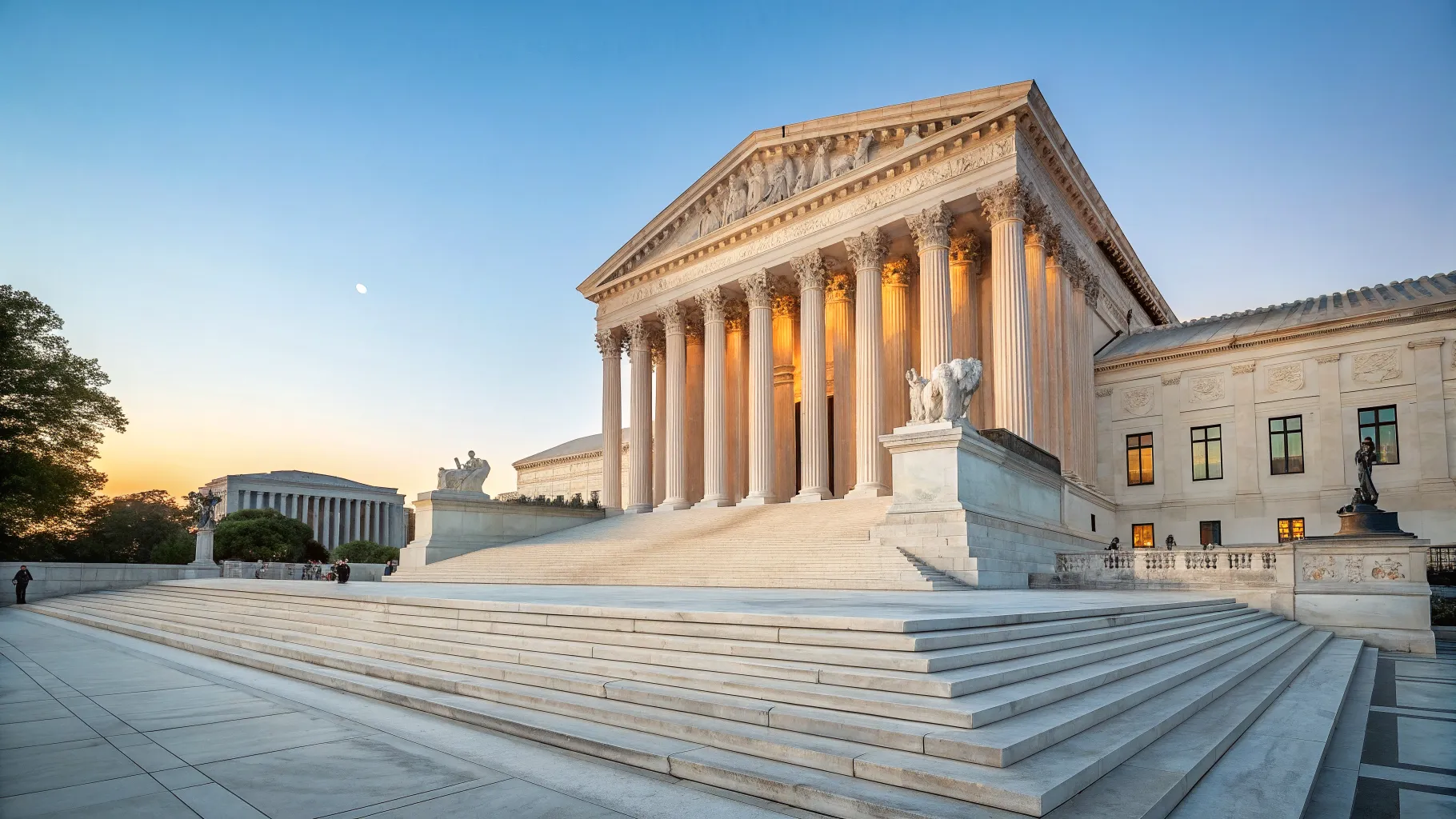
The Supreme Court issued rulings Friday in two cases that challenged tariffs imposed by President Donald Trump under the International Emergency Economic Powers Act, a move that could reshape the balance between the White House and Congress on trade and national security. The decisions address how far a president may go when invoking emergency authority to alter trade flows and set duties, and they arrive amid ongoing debates over supply chains and foreign policy.
The Supreme Court ruled Friday on two cases challenging President Donald Trump’s tariffs under the International Emergency Economic Powers Act.
Background: What the Law Allows
Congress passed the International Emergency Economic Powers Act (IEEPA) in 1977 to give presidents tools to respond to foreign threats. The law permits restrictions on transactions with foreign actors after a national emergency is declared. It has often been used to freeze assets, block financial dealings, and target specific sectors tied to security risks.
Tariffs sit at the intersection of trade and security policy. While Congress holds the power to regulate commerce, it has granted the executive branch discretion in certain cases. Over the past two decades, presidents from both parties have leaned on emergency and trade statutes to steer economic pressure campaigns abroad. That trend accelerated during recent disputes over technology, sanctions, and critical goods.
The Legal Questions at Stake
The two cases centered on whether tariffs justified by an emergency declaration fit within IEEPA’s text and limits. They also tested the line between national security judgments and economic policy choices reserved for Congress. Plaintiffs argued that using emergency powers to impose broad duties swept too far, while government lawyers defended the president’s authority to act amid foreign threats.
Key questions included:
- How clearly must a national emergency relate to the specific tariffs imposed?
- What procedural steps and findings does IEEPA require?
- How much deference should courts give the executive on security assessments?
- Do tariffs under emergency powers conflict with other trade statutes?
Legal scholars have noted that the Court’s approach to delegation and executive discretion could ripple across sanctions, export controls, and investment screening. A strict reading would tighten the guardrails around emergency economic actions. A broader reading would preserve wide latitude for future presidents.
Economic and Diplomatic Impact
Tariffs set under emergency claims can reshape costs for importers, manufacturers, and consumers. Industries that rely on inputs from abroad, such as electronics, autos, and machinery, face pricing uncertainty when duties shift quickly. Small and mid-size firms often struggle most with rapid policy changes because they lack long-term hedges or alternate suppliers.
The rulings also matter for U.S. allies and trade partners. Emergency-based tariffs can become leverage in negotiations, but they can also trigger retaliation or disputes in international forums. Clarity from the Court may help trading partners gauge the durability of U.S. measures and adjust their own policies.
Markets watch these cases for signals about predictability. Stable rules reduce risk premiums and encourage investment in new capacity. Unclear boundaries can deter expansion or lead companies to stockpile inventory, adding cost and volatility.
Signals for Future Policy
How the Court interprets IEEPA will influence future presidents responding to cyber intrusions, supply chain disruptions, or geopolitical crises. If the decisions articulate detailed standards, agencies may issue more precise findings and timelines when invoking emergency powers. That could improve transparency for businesses and Congress.
Trade policy is now closely tied to national security planning. Semiconductor tools, rare earth materials, and advanced software can pose strategic risks. Policymakers may seek new legislation to clarify the use of economic tools, especially if the rulings highlight gaps or conflicts among existing laws.
The Court’s Friday rulings mark a turning point for the use of emergency economic powers in trade. Companies will look for guidance on compliance and risk, while lawmakers weigh whether to adjust statutory limits. The next phase will likely include agency directives, possible negotiations with trading partners, and further challenges as stakeholders test the new boundaries. Watch for updated regulations, congressional hearings on emergency authorities, and shifts in corporate sourcing strategies as the legal landscape takes shape.