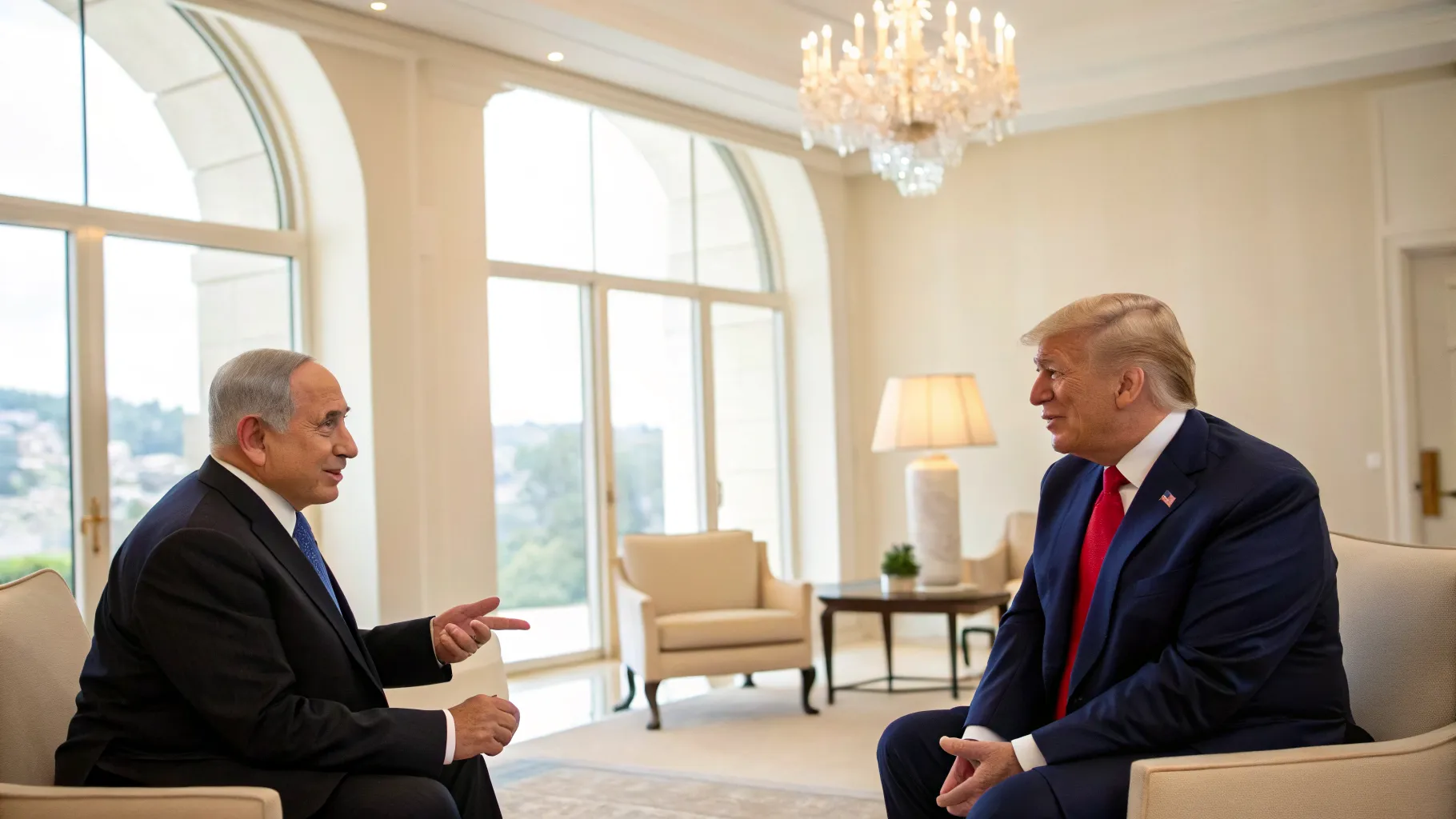
Israeli Prime Minister Benjamin Netanyahu said he spoke with U.S. President Donald Trump, who sees a chance to reach a deal with Iran. The comments came Monday and pointed to a possible diplomatic opening amid military pressure and maritime warnings.
Netanyahu said the goal would be to use recent gains to achieve war aims through a negotiated outcome that protects Israeli interests. Hours later, a senior Iranian military spokesperson warned outside powers to stay out of Gulf security and asserted control of the Strait of Hormuz.
Signals From Jerusalem and Washington
In a video statement, Netanyahu framed talks with Trump as an opportunity driven by recent military outcomes. He linked those gains to potential leverage at the table.
“Leveraging the mighty achievements obtained by the IDF and the U.S. military, in order to realize the goals of the war in a deal — a deal that will preserve our vital interests.”
He said Trump believed there was a “chance of reaching a deal with Iran.” The timing suggests an attempt to pair pressure with diplomacy. It also reflects long-running coordination between the United States and Israel on Iran policy.
Tehran’s Firm Line on Gulf Waters
Tehran issued a pointed reminder about control of strategic sea lanes. Ebrahim Zolfaghari, spokesperson for the Khatam Al-Anbiya Military Command Headquarters, rejected outside security roles in the Gulf.
“Countries outside of the region have no right to interfere in the security of the waters.”
He added that Iran exercises strategic control over the Strait of Hormuz, a narrow chokepoint at the mouth of the Persian Gulf.
“Iran is exercising strategic control over the Strait of Hormuz.”
The strait is vital to global trade. Roughly one fifth of the world’s crude oil and petroleum products pass through it. Any threat to traffic there can raise shipping costs and fuel prices worldwide.
Background and What Is at Stake
Tensions around Iran’s nuclear and regional activities have shaped Middle East policy for years. The United States left the 2015 nuclear deal in 2018 and reimposed sanctions. Since then, maritime incidents, drone attacks, and proxy clashes have tested naval patrols and shipping routes.
Israel has focused on curbing Iran’s military footprint and arms transfers. Washington has balanced sanctions, deterrence patrols, and limited diplomacy. Iran has warned against foreign military presence near its shores and insisted on control of nearby waters.
Deal or Standoff: Possible Paths
Netanyahu’s comments suggest a push to convert military momentum into political gains. Details of any deal were not specified. Analysts would look for terms addressing security guarantees, limits on missile programs, and activity by allied militias. Verification and sequencing of steps would be central.
Iran’s stance on the strait signals leverage over oil transit and regional navies. That message complicates efforts to reduce tensions while keeping trade flowing. It also sets a hard line against expanded external patrols.
Regional and Market Reactions
Energy markets respond quickly to risk in the Gulf. Even brief disruptions can push prices up and strain importers. Insurers raise premiums when threats rise, adding costs for shippers.
Naval planners aim to keep lanes open without triggering escalation. Clear communication, convoy escorts, and rapid incident response can lower risk. Diplomacy that reduces miscalculation remains critical for traders and governments alike.
What to Watch Next
- Whether Washington and Jerusalem outline concrete terms for talks.
- Iran’s posture on ship inspections, escorts, and naval drills.
- Any signals of back-channel engagement on nuclear and regional issues.
- Movements in oil prices and insurance rates tied to Gulf transits.
The latest statements present a split screen: talk of a possible deal and a hard warning at sea. Both could shape coming weeks. If diplomacy gains traction, expect a focus on security guarantees and shipping stability. If it stalls, naval incidents and energy shocks may return to the forefront.