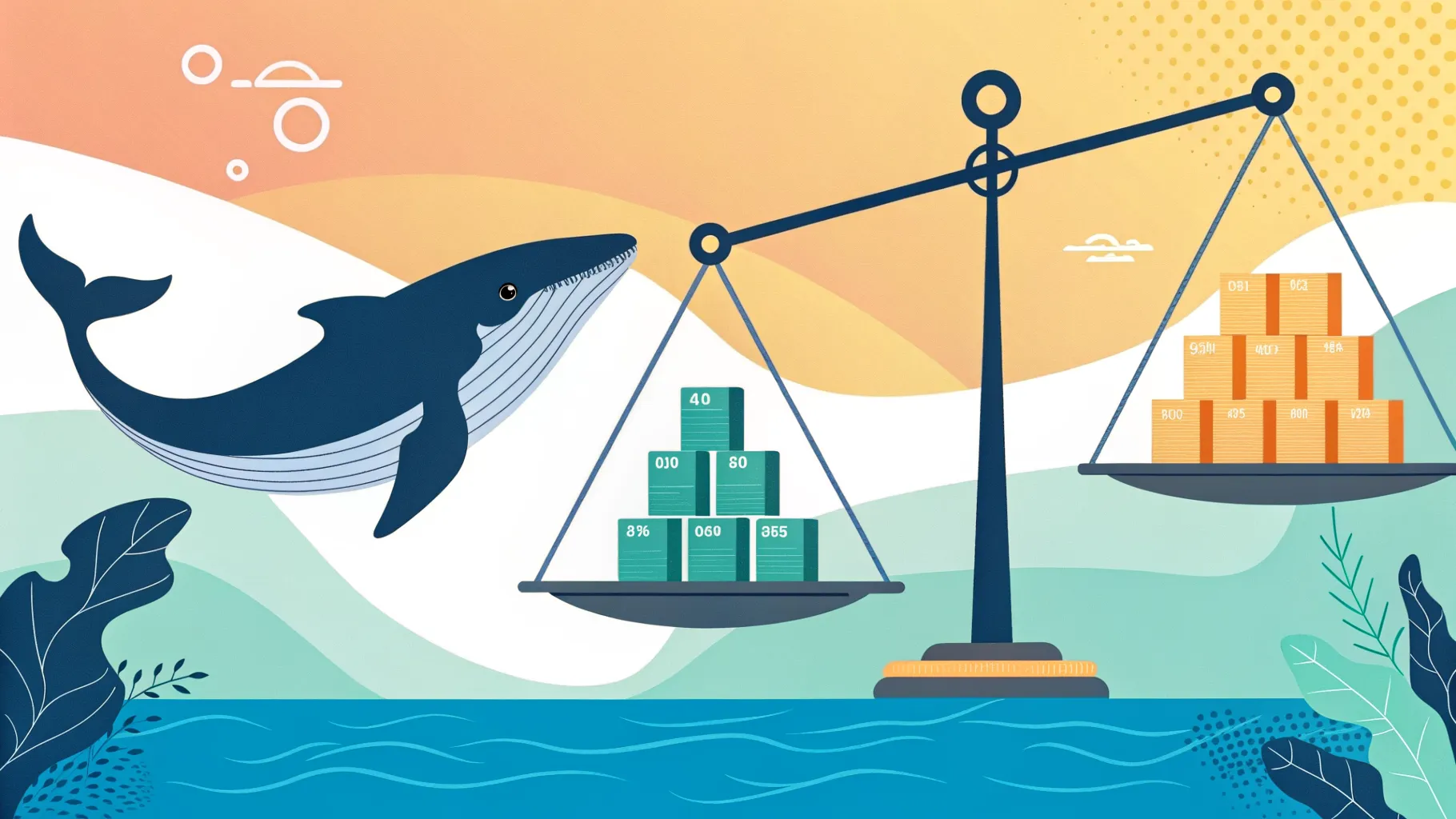
Every founder wants the big logo. The name that opens doors and makes the deck look sharp. I get it. Large accounts can pay well and move the needle fast. But here’s the hard truth: betting your business on a few whales is a silent risk that can erase years of work overnight.
My stance is simple. The best path is a smart mix of large and mid-market clients, with clear guardrails on concentration. That mix gives strong margins without putting your company’s future in the hands of one buyer or one executive change.
“Is it more profitable to serve larger companies? Yeah. At times.”
The Hidden Risk of Whale Clients
I have seen great agencies disappear after one client pulled the plug. Not because the work was bad. Not because the team lacked talent. They just let one relationship become their business model. That is a slow-moving trap.
There’s a story every agency operator should study. An LA shop once did amazing work and scaled fast on a single grocery brand. At their peak, roughly 85% of revenue came from that one account. Then ownership changed. Priorities shifted. The agency got cut. And the firm was gone soon after. No runway. No cushion. No second chance.
“You gotta be really careful on that concentration.”
That’s why I review client concentration often. Revenue is one piece. Profit mix is another. If one client makes up more than 20–25% of total revenue, I see a flashing red light. At 40%, it’s a crisis waiting to happen.
What a Healthy Mix Looks Like
Big companies can be great partners. They can also be slow, political, and high-touch. Mid-market clients usually move faster. They test more. They are easier to replace if something shifts. The right mix smooths cash flow and protects your team.
- Cap any single client at 20–25% of revenue.
- Maintain a pipeline with both big and mid-sized deals.
- Track profit by client, not just revenue.
- Plan for the loss of your top two clients every year.
- Invest in client success to extend lifetime value.
These steps build options. Options create stability. Stability frees you to grow with less stress and a lot more control.
Answering the Pushback
People often ask, “But aren’t larger companies more profitable?” Sometimes. Procurement can squeeze margins. Timelines can drag. Internal politics can stall scope. On the flip side, mid-market clients can be decisive. You can ship faster. Results show up sooner.
Another pushback: “We need whales to hit our goals.” I agree that large accounts can help you scale. But scale without diversification is roulette. One leadership change and your plan is toast. Growth should not depend on a single point of failure.
Finally, there’s the prestige argument. Landing a top brand brings status and referrals. That matters. Use it to win a mix of clients, not to justify risky dependence. Chase logos, but don’t let a logo own you.
How I Apply This
I like a portfolio that balances margin, growth, and risk. That means auditing our client list quarterly. It means modeling a worst-case loss and still being fine. It means saying no to expansions that would push us into dangerous territory. Discipline beats ego every time.
Here’s the point. The question isn’t whether big clients are good or bad. The question is whether your business can survive without any single one of them. If the answer is no, you don’t have a strategy. You have a hope.
The Bottom Line
Serve large companies. Serve mid-market companies. Don’t serve risk. Build a client mix that you can sleep on at night. Guard your caps. Track your profit. Keep your pipeline varied. That’s how you grow with confidence and stay around long enough to win.
Do an honest audit this week. Find your concentration risk. Set hard limits. And build a plan to replace your top client before you ever need to. Your future self will thank you.
Frequently Asked Questions
Q: How do I decide a safe client concentration cap?
Aim to keep any single client under 20–25% of total revenue. If one account crosses that line, slow expansion or add new clients to rebalance.
Q: What signals warn me a large client is risky?
Watch for leadership changes, long payment cycles, shrinking scope, or shifting goals. Any two at once should trigger a risk review and a backup plan.
Q: Can mid-market clients really be more profitable?
Often, yes. They move faster, require less red tape, and can scale in stages. Lower friction can mean better margins over time.
Q: How often should I review my client mix?
Quarterly is practical. Do a deeper annual review with scenarios that assume you lose your top one or two clients and model the impact.
Q: What if my biggest client already exceeds the cap?
Protect the relationship, but pause further growth with them. Prioritize new business to dilute the share. Set a timeline and track progress every month.