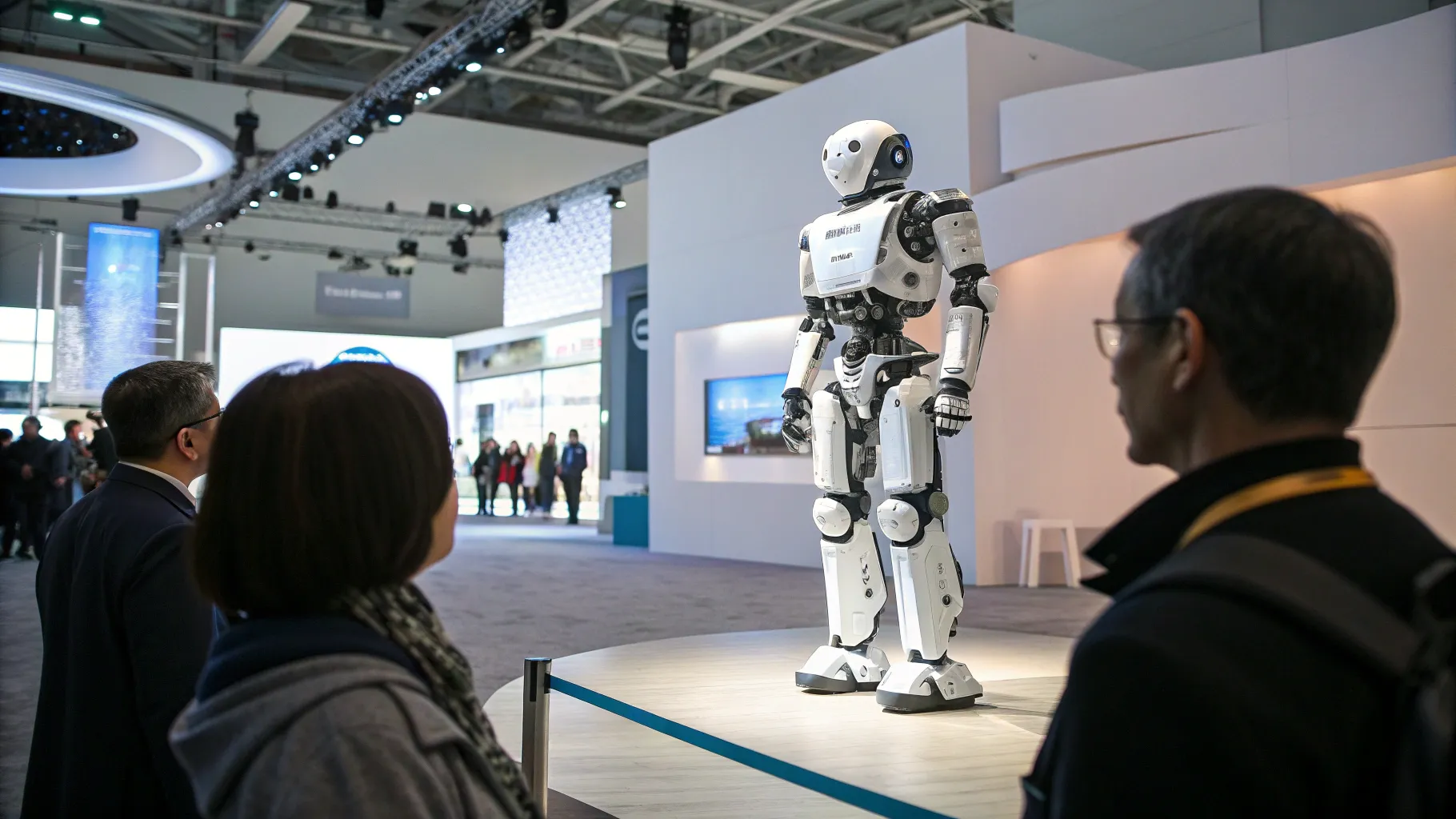
Hyundai-owned Boston Dynamics brought its humanoid robot, Atlas, onto a public stage at the CES tech showcase, marking a first for the company and the machine. The on-floor appearance signals a new push to move humanoids from lab videos to live demonstrations before customers, partners, and regulators. It also positions Hyundai’s robotics bet squarely in front of a global audience focused on automation, supply chains, and labor shortages.
“Hyundai-owned Boston Dynamics has publicly demonstrated its humanoid robot Atlas for the first time at the CES tech showcase.”
Boston Dynamics did not rely on a prerecorded reel alone. The company showed Atlas working through controlled motions in real time. The demo sought to answer a key question that has followed the field for years: can humanoids operate safely and predictably near people, outside research settings?
From Research Star to Public Stage
Boston Dynamics has spent more than a decade refining Atlas as a high-mobility humanoid. Earlier versions appeared in tightly scripted videos that highlighted jumps, parkour, and precise manipulation tasks. Those clips drew broad interest, but they left open questions about reliability and practical use.
Hyundai acquired a controlling stake in the company in 2021, shifting focus from pure research to applications in manufacturing and logistics. In 2024, Boston Dynamics introduced a new electric Atlas, moving away from hydraulics to pursue quieter operation and easier maintenance. The CES appearance adds a new chapter by placing the machine in a live setting with industry guests.
What the Demonstration Suggests
A live demo, even a brief one, hints at progress in balance, control, and safety systems. It suggests more confidence in repeatability under bright lights and variable conditions. It also reflects an industry trend to show working prototypes near potential buyers rather than behind closed doors.
- Live demonstrations reduce doubts about editing and retakes.
- Public tests invite feedback on safety and human interaction.
- On-floor performance can help define realistic use cases.
The company appears to be signaling readiness for pilot programs where humans and robots share space. That includes tasks like moving totes, staging parts, or tending machines that need frequent, small adjustments.
A Crowded Race for Humanoids
Atlas enters a busier field than in years past. Agility Robotics has tested Digit in warehouses. Tesla has shown progress on Optimus. Other startups are building general-purpose machines for repetitive work. Each group is chasing similar goals: safer motions, longer runtime, and useful grasping in tight spaces.
Boston Dynamics brings a long track record in legged robots like Spot and Stretch. That history may help with traction, fall recovery, and reliability. But humanoids face limits that wheels and tracks avoid, including balance on uneven floors and energy demands from legged motion.
Implications for Hyundai and Industry
For Hyundai, live demos support a strategy that blends vehicles, factories, and robotics. Automakers seek flexible automation that can shift jobs as product lines change. A humanoid that can handle varied tasks without major retooling is attractive, even if early units remain costly.
Analysts expect testing to start with low-risk activities, such as moving empty containers or scanning inventory. If results are steady, tasks could expand to light assembly, machine tending, or end-of-line inspection. Insurance and safety audits will shape the pace of adoption.
Safety, Trust, and Public Reaction
Public demonstrations carry new obligations. Companies must show fail-safes, clear emergency stops, and predictable behavior near people. Workers and unions also want transparency about job impacts and training. Policymakers are watching for standards on testing, reporting, and incident response.
Experts often urge a phased approach. Small pilots with clear metrics can prove value and build trust. Regular updates on uptime, failure modes, and injury rates can help turn curiosity into acceptance.
What to Watch Next
Key signals will come from pilot announcements, factory trials, and third-party testing. Battery life, service intervals, and parts availability will matter as much as agility. Pricing and support plans will determine whether companies test one unit or dozens.
The CES appearance suggests Boston Dynamics is ready to move past viral clips and into customer-facing trials. If Atlas can work safely around people and handle routine tasks, demand could build in logistics and manufacturing. If not, wheeled and fixed automation will continue to dominate near-term spending.
For now, the public debut sets a clearer bar for performance under pressure. The next step is proving that same performance, day after day, on factory floors and warehouse aisles.