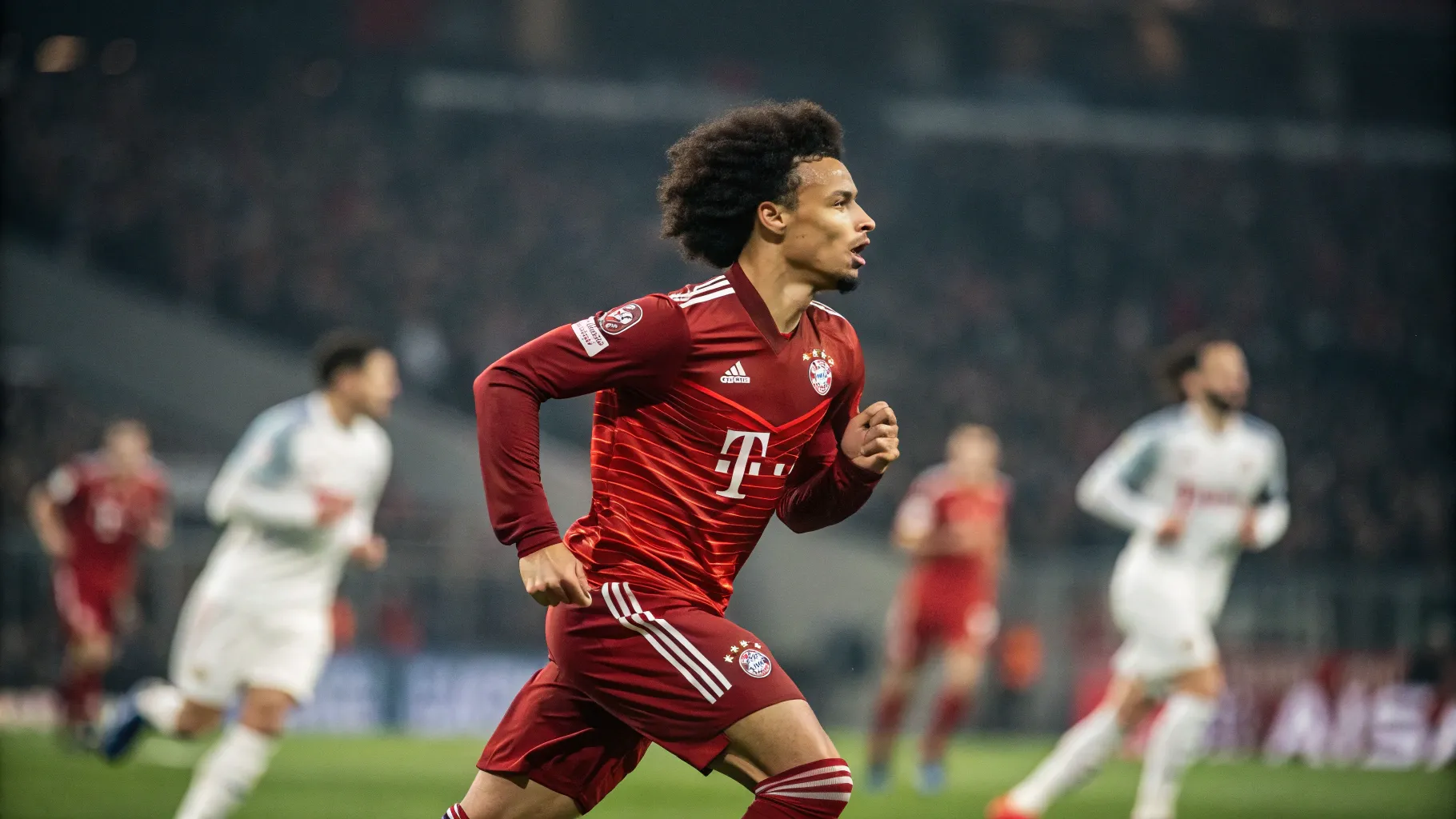
Leroy Sane arrived in Munich with star billing and sky-high expectations, yet debate over his true impact has never faded. The winger’s four seasons at Bayern produced moments of class, but also long spells that left supporters wanting more. The question now is how to measure a career judged as much by promise as by output.
Sane moved to Bayern in 2020 after a knee injury cut short his final stretch at Manchester City. He joined a team fresh off a treble and packed with attacking talent. Bayern won domestic titles during much of his stay, but his own arc remained uneven. That tension is captured in one stark assessment:
“Leroy Sane often hinted at greatness but, while his time in Munich was far from poor, he never quite reached the peak many believed possible.”
Expectations Shaped by Early Brilliance
Sane’s reputation was built on pace, direct running, and an ability to decide games with a single burst. His highlight reels from Schalke and Manchester City set a high bar. The move to Bayern was framed as a chance to become a central figure on a grand stage.
He showed flashes of that ceiling. Runs from the right flank, sharp cutbacks, and curls into the far corner became a familiar sight. He scored key goals in Europe and linked well with attacking partners during hot streaks.
Yet streaks were often followed by quiet patches. In a club defined by relentless standards, inconsistency stands out.
Coaching Changes and Tactical Fit
Sane worked under several coaches in Munich, each with different demands. Roles shifted between left and right wing, sometimes even into a narrow channel. That brought variety but also churned rhythm.
Under Hansi Flick, Sane was urged to press and track back while breaking into space. Julian Nagelsmann asked for more positional flexibility and combination play. Thomas Tuchel sought control and security in possession, often valuing defensive discipline from wide players.
Each approach revealed strengths and limits. Sane thrived with space to run at defenders. He looked less comfortable when play slowed and structure dominated decisions in the final third.
Competition, Injuries, and Consistency
Bayern’s wing positions are among the most competitive in Europe. Kingsley Coman, Serge Gnabry, and Jamal Musiala all competed for minutes. Form dictated selection, and rotations were common.
Recurring knocks and fitness management influenced rhythm. After a major knee injury prior to his Bayern move, careful load control remained part of his routine. That preserved availability but sometimes blunted momentum.
Coaches praised his work rate in good spells. Critics noted decision-making lapses and periods where games drifted past him. The result was a career that defied simple labels.
Peaks That Fed the Debate
There were stretches when he looked close to unplayable. His combinations with a central striker created quick chances and early goals. His Champions League outings often carried extra spark, with direct runs unsettling elite defenses.
- Electric starts to campaigns raised hopes of a sustained breakout.
- Key European nights showed his match-winning gear.
- Follow-up consistency remained the missing piece.
That pattern reinforced the sense of a player who could dominate but not always dictate over months, week after week.
How Bayern and Fans Viewed the Trade-Off
Inside the club, Sane’s talent was never in doubt. He stretched backlines, drew fouls, and created space for teammates. Those are valuable traits in tight domestic matches and against compact European blocks.
But Bayern’s standard for wide players is unforgiving. Output and reliability carry as much weight as aesthetics. Coman and Gnabry offered different mixes of discipline and end product. Musiala’s rise added another layer of competition for creative responsibility.
Supporters split on the verdict. Some pointed to strong spells and a good attitude. Others looked at the full body of work and expected more from a marquee signing in his prime.
What the Verdict Means for Club and Player
The judgment that his time “was far from poor” but short of the highest peak feels fair. He was a strong starter for long stretches, not always the definitive star. In a club built on relentless efficiency, that nuance becomes the story.
For Bayern, the assessment prompts familiar questions about role balance on the flanks. For Sane, it highlights the difference between brilliance in bursts and sustained dominance.
His next steps will hinge on three factors: fitness, a stable role with clear demands, and sharper decisions in the final third. If those align, the peak many expected could still arrive.
The broader takeaway is simple. Talent opens doors at Bayern, but habit decides status. Sane showed much of the first. The record suggests the second remained a work in progress. The coming seasons will show whether he can turn flashes into a steady flame.