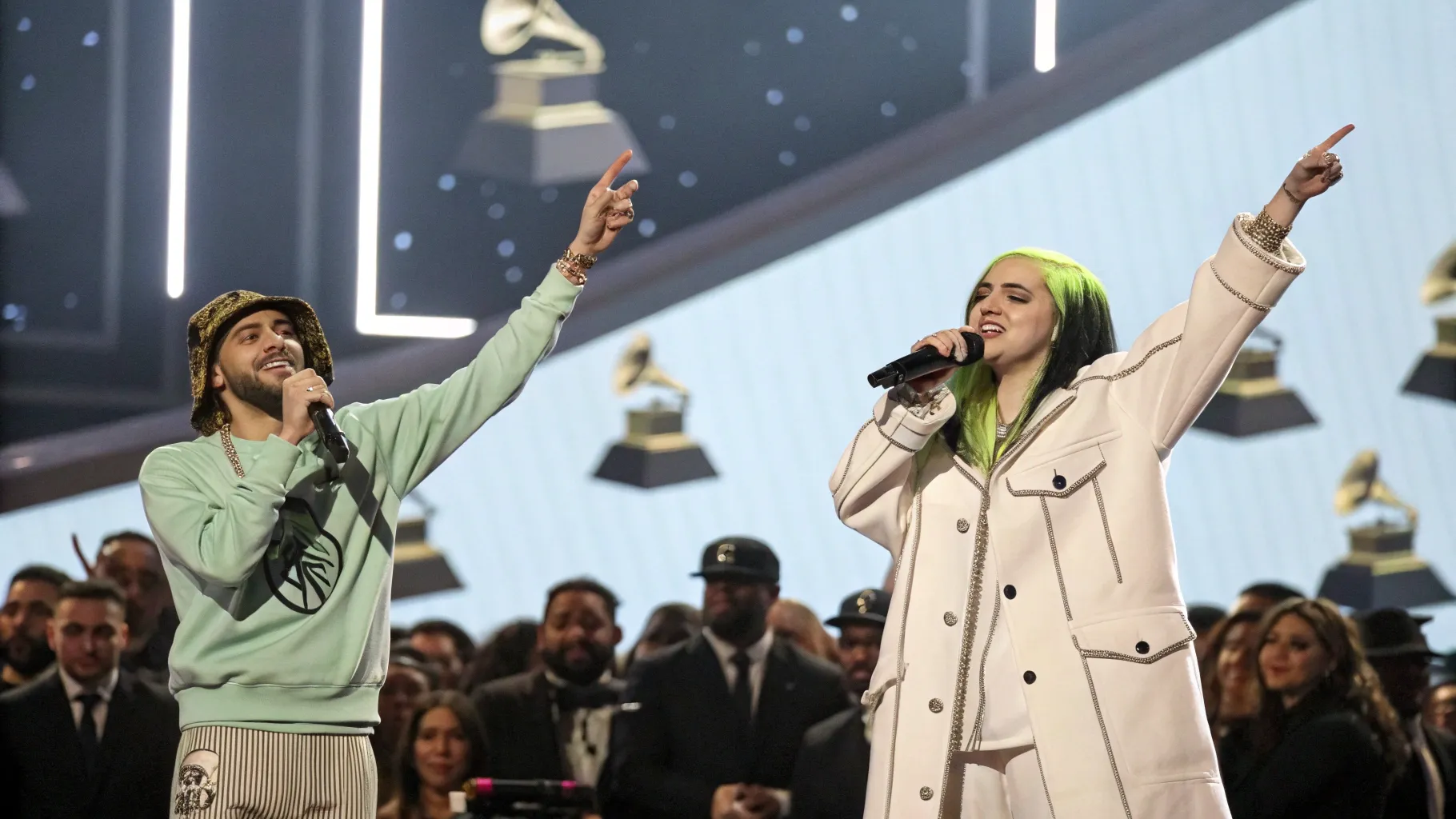
Some of music’s biggest names used the Grammys stage to speak out against immigration enforcement, turning a night of awards into a night of messages. In the show’s most visible moments, Bad Bunny drew a standing ovation and Billie Eilish delivered a censored outburst. The gestures signaled how artists are pressing national debates into prime time, bringing a charged issue to a global audience.
The protests unfolded live and without advance notice. They arrived as immigration policy and border enforcement remain at the center of U.S. politics. Artists leaned on symbolism and brief remarks to show solidarity with immigrants and to challenge aggressive enforcement tactics.
What Happened Onstage
Two moments stood out. Bad Bunny received a sustained ovation as he aligned himself with immigrant communities. Moments later, producers muted part of Eilish’s remarks after an expletive directed at enforcement practices. Both actions were short but hard to miss.
“From Bad Bunny’s standing ovation to Billie Eilish’s bleeped expletive, here’s how music’s biggest stars protested immigration enforcement at tonight’s Grammys.”
The gestures fit a growing pattern at awards shows. Artists use live broadcasts to highlight issues that cut across culture and policy. The approach relies on brevity and symbolism, but the audience reach is massive.
Background: A Debate That Won’t Fade
Immigration enforcement has shifted from administration to administration, with changes in deportation priorities, detention practices, and asylum processing. Public opinion has been divided for years. Some voters emphasize border control, while others focus on humanitarian protections and due process.
Music stars have weighed in before, including through speeches, pins, and coordinated actions on red carpets. Short, sharp statements travel quickly on social media, amplifying the message far beyond the room.
Why Artists Are Speaking Out
For many performers, the industry’s global ties make immigration personal. Tours depend on visas. Creative teams often span several countries. Fans and families live across borders. That proximity can turn policy into lived experience.
Artists also know that award shows attract tens of millions of viewers in real time. A single moment can become the clip that defines the night and shapes public conversation the next day.
Supporters and Skeptics
Supporters say the protests humanize a technical policy debate. They argue that live shows force attention on stories that might otherwise be buried by daily news cycles.
Critics counter that award stages are not the place for political messages. They argue that celebrity activism oversimplifies complex issues and risks alienating audiences who tune in for music, not policy.
- Supporters: Visibility drives awareness and empathy.
- Critics: Entertainment platforms are ill-suited for policy debates.
Industry Impact and Public Response
Networks and producers face a familiar challenge. Live TV thrives on spontaneity, but broadcasters must manage standards, delays, and content rules. The bleep during Eilish’s remarks reflects that balancing act.
Labels and management teams often plan for both the attention and the backlash. Social media reactions can swing sharply in minutes. Brands connected to the show monitor sentiment and adjust their messaging in near real time.
For immigrant artists and fans, the moments can feel affirming. They see their experiences acknowledged on one of the biggest stages in music. For others, the onstage messages spur debate rather than agreement.
What To Watch Next
Expect more artists to tie performances, wardrobe, and brief speeches to immigration themes. Visual cues and compact phrases translate well on air and online. They also reduce the risk of long segments getting cut for time or standards.
Advocacy groups may try to coordinate with performers ahead of future shows. Broadcasters, meanwhile, will refine delay systems and guidance to control language without dulling the live feel that drives ratings.
Policymakers will likely take notice. When superstar moments dominate feeds, offices field calls and emails. Whether that converts into policy shifts is uncertain, but the attention is real.
The Grammys made clear that culture and policy are colliding on the biggest stages in music. With a standing ovation for Bad Bunny and a censored flash from Billie Eilish, artists kept the immigration debate in plain view. The next test will be whether these moments lead to sustained organizing, clearer policy conversations, or simply another cycle of viral clips and swift responses.