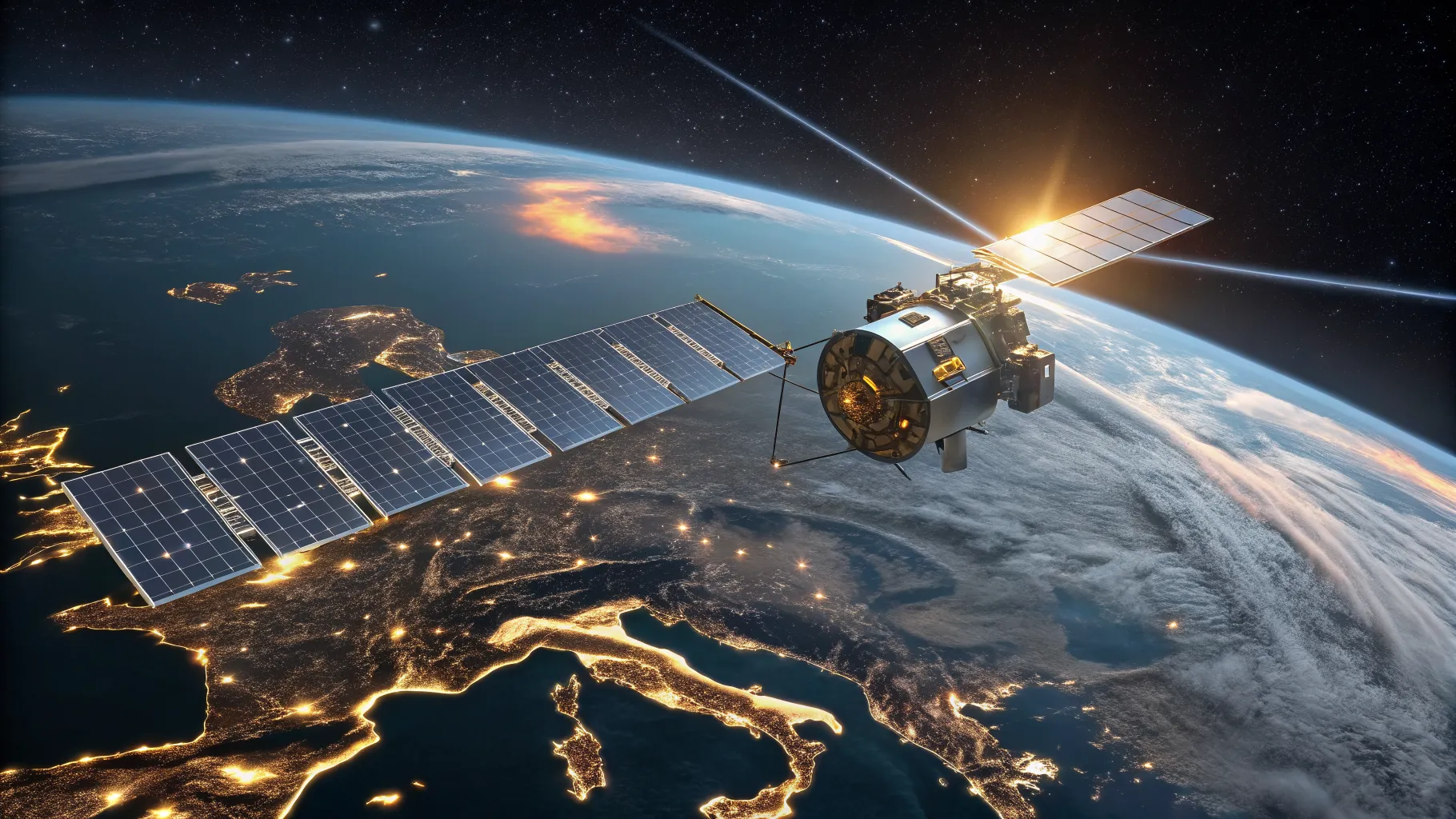
A young energy company is promoting a bold plan to beam sunlight from space to Earth, aiming to power solar panels at night and address other problems caused by darkness. The proposal, discussed this week, sets out to deliver steady electricity after sunset by transmitting energy collected above the clouds to ground stations. The idea promises round-the-clock clean power, but it faces steep technical, safety, and cost hurdles.
The company says the goal is to lift large solar arrays into orbit, convert the energy to microwaves or lasers, and send it to receivers on the ground. Advocates argue that uninterrupted sunlight in space could smooth the peaks and valleys that limit renewables. Skeptics warn that practical deployment may be decades away and will require major advances in space operations and grid planning.
What the Company Says
The company thinks beaming sunlight to earth can enable nocturnal solar energy production and solve other darkness-related problems.
Executives frame the concept as a way to cut reliance on fossil fuels during evening demand peaks. They also point to lighting, emergency response, and remote connectivity as potential use cases where power gaps at night create risk or slow economic activity. The pitch hinges on delivering reliable power when and where it is needed, without weather interruptions.
Background: An Old Idea Gains New Attention
Space-based solar power has been discussed since the late 1960s, when researchers first proposed orbital arrays feeding “rectenna” receivers on Earth. NASA studied the concept in the 1970s. Interest has risen again as launch costs have declined and wireless power transmission has improved.
In recent years, research groups have tested key parts of the system. Experiments have shown controlled wireless energy transfer over short distances. Academic teams have flown small demonstrations to validate hardware in orbit. Governments in Europe and Asia have funded studies on grid integration, safety standards, and economic viability. None of these efforts has yet delivered commercial-scale power to the grid.
How It Would Work
The core system includes a large solar array in orbit, power electronics to convert direct current to a suitable frequency, and a transmitter that sends energy to a ground-based rectenna. That receiver converts radio waves or laser light back into electricity.
- Orbiting arrays collect steady sunlight above clouds and nighttime.
- Transmitted power is directed to fixed ground stations.
- Grid operators dispatch the energy to meet evening demand.
Supporters say the approach could reduce the need for large battery fleets. They also cite lower land use per unit of delivered energy compared with some terrestrial projects, though large ground receivers would still be required.
Promises and Pitfalls
The potential impact is clear. Reliable night power could steady wholesale prices, cut peaker plant use, and improve energy security. Remote communities, disaster zones, and critical facilities could benefit from rapid deployment of receiving stations.
The path to that future is uncertain. Engineers must prove precise beam control, safe operation, and efficient conversion both in space and on the ground. Large orbital structures would need in-space assembly or modular designs. Launch cadence, maintenance, and debris avoidance add complexity.
Economics are another barrier. Even with falling launch costs, building and operating multi-gigawatt capacity in orbit will require huge capital outlays. Competing options—onshore wind, utility-scale solar with batteries, geothermal, and demand response—are proven and getting cheaper. Regulators will also ask hard questions about spectrum use, aviation safety, environmental impacts, and community acceptance of large rectennas.
What Experts Are Watching
Researchers track several benchmarks that could determine viability:
- Demonstrations of end-to-end power beaming from orbit to a grid-connected site.
- Conversion efficiencies that make delivered electricity cost-competitive.
- Automation for in-space assembly and maintenance of very large structures.
- Agreed safety standards for beam containment and fail-safes.
- Clear regulatory paths for spectrum, licensing, and environmental review.
Policymakers are weighing the role of public funding for pilot projects. Some national energy plans now reference space-based solar as a possible option in the 2030s or 2040s. Private ventures pitch earlier timelines, but those depend on rapid advances and stable financing.
Comparisons and Use Cases
Compared with ground solar plus batteries, space-based solar aims to deliver longer-duration, dispatchable power. It could complement grids with deep renewable penetration by covering nighttime ramps. It might also supply power to islands and remote regions that rely on shipped fuels. For cities, it could act as a clean backup during heat waves or winter calm periods when wind output falls.
The company’s plan taps into a long-running vision: clean electricity on demand, day or night. The coming months will show whether it can secure partnerships for pilots, win regulators’ trust, and answer cost concerns. If early tests hit their marks, attention will turn to scaling, safety, and price. If hurdles persist, established options—batteries, flexible demand, and new transmission—will keep leading the evening transition. Either way, the push to power the night is accelerating, and this proposal adds urgency to the search for reliable, clean after-dark energy.