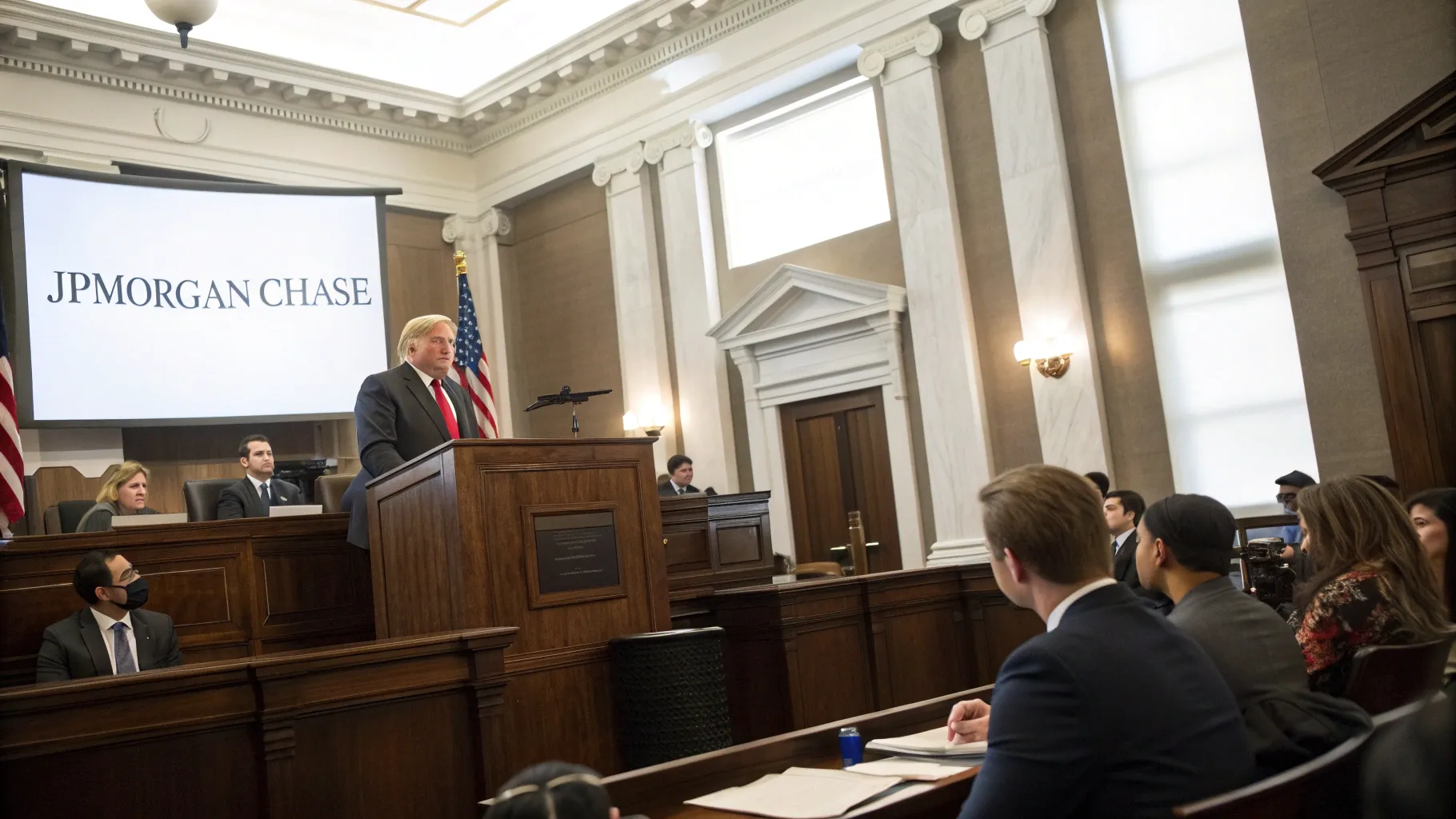
Former President Donald Trump filed a $5 billion lawsuit against JPMorgan Chase and its chief executive Jamie Dimon, claiming the bank closed accounts tied to him and his companies for political reasons. The complaint, lodged in Miami-Dade County court in Florida, says the alleged “debanking” began after he left the White House in January 2021 and violated basic duties owed to customers.
The case places one of the nation’s largest banks at the center of a fierce dispute over how financial firms manage reputational risk and political pressure. It also raises questions about the limits of bank discretion when deciding whom to serve.
The Allegations
Trump accuses JPMorgan of “debanking him and his businesses for political reasons after he left office in January 2021.”
The suit seeks $5 billion in damages. It names both JPMorgan Chase and CEO Jamie Dimon as defendants. The filing argues the bank took adverse actions that harmed his companies and brand. It asserts the decisions were not based on standard risk or compliance reasons but on political bias.
JPMorgan, one of the world’s largest financial institutions, has long maintained broad latitude to accept or end client relationships under its account agreements. The suit challenges how far that latitude goes, particularly when public figures are involved.
Background on “Debanking”
“Debanking” is a term used when institutions close accounts or deny services to individuals or businesses. Banks cite anti-fraud rules, anti-money laundering controls, and sanctions screening as key reasons for reviews. They also weigh reputational concerns, which can include risks tied to public controversy.
Civil liberties groups have warned that opaque account closures can chill lawful activity. At the same time, regulators require banks to manage risk and report suspicious activity. The tension between risk management and fair access has grown sharper in recent years.
- Banks must comply with anti-money laundering laws and sanctions rules.
- Account agreements often allow termination with notice, subject to law.
- Political affiliation is not a protected class under federal law.
What the Case Could Turn On
The dispute may hinge on the specific account contracts, internal bank rationales, and any evidence pointing to political motive. If a court finds that standard risk policies drove the decisions, the bank could be on safer ground. If evidence suggests viewpoint-based punishment, the analysis becomes more complex.
Key questions include: what triggered the account actions, how the bank applied its compliance policies, and whether Trump or his companies were treated differently than similar clients. The involvement of a bank CEO as a named defendant also raises the bar for proving personal responsibility.
Industry and Political Stakes
Financial firms are under pressure from many directions. Advocates on the left have urged banks to scrutinize clients tied to disinformation, extremism, or fraud. Voices on the right argue that access to banking should not hinge on politics or public speech. Companies face legal risk and public backlash either way.
State policymakers have floated measures to restrict what they see as viewpoint-based financial discrimination. Banks counter that such rules could interfere with safety, compliance, and their ability to manage risk. The outcome of this case could shape how far institutions go in weighing controversy when assessing clients.
Possible Paths Ahead
Civil litigation of this kind often begins with motions challenging the legal sufficiency of the claims. Discovery could follow, bringing internal communications and policy documents into focus. A settlement is also possible, though the size of the demand and the public profile may make that harder.
For Trump, a favorable ruling could provide damages and a public rebuke of perceived bias. For JPMorgan, a defense win could affirm banks’ ability to terminate accounts under policy and contract. Either way, the case will be watched by corporate legal teams, advocacy groups, and regulators.
What to Watch
- Whether the court allows claims against Jamie Dimon personally to proceed.
- Details about the timing and reasons for any account closures.
- How the court weighs contract terms against allegations of political motive.
The lawsuit sets up a high-profile test of how banks balance legal compliance, reputational risk, and fair access. As filings and hearings move forward, expect closer scrutiny of internal decision-making and account policies. The result could influence how financial services are offered to public figures and businesses caught in political crosscurrents.