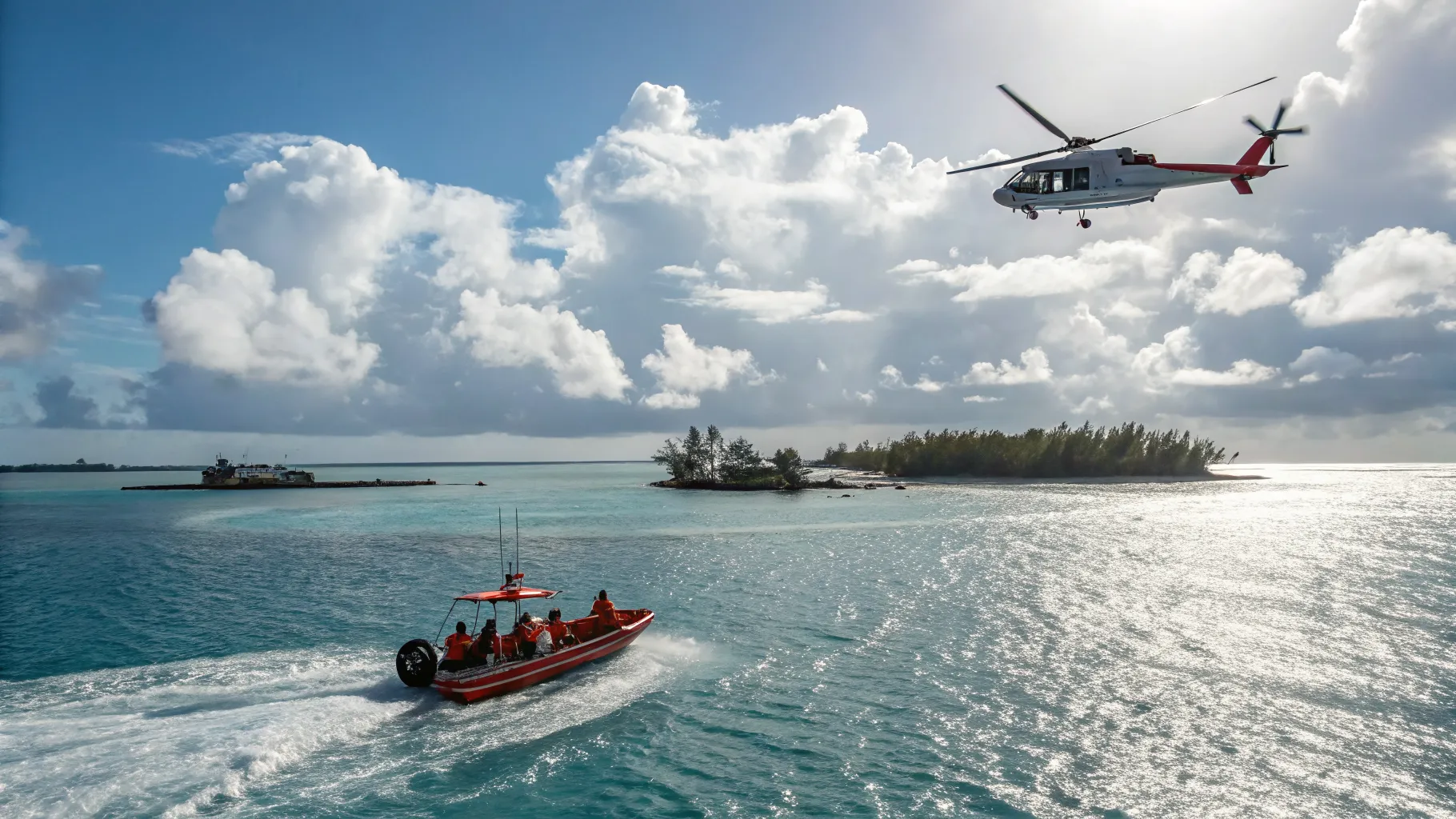
An American woman went missing in the Bahamas on Saturday, after her husband reported she fell from their dinghy and was swept out to sea. The disappearance, which occurred off the islands’ popular cruising waters, has prompted questions about small-craft safety in open seas and the challenges of search efforts in fast-changing conditions.
Authorities had not released the woman’s identity or the precise location as of publication. Her husband told officials she fell overboard and was carried away by currents, a scenario that can unfold within minutes in exposed channels. The incident highlights the risks of short coastal outings that turn hazardous when wind, waves, or equipment issues intervene.
“She fell from their dinghy and was swept out to sea,” her husband said.
Challenging Waters and Rapidly Shifting Conditions
The Bahamas span hundreds of islands and cays linked by shallow banks and deeper cuts. Those passages can funnel strong tidal streams and sudden swells, especially where the Atlantic meets narrow channels. Small inflatables and dinghies, often used to shuttle between anchored boats and shore, are vulnerable when weather shifts or passengers lose footing.
Local mariners say visibility on the water can change in minutes, making it hard to keep sight of a person in the sea. Strong sun glare, chop, and wind-driven drift reduce the time window for recovery. Even skilled swimmers tire quickly when pulled by currents or waves.
How Maritime Searches Usually Unfold
In similar cases, Bahamian authorities coordinate with volunteer responders and nearby vessels to create a rapid search grid. Air assets, when available, help spot surface objects and life jackets. Neighboring boats often receive radio calls to keep watch for anyone adrift.
Maritime officers typically gather details to guide search patterns: last known position, time in the water, wind direction, current speed, and whether the person wore a flotation device. That information helps estimate drift and prioritize likely areas.
- Last known location and time inform the initial search box.
- Wind and tide data shape drift models over hours.
- Reports from boaters refine the search as new sightings arrive.
If no immediate sightings occur, responders often expand the grid quickly, as drift can carry a person far from the original site. At night, thermal imaging and lights, when available, aid scanning, but rough seas and darkness reduce effectiveness.
Safety Practices Under Renewed Scrutiny
Incidents like this renew calls for simple, consistent safety steps on small craft. Maritime trainers emphasize wearing life jackets while underway, even for short trips. They recommend a working kill-switch lanyard on outboard engines, non-slip footwear, and keeping weight low and centered in the dinghy.
They also urge boaters to carry a waterproof light, whistle, and a personal locator beacon if possible. A basic safety briefing—who sits where, how to move aboard, and what to do if someone falls in—can prevent missteps when seas build.
Recent boating safety reports show that most fatal incidents involve drowning. Many victims were not wearing life jackets. In warm-water regions, people often underestimate fatigue and overestimate swimming ability, a mismatch that becomes critical once distance and current are factors.
What Investigators Look For
Marine investigators in such events examine vessel condition, weather logs, and any witness statements. They consider whether alcohol or medication played a role, whether the engine kill-switch was used, and if safety gear was accessible. They also look at communications: VHF radio calls, possible distress alerts, and the timeliness of the first report.
The husband’s account will be central to the early timeline. Officials will likely map the dinghy’s route, confirm tide and wind at the time, and cross-check with nearby boat traffic. If available, marina cameras, anchorage witnesses, or vessel tracking data may provide corroboration.
Travelers Weigh Risk and Readiness
The Bahamas remain a major boating destination, with clear water drawing thousands of visitors each season. Local guides encourage guests to plan short trips around daylight, check forecasts, and avoid exposed cuts when wind opposes current. Even short rides should include flotation for every person on board.
Tourism operators say clear briefings and respect for changing weather are key. Many urge visitors to treat a dinghy as more than a shore shuttle. It is a small vessel in open water, and it deserves the same caution as a larger boat.
The search for the missing woman underscores those lessons. While details are still developing, the case points to the narrow margins in small-craft mishaps. Early reporting, proper gear, and steady judgment can improve outcomes, but time and conditions often decide the result.
As authorities assess next steps, observers will watch for updates on search areas, any debris or sightings, and whether currents shift the focus. For travelers planning trips, the takeaway is clear: prepare for short rides as carefully as long passages, and assume conditions can change without notice.