Many roofing companies that reach great success often look and perform in a certain manner. Large corporate offices and administrative teams that handle everything from scheduling to accounts are not uncommon.
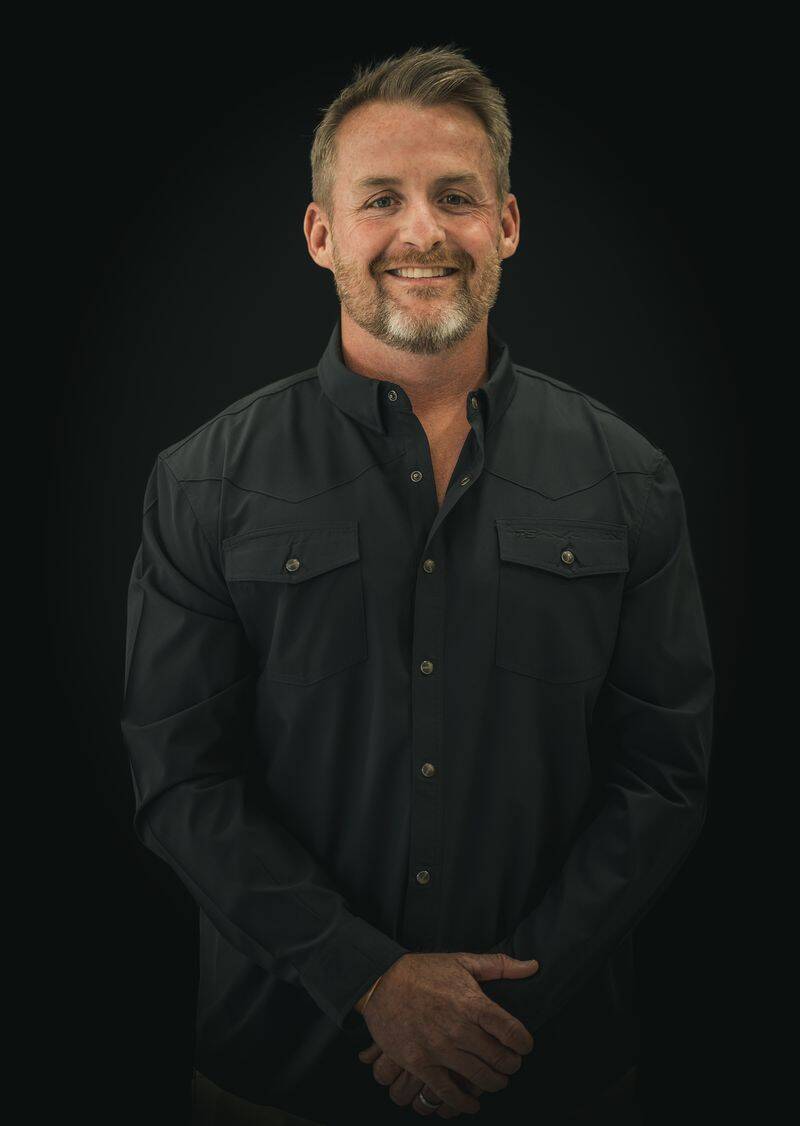
Jake Brydon’s Heritage Construction is different.
As Brydon’s business is projected to reach $60M in annual revenue with fewer than five people running the corporate office, Heritage Construction has created success the roofing industry rarely sees: a 14% EBITDA margin.
The BenchMark Few Talk About
To understand Heritage Construction’s success, one must first understand what a typical roofing business looks like.
The average roofing contractor runs a business with significant labor costs, which include materials that consume around a third of each dollar earned, and a sales team that takes a large share of what remains. When warranty redemptions arrive, small litigation expenses appear. Alongside this, the friction of running a large field operation becomes clear.
Brydon has watched the pattern repeat throughout the industry. He has seen owners who have built $100 million companies wrestle with overhead, and has spoken with operators running $30 to $40 million businesses, net figures that make those revenue numbers feel meaningless.
Brydon believes that 17% is the number that most would chase if overhead did not exist. Most fall within the five to seven percent range, and consider that a success. Heritage Construction is managing at 14%, which Brydon describes as a “unicorn metric” for this space.
The reason this margin exists isn’t that Heritage charges more or works less, but because the company was deliberately engineered to scale revenue without scaling overhead.
The Origin of the Operating Model
After building Heritage Construction into a multimillion-dollar operation, Jake Brydon began to look ahead, during which time he envisioned what scaling further would require. The mentors he had access to, who were operators doing $100 million in annual revenue, did not paint the greatest picture. With revenue and overhead high, and accounts receivable being a consistent problem, the complexity had become clear.
This is where Brydon decided to deviate from the norm.
Rather than hire to scale, he chose not to invest in automation, which ultimately led him to build RoofLink. This CRM and operating system was specifically designed to handle the complexity that typically demands a large office. Instead of adding employees every time the business grew, however, Brydon built infrastructure that shaped growth without administrative expansion.
The result is an office with fewer than five people keeping what Brydon calls “the trains arriving on time,” while everyone else wears the Heritage logo in sales, sales management, or out on the field.
What RoofLink Does
RoofLink distinguishes itself from traditional CRMs by providing a comprehensive job process system. It streamlines every task, from the initial door knock to the final payment, within a single interface, reducing the need for administrative intervention.
With RoofLink, a sales representative manages the entire customer journey: accurately measuring roofs, generating estimates, securing approvals, and triggering purchase orders, all within one system.
Sales staff also oversee installation workflows and payment collection. By eliminating manual handoffs, RoofLink drastically reduces administrative staff needs and increases operational efficiency.
This is the infrastructure that makes the five-person office possible. It is also how Brydon is direct when he says that the business has reached $60 million in revenue without building the overhead infrastructure that has constrained his peers.
Heritage Construction’s website notes that the company went from $35 million with 17 office staff to over $50 million with less than four, all due to the automation and single-interface approach that RoofLink helps create.
Why Margins Change Everything
Operating at seven percent and operating at fourteen percent are not matters of profitability in the current year, but rather the entire risk profile of the business.
Brydon has been clear about the realities that take the fun out of roofing at scale. When a business is running on five to seven percent margins, issues such as warranty claims and litigation expenses do not just cost money, but also affect the enjoyment of running the company. Owners who hit this wall often think about selling. It isn’t because the business isn’t thriving, but because stress often drives people away.
A 14% EBITDA margin creates a buffer, meaning that when those friction points arise, the business absorbs them without being destabilized. This means the owner can run from a position of strength rather than vulnerability, and that when someone does come with an acquisition offer, the asset is structurally sound enough to command a different conversation.
Breaking Through the Scalability Ceiling
At point one, there was a period when Heritage Construction could not exceed $40 million in annual revenue. Brydon has described this cycling between $30 million, $34 million, $36 million, and $38 million as frustrating. Always approaching $40 million but never clearing it became a hill that took the enjoyment out of running the business, since he could not identify what was blocking his success.
The answer turned out to be a focus on mid-level management and recruiting. The ability to grow a business to $40 million does not automatically translate into the capabilities to grow to $100 million. The required skills, systems, and structures differ. Once Brnydon identified the gap and addressed it, the ceiling broke, allowing growth to resume.
This concept illustrates the importance of Heritage’s path to its current status. The business did not scale through brute force or by simply working harder. Instead, it scaled by correctly diagnosing the constraint points at each point and deliberately solving for them.
The Model Many Operators Are Not Running
Jake Brydon built Heritage Construction on an atypical model for the roofing industry. He did not get lucky with a good market or a strong sales team; rather, he purposely created an operating model that helped the company thrive.
Most companies scale by adding people. Heritage, instead, is scaled by systems.
The five-person corporate office is not a limitation, but instead, evidence that the internal infrastructure is working. Every dollar that does not go to unnecessary overhead becomes margin. That margin allows the business ot survive the hardships of seasons, absorb unexpected costs, and grow without needing to chase top-line revenue.
For roofing operators running at 7% margins and wondering why growth feels like it is costing more than its returns, Brydon’s model offers a direct answer: the revenue isn’t the problem; the overhead structure is.
For Jake Brydon, the fix is not to hire more people. Instead, it is to build systems that make additional hires unnecessary in the first place.