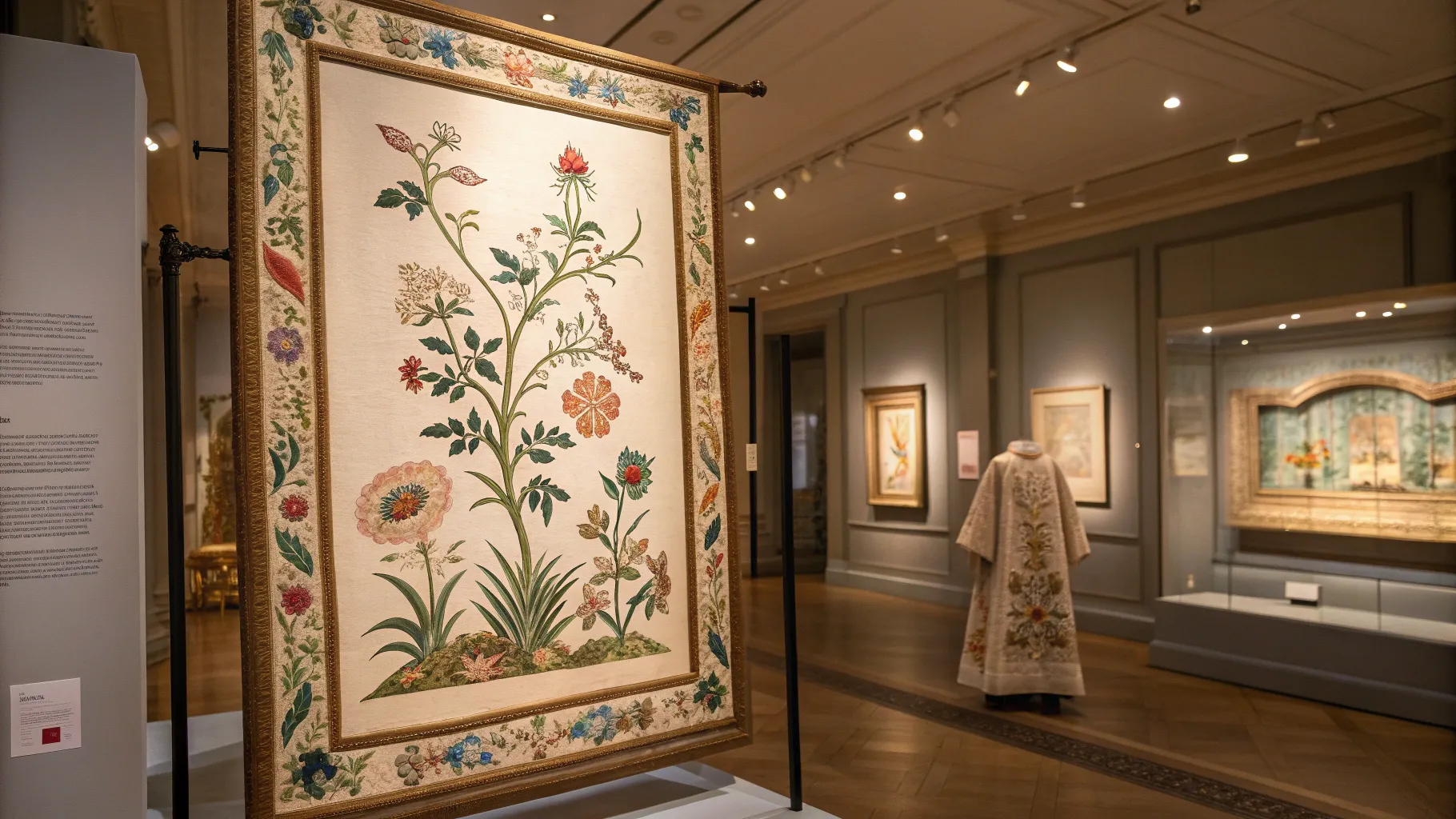
A major embroidery loan is set to travel to the United Kingdom under state-backed protection, easing the financial burden on the host institution and widening public access to a rare artifact. According to an official statement, the piece will be covered by the Government Indemnity Scheme when it arrives in the UK, a move that allows museums to display high-value works without paying costly commercial insurance.
“The huge embroidery will be covered under the government’s indemnity scheme when it travels to the UK.”
The announcement signals that officials and curators have cleared key security and conservation hurdles. It also suggests the exhibition plan is close to final, pending logistics and final checks. The exact venue and dates were not disclosed.
What the Indemnity Scheme Does
The Government Indemnity Scheme (GIS), administered by Arts Council England, provides state-backed cover for artworks and cultural objects loaned to UK institutions. It stands in for commercial insurance if borrowing museums meet strict security, transit, and conservation standards.
For museums, the scheme reduces costs that can run into six or seven figures for high-value items. For lenders, it gives assurance that the state will meet losses in the rare event of damage or theft, subject to conditions.
- Cover typically applies during transit and display periods.
- Institutions must meet environmental and security benchmarks.
- Excesses may apply, and negligence is not covered.
Officials often require facility reports, detailed transport plans, and proof of trained handling staff before granting cover. These measures reduce risk and have enabled UK audiences to see objects that might otherwise stay in storage or abroad.
Textiles Demand Special Care
Large historic embroideries are fragile. They are sensitive to light, humidity, vibration, and handling. Lenders and conservators weigh each movement carefully, as even minor stress can cause fibers to weaken or dyes to fade.
Special crates, shock sensors, and climate controls are routine for such loans. Display times are often limited and light levels reduced to protect the piece. The borrowing museum will likely commit to tighter environmental set points and real-time monitoring, with conservators on call.
When used properly, indemnity cover goes hand in hand with these safeguards. It does not replace them. It requires them.
Costs, Benefits, and Public Interest
State-backed cover can save UK institutions substantial sums, freeing money for conservation, education, and community programs. That saving is often a decisive factor in securing landmark loans.
Economic impact studies for comparable exhibitions have shown boosts for local tourism, with higher footfall for nearby businesses. While figures for this embroidery are not yet available, museum leaders often report increased ticket sales, memberships, and school visits tied to headline loans.
There is also cultural value. Loans of rare textiles help fill gaps in public collections and support research. Scholars gain access for close study, and visitors get a chance to see objects that are usually out of reach.
Risk Management and Accountability
The scheme shifts financial risk to the state, so oversight is tight. Lenders must disclose condition reports. Borrowers must log any change during transport or display. Any incident triggers an independent assessment and, if needed, a claim process.
Critics sometimes question public exposure to large indemnity liabilities. Supporters argue that incidents are rare and that the public benefit is high. They also point to lower overall costs than equivalent commercial insurance and to the strict controls already in place.
In practice, the scheme has helped bring masterworks from overseas and from UK collections to cities and towns that might not otherwise see them.
What to Watch Next
Key details to track now include the exhibition venue, opening dates, and the conservation parameters agreed for the loan. Transport plans and courier arrangements will be finalised in the coming weeks, along with display design to manage light and visitor flow.
If successful, the loan could encourage further textile exhibitions supported by indemnity coverage, inspiring partnerships between national and regional museums. It may also prompt renewed investment in conservation facilities to meet the scheme’s standards.
For now, the confirmation of state-backed cover signals momentum. The embroidery is on course for a UK showing, with the government sharing risk so the public can share in the experience.