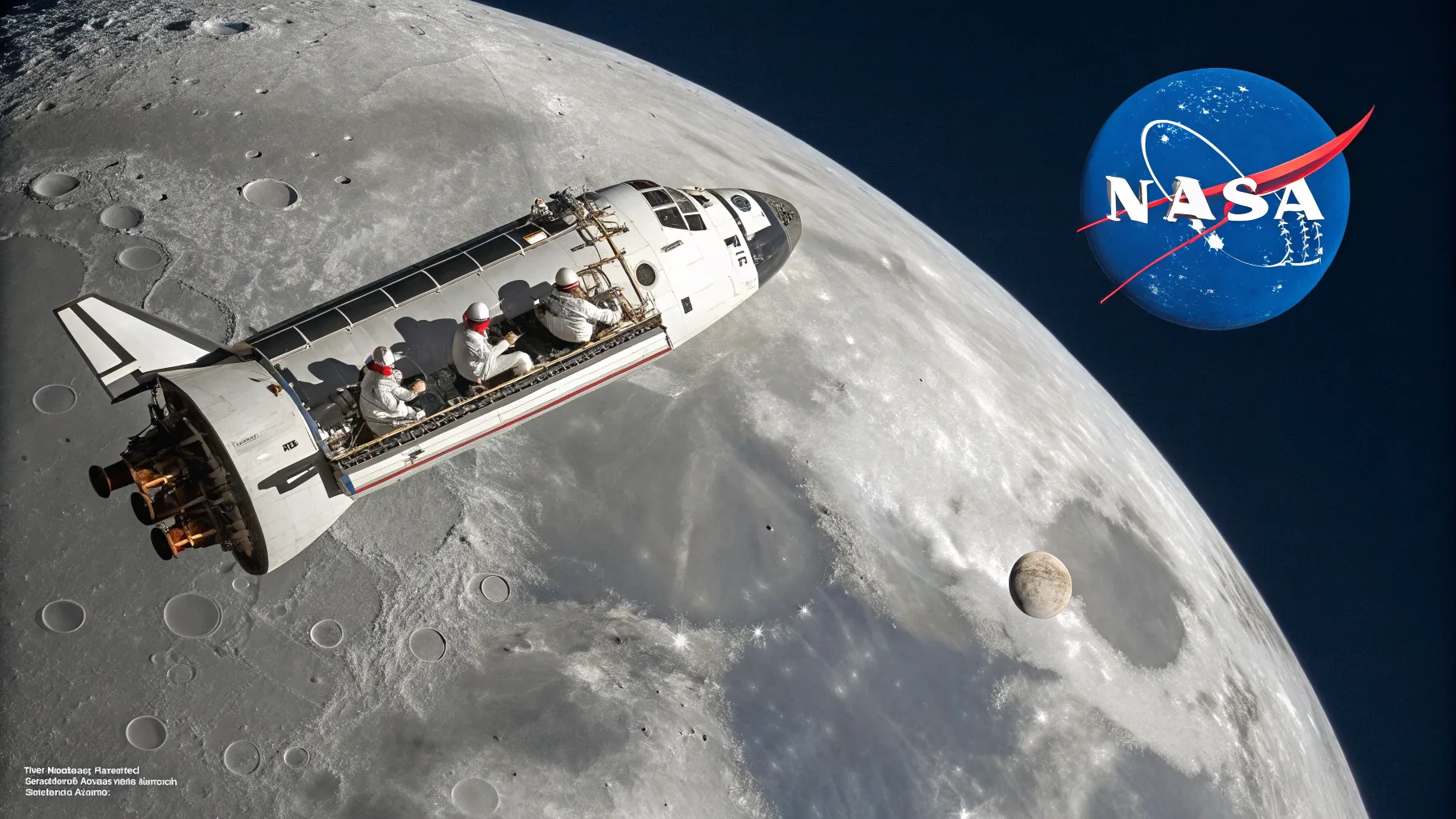
A NASA crew of four astronauts is set to sweep past the moon on Monday in the closest approach of their mission, marking the nearest human visit to the lunar surface in more than half a century. The flyby, planned as a high-speed pass on a free-return path, is designed to test deep space systems and pave the way for future missions that aim to return people to the moon.
The maneuver is expected to validate navigation, communications, and life-support performance in lunar conditions. It will also offer a crucial rehearsal for later flights that will push closer to lunar orbit and, eventually, a surface landing. NASA has said the four-person crew reflects the agency’s intent to fly larger teams on voyages that last longer and go farther than recent low-Earth orbit missions.
Why This Flyby Matters
“A NASA crew of four astronauts will fly by the moon on Monday at the closest distance they will get to the lunar surface during their mission and the nearest any human has gotten to the moon in more than 50 years.”
The last time humans traveled this close to the moon was during the Apollo era, which ended in 1972. Since then, crewed spaceflight has focused on near-Earth operations. The return to lunar distances carries both symbolic and practical weight. It signals progress on crew-rated spacecraft that can survive deep space radiation, extended communication delays, and high-speed reentry.
NASA officials frame this pass as a confidence check for a system meant for more ambitious steps. Engineers want to see how guidance algorithms handle the moon’s gravity. Flight surgeons want data on crew health during days far from Earth. Mission planners want to confirm they can maintain stable links with tracking stations for the entire arc of the flight.
From Apollo To A New Lunar Push
Apollo 8 first carried astronauts to lunar distance in 1968. Apollo 13 executed a free-return swing around the moon in 1970 after an in-flight emergency. The final crewed lunar mission, Apollo 17 in 1972, set the long pause that followed. The new campaign aims to restart human travel to the moon with modern spacecraft and safety standards.
NASA’s broader plan includes stepwise tests: fly crews around the moon, then send crews to lunar orbit, and, later, attempt a surface landing. The agency has partnered with private contractors for rockets, spacecraft modules, and landing systems. International partners supply hardware and science. The goal is to build a steady cadence of missions rather than one-off feats.
- Four astronauts will conduct the flyby on a free-return path.
- The pass will be the closest human approach to the moon in over 50 years.
- Key systems under test include navigation, life support, and deep space communications.
What The Flyby Will Test
The crew will pass the moon at high speed, then head back to Earth without entering lunar orbit. That trajectory reduces propellant use and keeps the mission simple while still stressing key systems. Tracking the spacecraft as it swings behind the moon will test relay handoffs and ground coverage. The heat shield will face a fast, hot reentry at the end of the trip, offering data for future flights.
Inside the cabin, sensors will monitor radiation exposure and environmental controls. Crew tasks will include manual navigation checks, communications drills, and system reconfiguration during critical burns. Every step supports the larger plan to certify the vehicle for longer missions.
Debate On Cost, Risk, And Pace
Supporters argue the mission offers a clear return: safer future flights based on real data, stronger industry partnerships, and renewed public engagement. Skeptics point to budget pressures, shifting schedules, and the technical risks of deep space travel. Safety advocates highlight that a free-return profile gives the crew a built-in path home if a major system fails.
Geopolitics also shapes the effort. China has stated plans for a crewed lunar landing later this decade, raising pressure on the United States to show progress. Allies in Europe, Canada, and Japan have tied their own science and hardware to NASA’s timeline.
What Comes Next
If Monday’s pass achieves its goals, NASA will move to more complex objectives. That could include extended operations near the moon, new docking tests, and demonstrations with cargo and habitat modules. Each mission will stack evidence that crews and spacecraft can handle weeks in deep space.
For now, the focus is on the flyby’s core checks: guidance near the moon, stable communication, crew health, and a safe return. Success will mark a major step toward sending astronauts back to lunar orbit and, eventually, to the surface.
As the four astronauts arc past the moon, they will carry the hopes of a program looking to restart human exploration outside Earth’s neighborhood. The outcome will guide funding, schedules, and the shape of the next missions. Watch for NASA’s data on system performance and reentry—those results will chart the path to the next giant step.