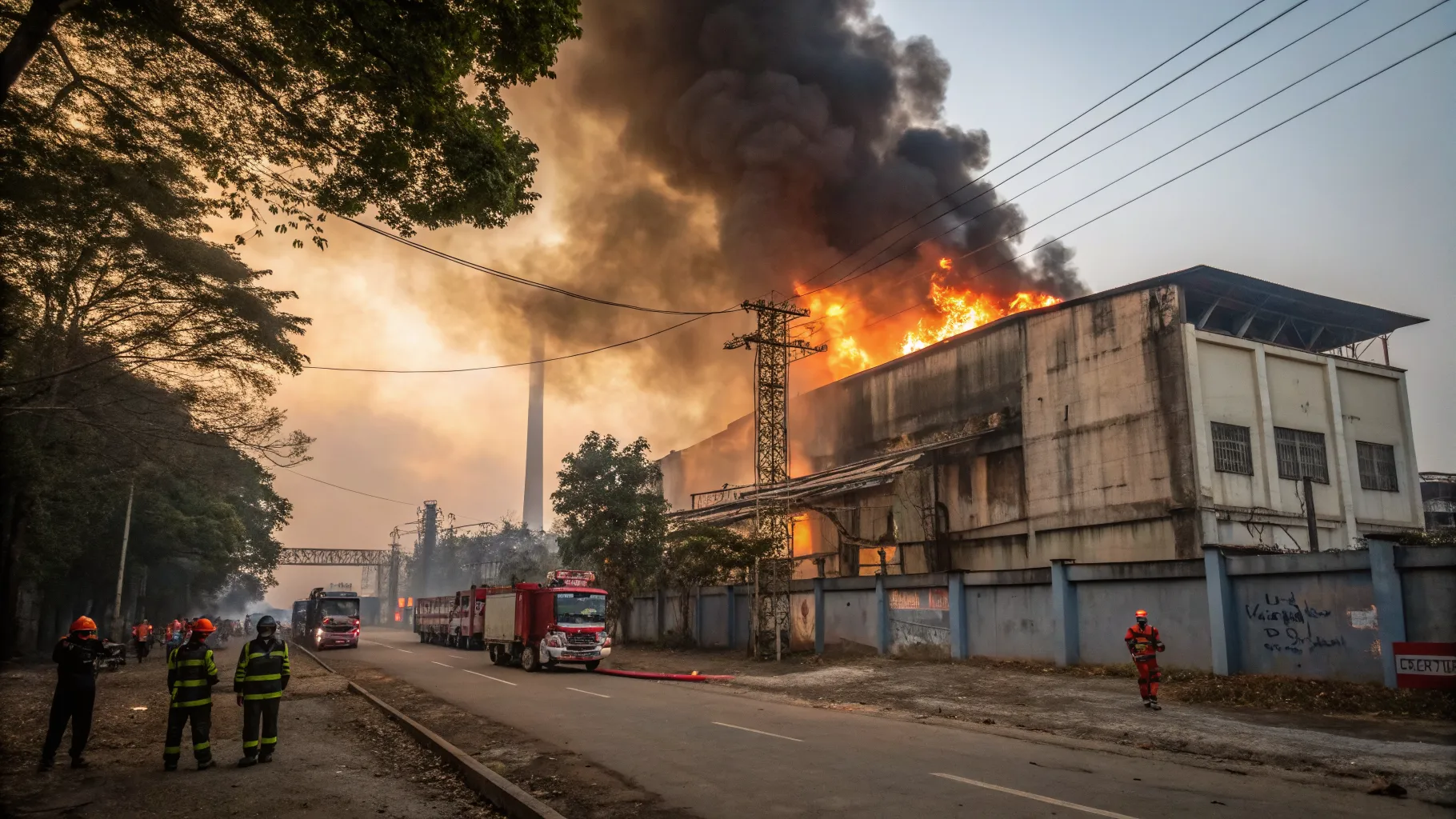
A fire at a gas-lighter factory outside Dhaka on Saturday afternoon left at least five people dead, authorities said, renewing scrutiny of industrial safety in Bangladesh.
The blaze erupted in the Kadamtali area of Keraniganj, just across the Buriganga River from the capital. Firefighters battled flames and smoke as residents watched from narrow lanes that complicated access. Officials said the toll could change as crews searched the site and assessed damage.
The incident highlights ongoing risks in factories that handle flammable materials. Gas-lighter production often involves butane or propane, solvents, and plastic casings. Poor ventilation, unsafe storage, and crowded work floors can turn a small spark into a deadly event.
Pattern of Industrial Disasters
Bangladesh’s manufacturing sector has grown rapidly, supplying goods from apparel to plastics. Yet safety measures in many small and medium facilities lag national codes. Fires and explosions are common in clustered industrial zones around the capital, where buildings mix commercial and residential use.
Past disasters show how quickly ordinary workdays can turn tragic. A 2012 garment factory fire at Tazreen Fashions killed more than 100 workers and spurred calls for reforms. In 2019, a fire in Old Dhaka’s Chawkbazar area, fueled by chemicals stored in shops and homes, killed dozens. In 2021, a food-processing plant fire in Rupganj left more than 50 people dead, intensifying pressure on regulators to act.
- Tazreen Fashions fire (2012): 112 dead.
- Chawkbazar blaze (2019): about 70 dead.
- Rupganj factory fire (2021): at least 52 dead.
Keraniganj itself has seen deadly incidents. A plastic factory fire in 2019 killed at least 13, exposing weak enforcement and hazardous storage practices in the area.
What Investigators Will Examine
Investigators typically focus on ignition sources, fuel load, and building exits. In a gas-lighter plant, small leaks or aerosolized fuel can spread quickly. If exits are blocked or too few, workers may be trapped by heat and smoke.
Key issues likely under review include:
- Storage and handling of pressurized gas canisters and solvents.
- Condition of wiring and machinery, including heat sources.
- Fire alarms, extinguishers, sprinklers, and training records.
- Emergency exits, signage, and drills for workers.
Firefighters often face delays reaching inner lanes of Keraniganj. Congested streets, low water pressure, and dense construction can slow response and worsen outcomes.
Voices From the Scene and Industry
Local officials reported at least five fatalities and ongoing recovery work through the afternoon. Residents described smoke pouring from upper floors and workers trying to escape through stairwells. Factory owners in the area said many plants operate on tight margins, which can lead to shortfalls in safety spending.
Worker advocates urged a stronger push for compliance. They argue that small factories need regular inspections, clear guidance on safe storage of fuels, and penalties that deter violations. Business groups counter that owners also need access to affordable credit to upgrade wiring, install alarms, and secure certified extinguishers.
Regulation, Enforcement, and Gaps
Bangladesh has updated fire and building codes over the past decade, especially in the garment sector. Accord and Alliance programs helped improve many export factories. But thousands of smaller plants operate outside these initiatives, including workshops that produce plastic goods, lighters, and household items.
Enforcement remains uneven. Inspectors face limited staffing and a large number of facilities spread across informal zones. When tragedies occur, crackdowns often follow, but sustained monitoring can fade as attention shifts.
What Comes Next
Authorities are expected to conduct a full inquiry into the Keraniganj fire. Families will seek identification of the victims and compensation. Fire service officials will review response times and equipment needed for dense industrial districts.
Experts say the path forward is clear: reduce fuel loads, fix wiring, install alarms and sprinklers where feasible, and keep exits open. Targeted inspections and technical support for small factories can avert future disasters. Land-use planning that separates homes from hazardous production would also reduce risk.
Saturday’s fire is a stark reminder. As industry expands on Dhaka’s edges, safety must keep pace. Without steady enforcement and practical help for smaller plants, preventable deaths will continue.